The 26.49 T Plug Field
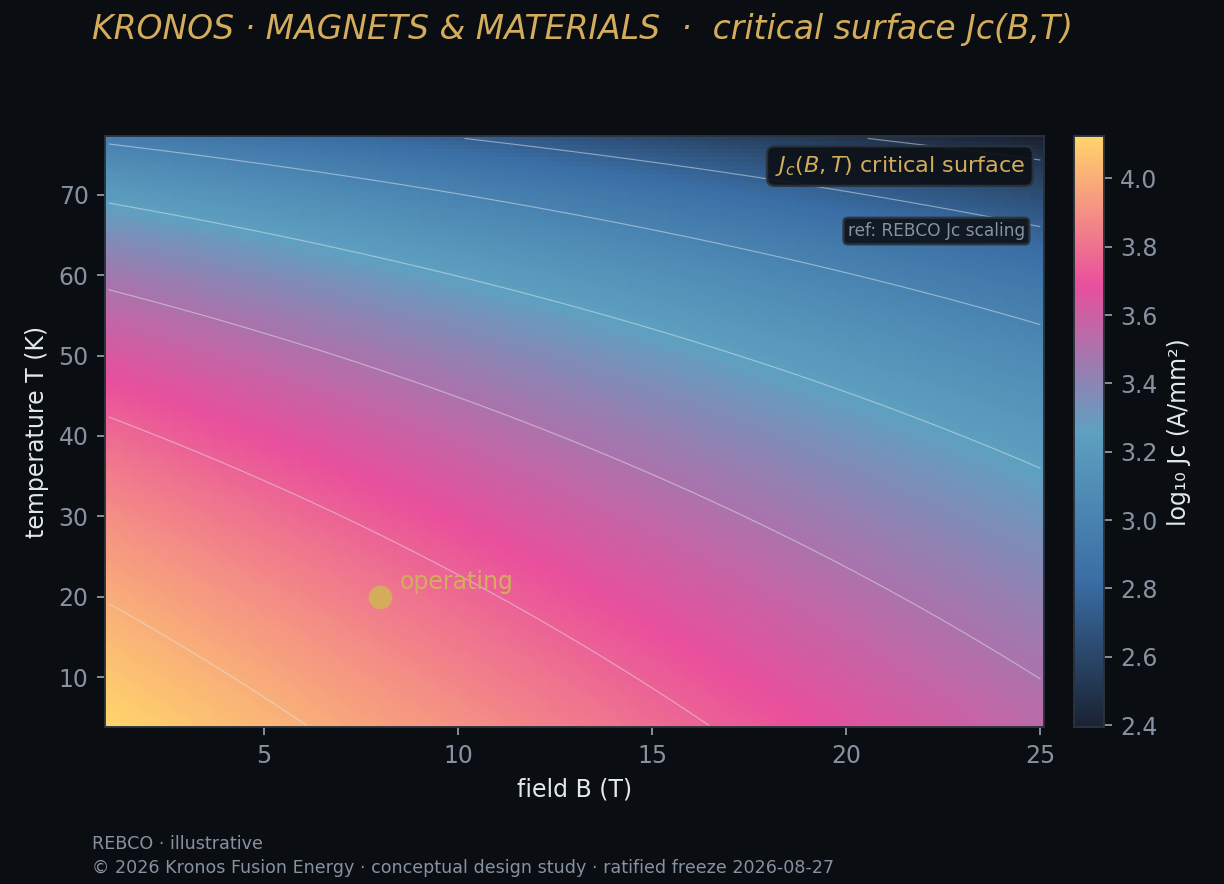
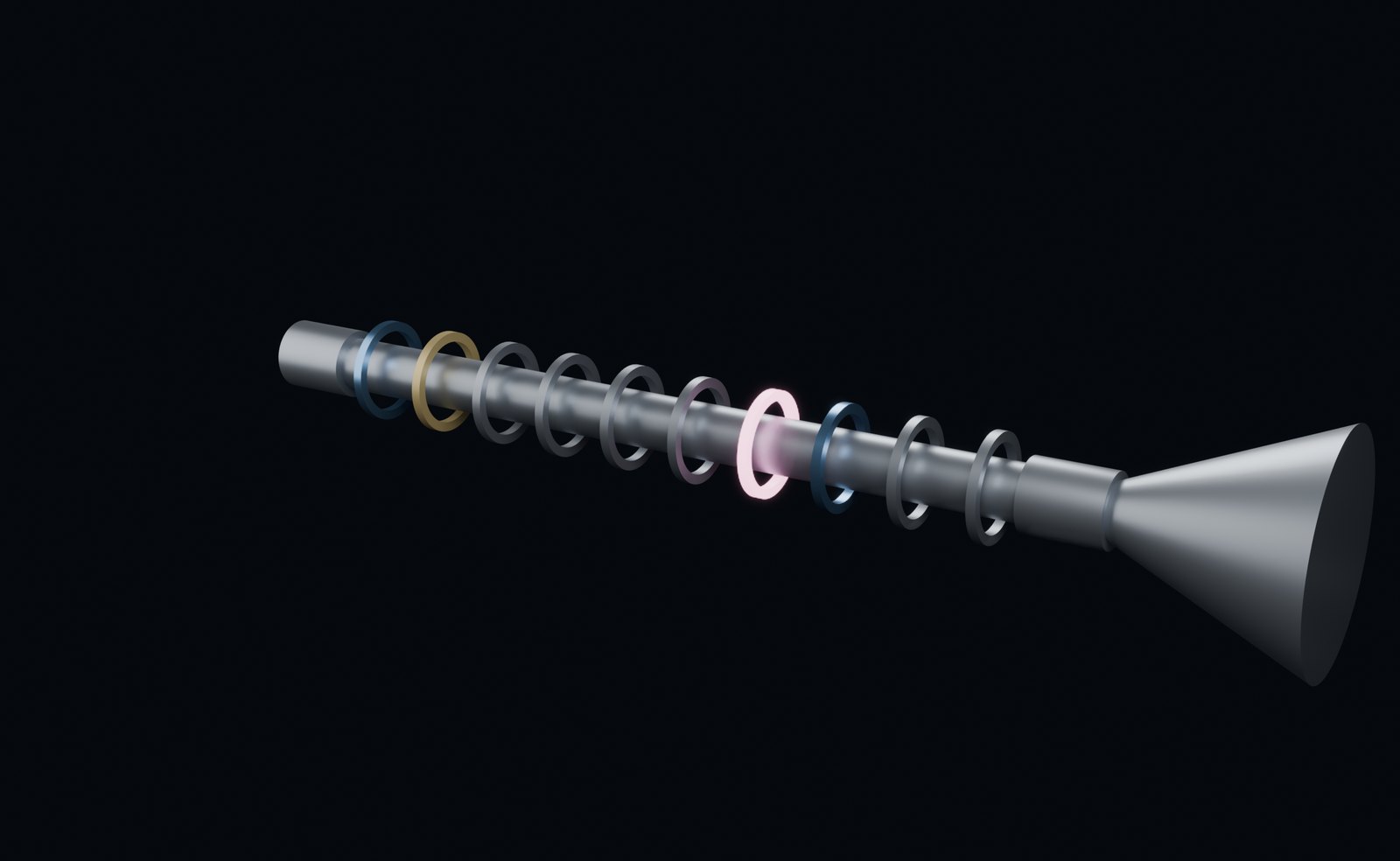
The end plugs demand a 26.49 T magnetic field — far above operating fusion magnets — to hold the confining potential and density.
The strongest field in the machine
The burner's end plugs are specified at 26.49 T. This field sets the mirror ratio at the plug and the density the plug plasma can hold, which in turn set the confining potential. It is the single most demanding magnetic parameter in the design — higher than any large-scale fusion magnet in operation, and well into the regime where conductor stress dominates the engineering.
At 26.49 T the magnetic pressure on the coil (which scales as B2) is enormous. This is the direct cause of the coil-stress gate: at the design bore, the plug coil is overstressed by roughly 3 to 3.9 times what the conductor and structure can bear as specified, making it infeasible in its current form.
Honest framing
The field value is not negotiable to the physics: the confining potential the plug must build requires it. The engineering to reach 26.49 T at the required bore does not close today. The burner is an engineering program precisely because this gate, among others, remains open.
For scale, 26.49 T is well above the fields at which today's large superconducting fusion magnets operate, and the step is not incremental — magnetic pressure grows as the square of the field, so the mechanical problem grows faster than the field itself. The number is quoted exactly because it is the pivot on which the coil-stress gate turns.
- Plug field specified at 26.49 T
- Sets mirror ratio, density, confining potential
- B2 pressure drives the coil-stress gate
- Overstressed ~3–3.9× at the design bore