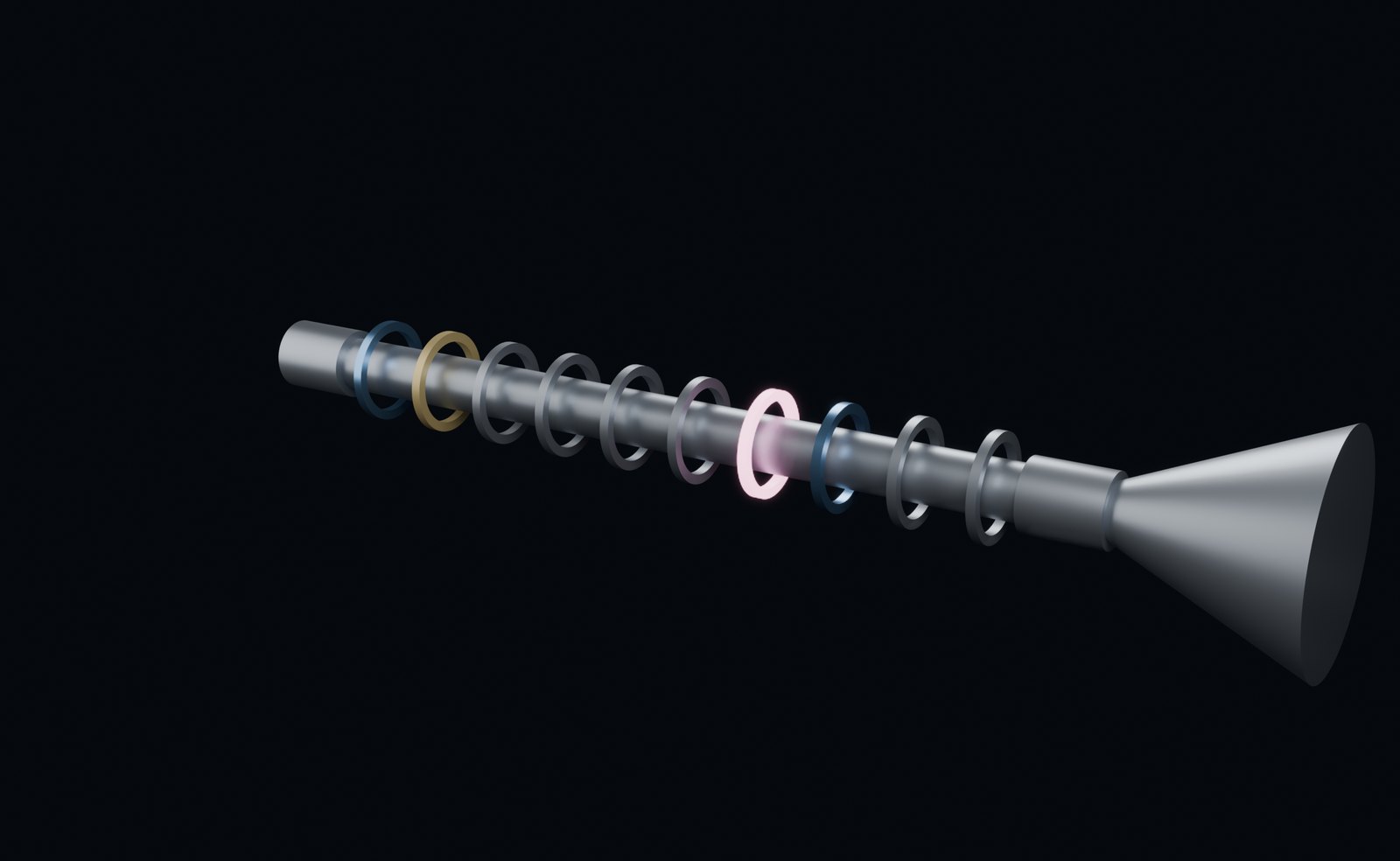
Neutron Activation & Shielding
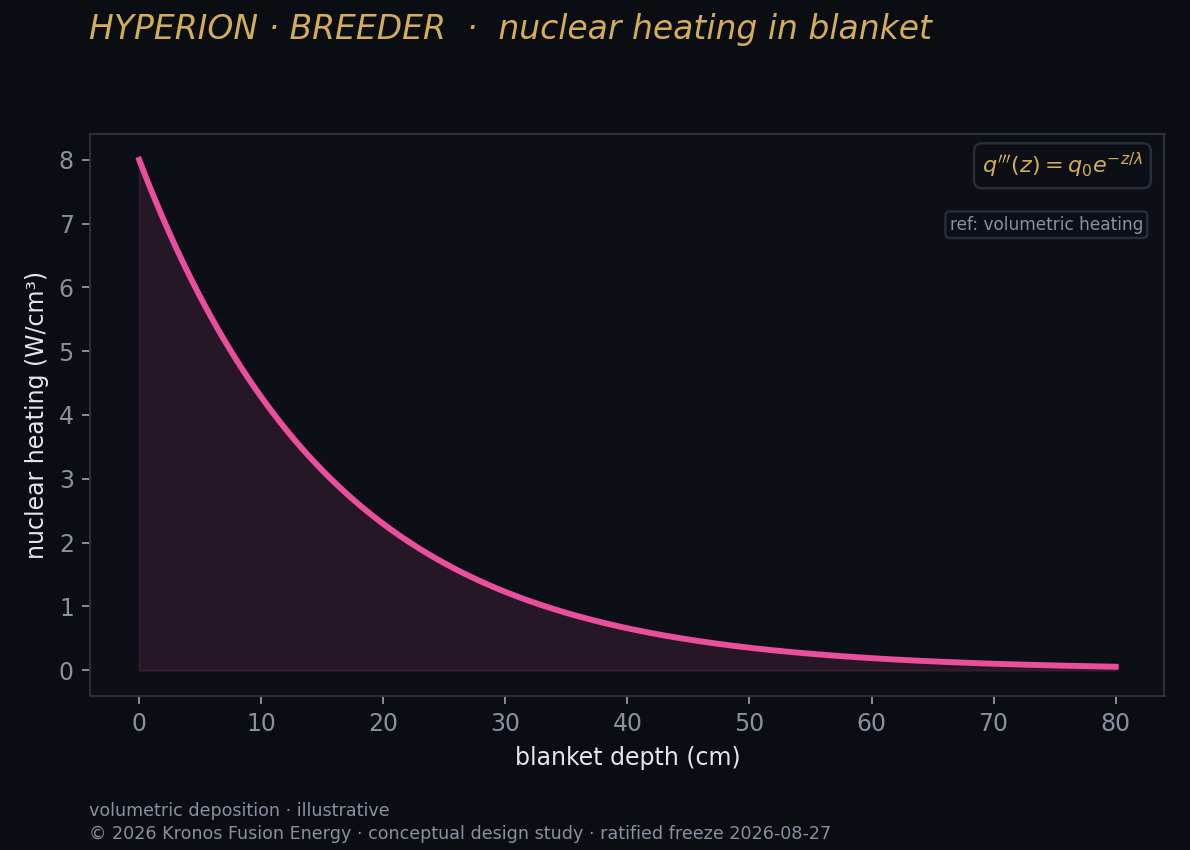
Even at 5.44%, the neutron flux activates nearby structures and demands shielding; low-neutron does not mean no shielding.
The consequence of not being aneutronic
The 5.44% neutron fraction is small compared with D–T's ~80%, but it is not zero. The 2.45 MeV and 14.1 MeV neutrons from the D–D side reactions penetrate matter, deposit energy as heat, and transmute nuclei in the first wall, plug region, and nearby components — leaving them radioactive. The burner therefore needs neutron shielding and manages activated material over its life.
The advantage over D–T is one of degree, and it is large: an order-of-magnitude lower neutron power means thinner shields, less activation, and lower heat-removal load on the blanket-equivalent structures. But the design still accounts for radiation damage to materials, activation of coolant and components, and the eventual handling of activated parts.
Honest labelling
Describing the burner as "clean" or "radiation-free" would be false. It is low-neutron: meaningfully less activating than D–T, and still a nuclear machine requiring shielding, monitoring, and disciplined material management.
The activation also has a time dimension: some induced isotopes decay quickly and some slowly, so the handling and monitoring of activated material is a lifecycle concern, not a single design load. A tenfold-lower neutron source than D–T makes that lifecycle far more manageable, but it does not remove the need for shielding, monitoring, and disciplined material accounting.
- 5.44% neutrons still activate structures
- Requires shielding and activation management
- ~10× lower neutron load than D–T
- Low-neutron, not clean or aneutronic