D–T Versus D–Helium-3 Physics
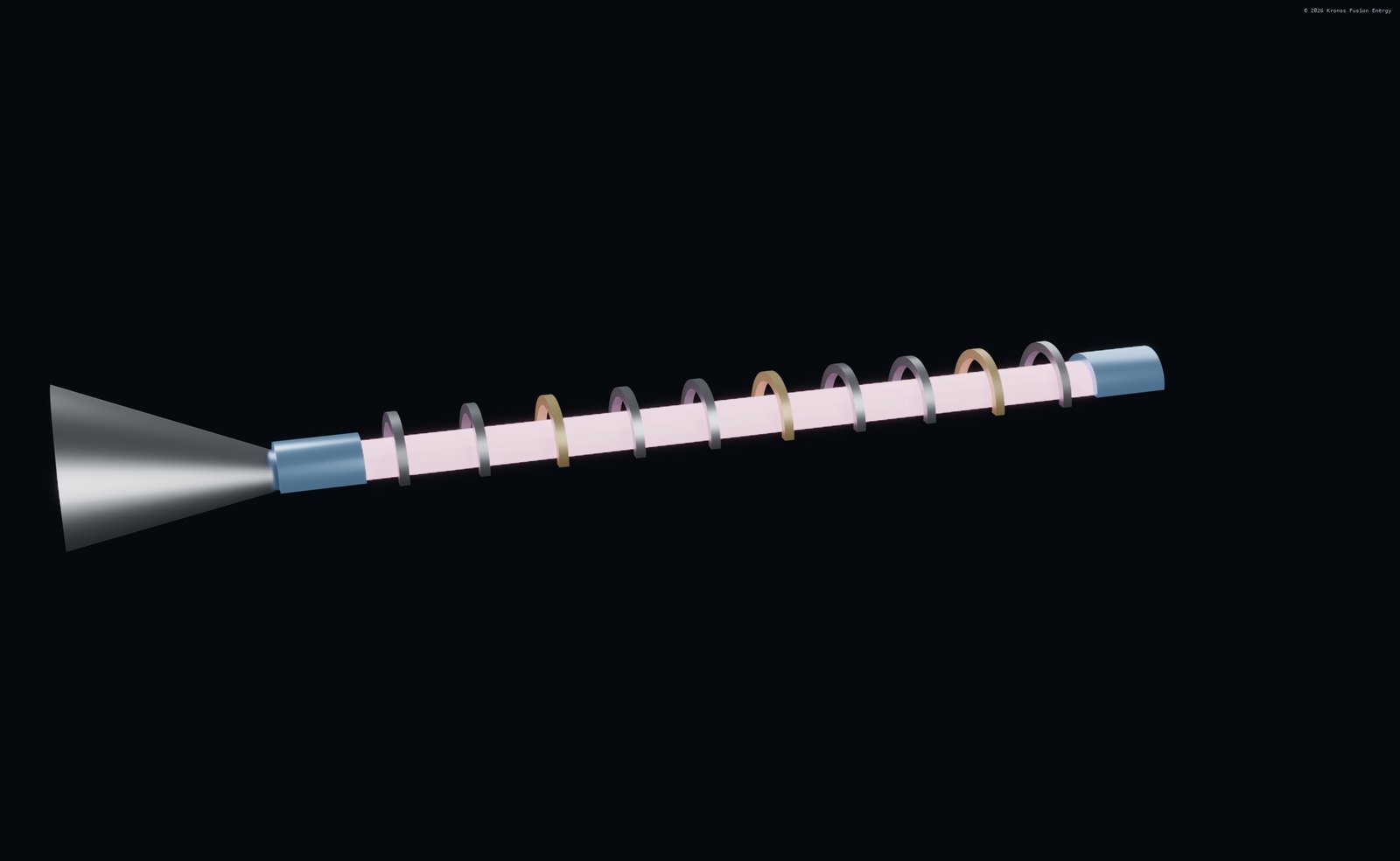
Side by side: the two fuels differ in ignition difficulty, neutron output, and conversion path, and each drives a different machine.
Two fuels, two machines
The breeder (Hyperion) runs D–T; the burner (Aegis) runs D–3He. The choice of fuel cascades into almost every design decision. The table below sets the physics side by side.
| Property | D–T (breeder) | D–<sup>3</sup>He (burner) |
|---|---|---|
| Charge product Z<sub>1</sub>Z<sub>2</sub> | 1×1 | 1×2 |
| Ignition temperature | ~10–20 keV | ~90 keV operating |
| Neutron energy fraction | ~80% | ~5.44% |
| Main energy carrier | 14.1 MeV neutron | charged p + α |
| Natural conversion | thermal blanket | direct conversion |
| Fuel availability | D + bred T | D + scarce He-3 |
D–T is easier to ignite and has a larger cross-section, which is why the breeder can be the near-term machine that actually makes fuel and products. D–3He is harder in every confinement metric but offers a mostly charged output and far lower activation — the reason it is chosen for a resilient, direct-conversion generator.
Why the program uses both
The two are complementary. The breeder's D–T reaction breeds the tritium that decays into the helium-3 the burner needs. The burner's D–3He reaction delivers low-neutron, directly converted power. Neither fuel alone gives both fuel production and clean-ish direct-conversion power; together they close a loop.
The right reading of the table is that difficulty and payoff move together: D–3He asks more of confinement and fuel supply and returns a charged, directly convertible, low-activation output. Choosing it for the burner is a deliberate acceptance of the harder physics in exchange for the properties a resilient fixed-installation generator most needs.
- D–T: easy ignition, ~80% neutrons, thermal
- D–3He: ~90 keV, ~5.44% neutrons, direct
- Breeder makes the fuel the burner needs
- Complementary, not competing