Maxwellian Versus Beam-Driven Ions
A thermal plasma fuses from the tail of its distribution; injected fast ions can add reactions but must be sustained against slowing-down.
Two ways to reach fusion energy
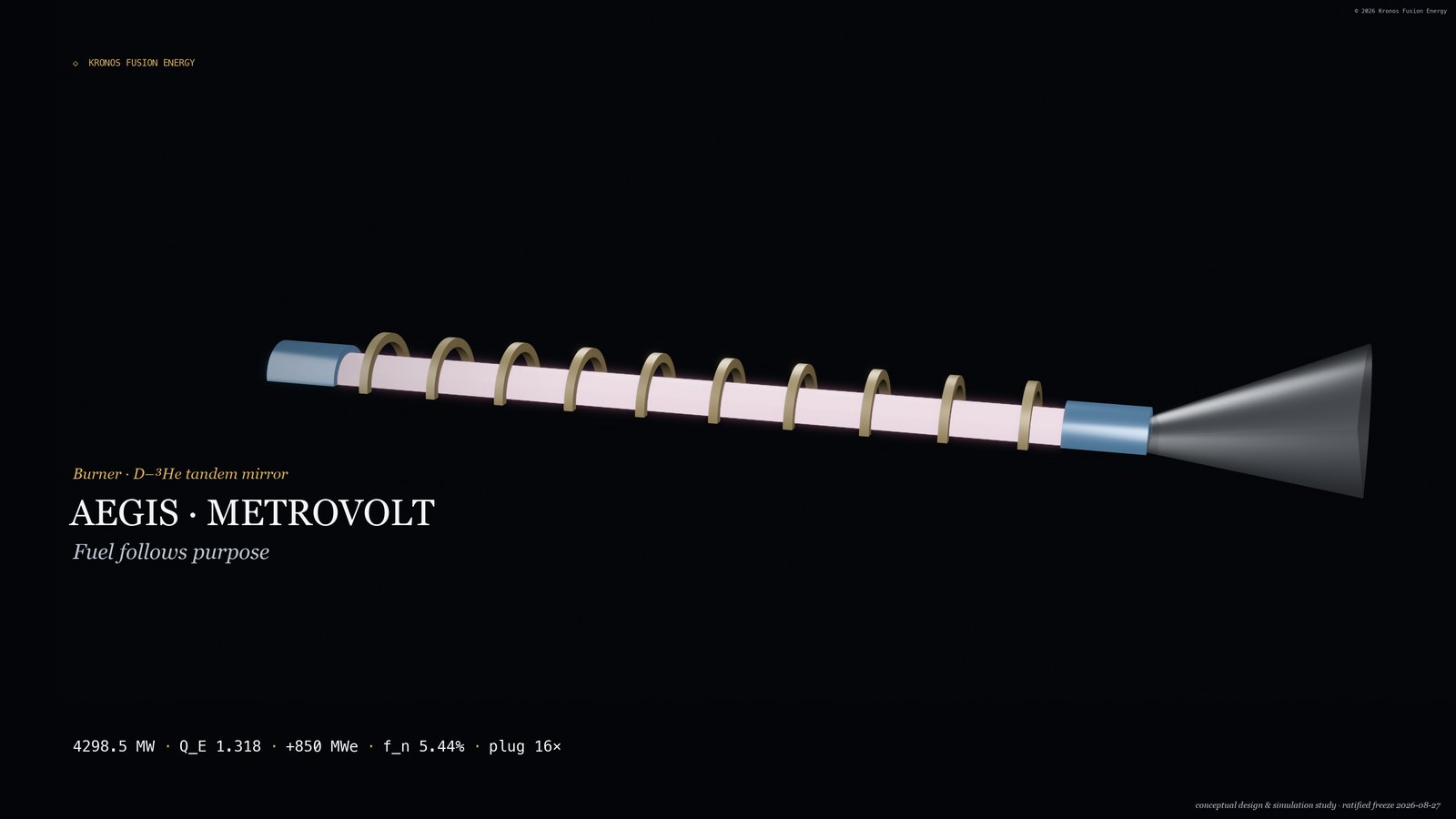
In a thermal (Maxwellian) plasma at ~90 keV, most ions are slower than the optimum fusion energy and the reactions come from the fast tail. An alternative is to inject energetic ions as a beam, placing population exactly where the cross-section is high. Real mirror designs use both: bulk thermal ions plus neutral-beam-injected fast ions.
Beam-driven and "sloshing" ions are central to tandem-mirror plugging: fast ions injected at an angle collect near the mirror throats, peaking the density there and building the electrostatic potential that confines the central-cell ions. But injected ions slow down by collisions and must be continuously replaced, which draws input power.
The efficiency question
Beam sustainment always carries an efficiency penalty; too much reliance on beam-driven reactions erodes net gain. The design target is a largely thermal central cell with beams used where they do the most good — building the plug potential — rather than as the primary fusion driver.
There is also a bookkeeping subtlety: reactions between beam ions and thermal ions can dominate the fusion rate in some regimes, so the effective reactivity is not simply the thermal ⟨σv⟩. The burner design leans on beams to build the plug rather than to drive the bulk of the fusion, keeping the recirculating power within what the engineering gain can absorb.
- Thermal plasma fuses from its high-energy tail
- Beam/sloshing ions place population at high ⟨σv⟩
- Sloshing ions build the plug potential
- Beams slow down; sustaining them draws power