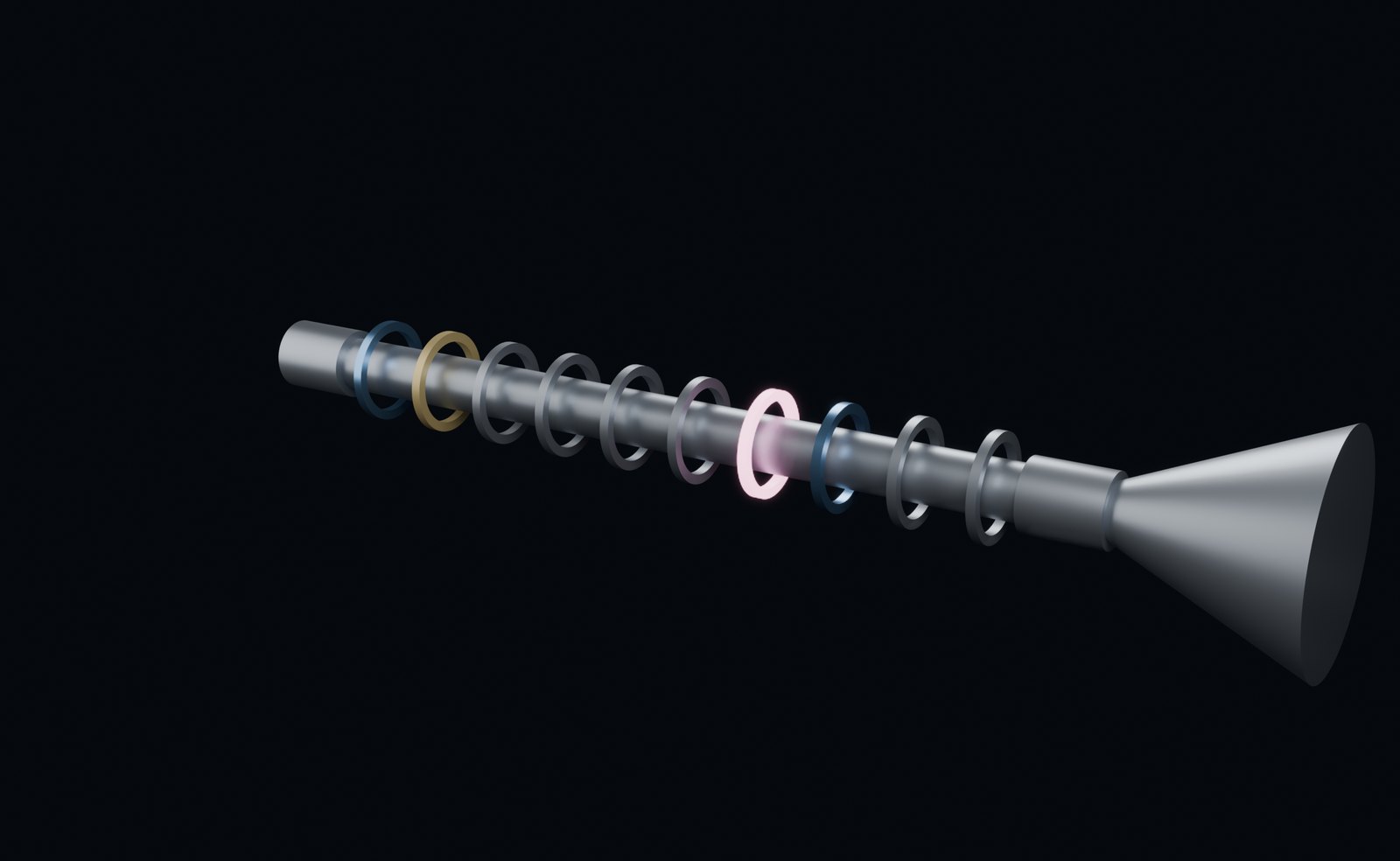
The Central Cell
The long, moderate-field central cell is where D–He-3 actually burns; its length and density carry most of the fusion power.
Where the power is made
The central cell is the long, relatively low-field section between the two ends. It holds the bulk of the fuel and is where nearly all the D–3He fusion occurs. Its field is modest compared with the plugs — the burner's design puts about 8 T on axis in the equivalent breeder core, and the central cell of the mirror runs well below the 17 T throat and 26.49 T plug.
Fusion power from the central cell scales with its volume, the fuel density squared, and the reactivity at ~90 keV. A longer central cell makes more power for the same field, which is why mirror reactors tend to be long and thin rather than compact. The confinement of this fuel depends entirely on the plugs at the ends holding the ambipolar potential.
Coupled to the ends
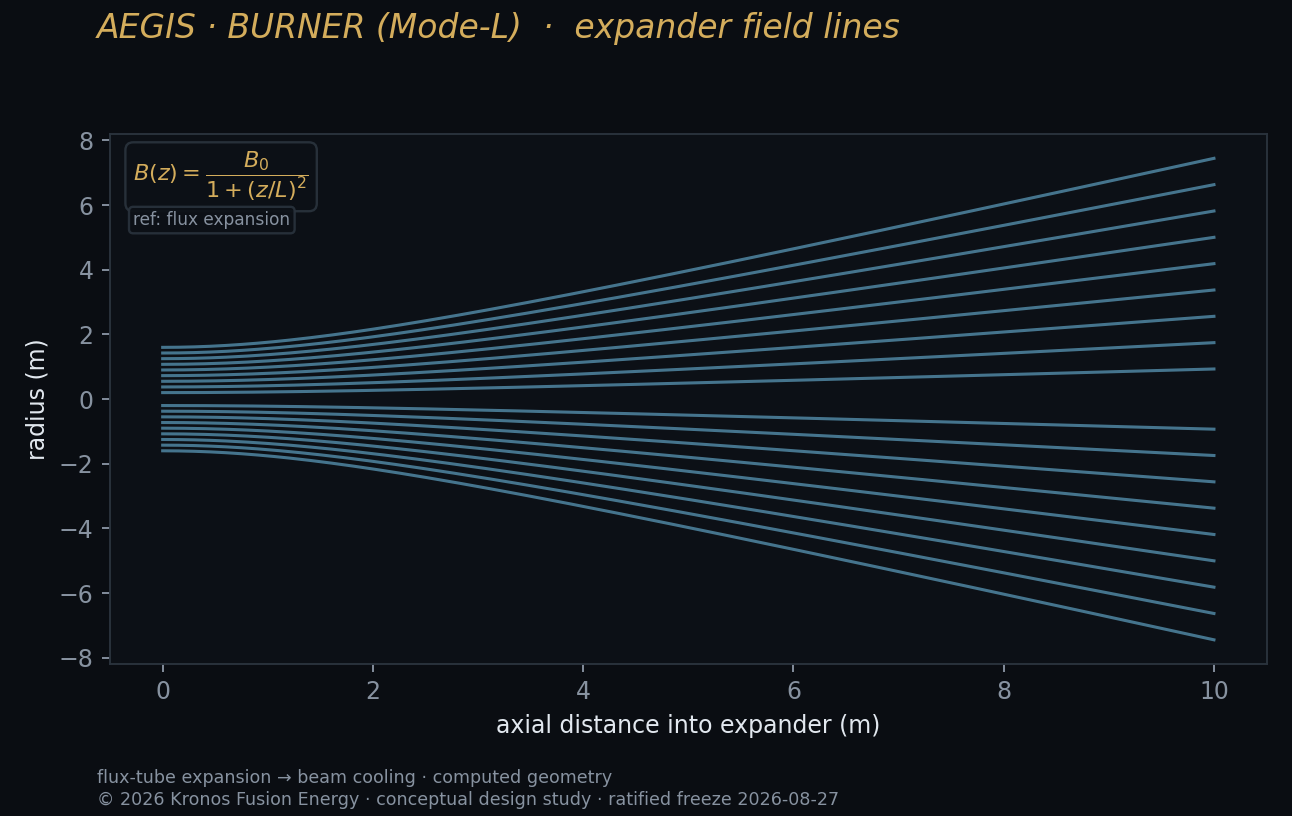
The central cell cannot be analysed alone. Its ion confinement time is set by the end-plug potential; its density and temperature feed back into the potential the plugs can sustain; and its exhaust flows to the expanders and direct converters. It is the productive core, but the plugs are what make that core hold together.
Because the central cell is where the neutrons are also made, its density and temperature set both the useful fusion power and the 5.44% neutron fraction at once — the two cannot be tuned independently. Designing the cell is therefore a joint optimisation of power output, neutron load, and the confinement the plugs can provide, not a search for a single peak.
- Long, moderate-field burn region
- Holds most fuel and makes most fusion power
- Power ∝ length × n2 × ⟨σv⟩
- Confinement set by the end-plug potential