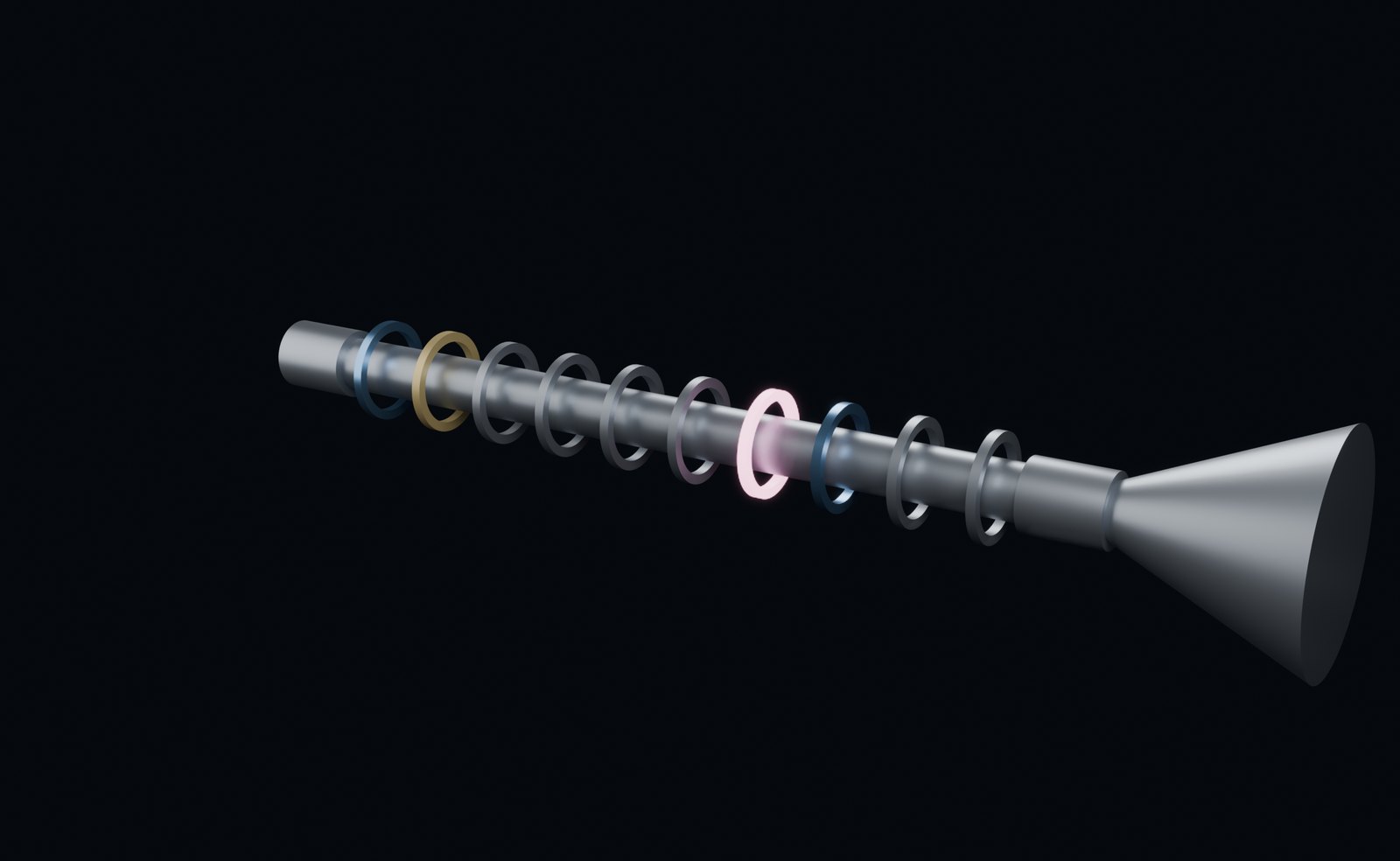
Plasma Initiation & Buildup
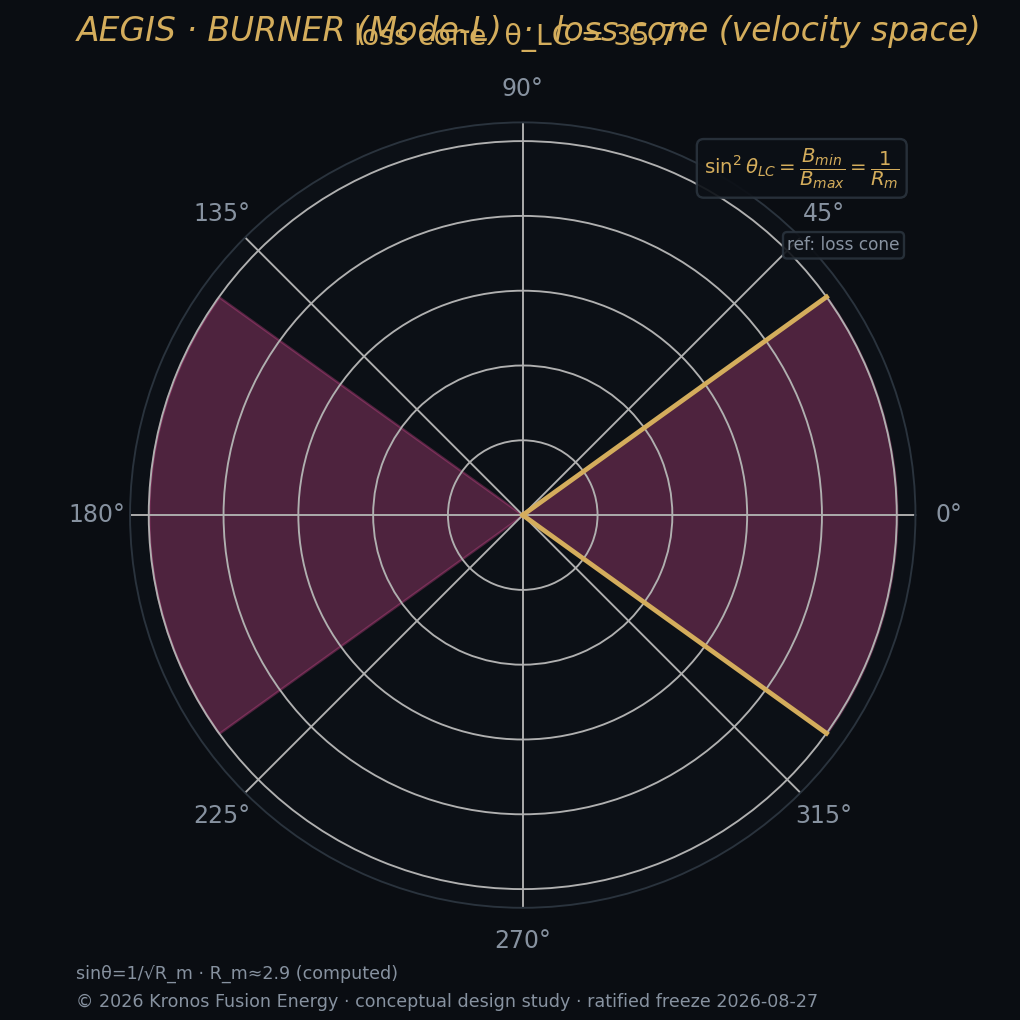
Starting the burner means creating a target plasma, forming the mirror-trapped populations, then building the plug potential up to confining strength.
From vacuum to a plugged burn
Startup is a sequence, not a switch. First a low-density target plasma is created in the central cell and end regions, typically by gas breakdown and electron-cyclotron heating. Then neutral beams build the sloshing-ion and hot-electron populations at the ends. Only once those populations exist does the confining ambipolar potential begin to form.
The order matters because confinement is bootstrapped: better confinement lets density and temperature rise, which raises the potential, which improves confinement further. This positive feedback is how the plasma climbs to its operating point — but it must be steered carefully, because the same feedback can stall if the plug populations are not built in the right sequence.
A demanding trajectory
Reaching the ~90 keV, high-potential operating point along a stable path, without triggering the loss-cone or MHD instabilities on the way, is itself an unproven part of the physics. Demonstrating a controlled startup to a plugged D–3He burn is among the goals of the test burner.
The bootstrap is also where several gates first bite: the startup must pass through lower-potential, lower-confinement states where microinstabilities and MHD modes are most dangerous, before reaching the operating point where confinement is strong. Demonstrating a repeatable, controlled path through that valley is as much a part of proving the burner as reaching the operating point itself.
- Target plasma from gas breakdown + ECH
- NBI builds sloshing ions and hot electrons
- Ambipolar potential forms and bootstraps τ
- Stable trajectory to 90 keV is unproven