Ignition Versus Driven Operation
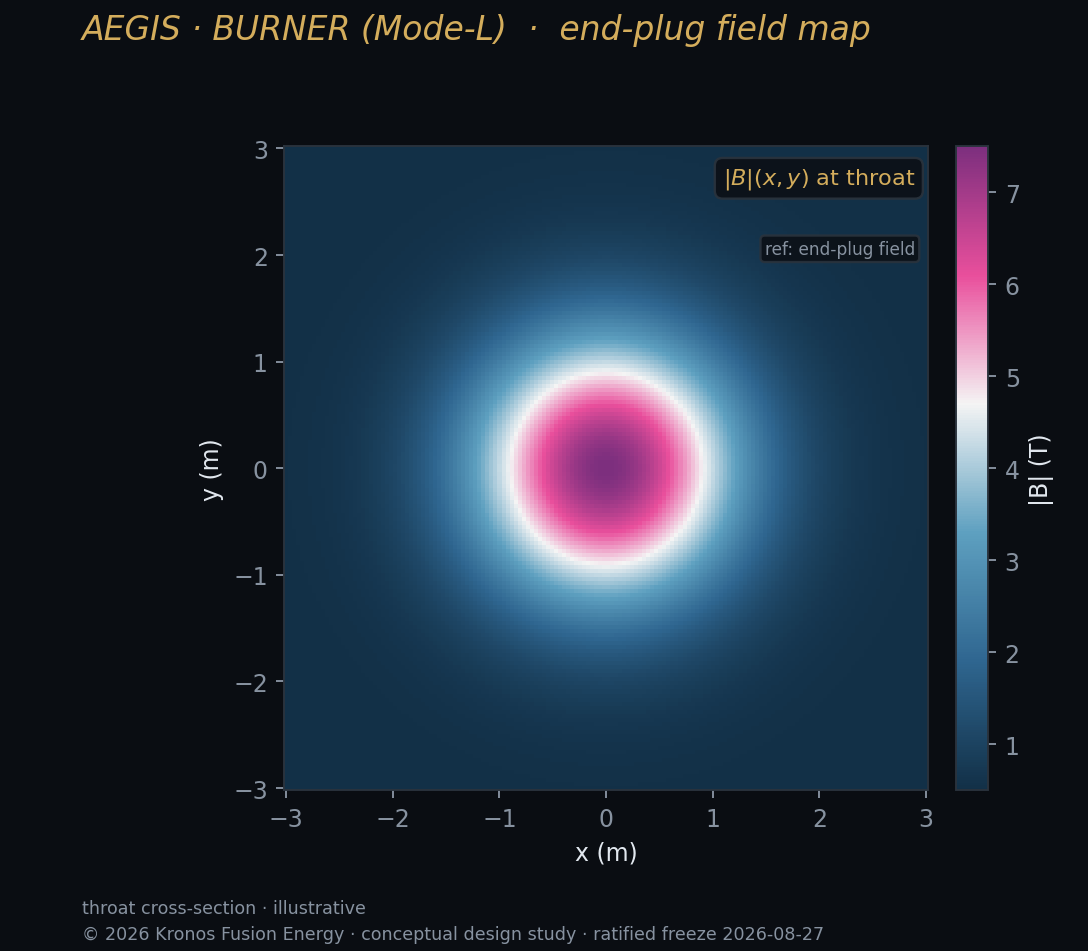
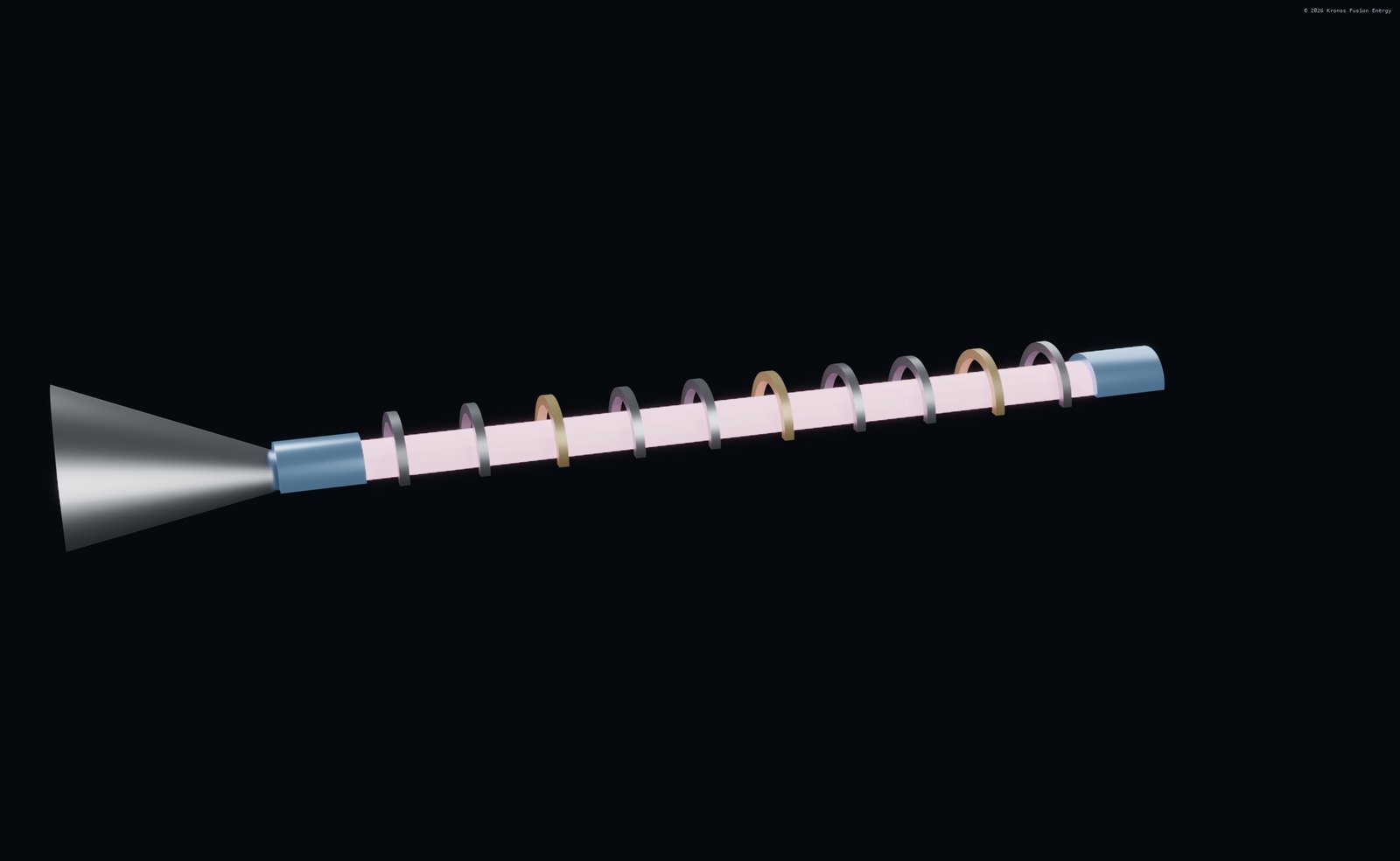
The burner is designed as a driven system: external power sustains the plugs and heating rather than relying on self-heating alone.
Self-heated or externally sustained
An ignited plasma sustains its temperature entirely from its own fusion products, needing no external heating once started. A driven plasma requires continuous input power — to heat, to fuel, and, in a mirror, to maintain the end plugs. The burner is designed as a driven system, not an ignited one.
In D–3He the charged fusion products (the 3.6 MeV alpha and 14.7 MeV proton) do deposit energy back into the plasma, providing partial self-heating. But because the triple product needed for full ignition is so high, the design does not assume ignition; it assumes a positive but finite energy gain with external drive.
A fraction of the generated electricity is recirculated to run the injectors and plugs. The net output is what remains. The engineering gain, QE, must stay comfortably above one after this recirculation — which is a stricter test than the scientific gain Qsci that only counts fusion versus heating power.
Why driven is honest
Claiming ignition for D–3He would overstate the physics. Treating the burner as driven — and holding it to an engineering-gain test that includes plug and injector power — is the honest framing, and it is why the plug efficiency and recirculating power matter so much.
Treating the machine as driven also shapes how it is controlled: the operating point is actively maintained by heating and plug power rather than sitting at a self-sustaining fixed point, which gives operators a throttle but demands continuous, reliable input. That control burden is one of the reasons availability — the fourth gate — is non-trivial for a driven mirror.
- Burner = driven, not ignited
- Charged products give partial self-heating
- Recirculated power runs plugs and injectors
- Engineering gain QE is the honest test