Open Gate: The Plug Coil Is Overstressed as Specified
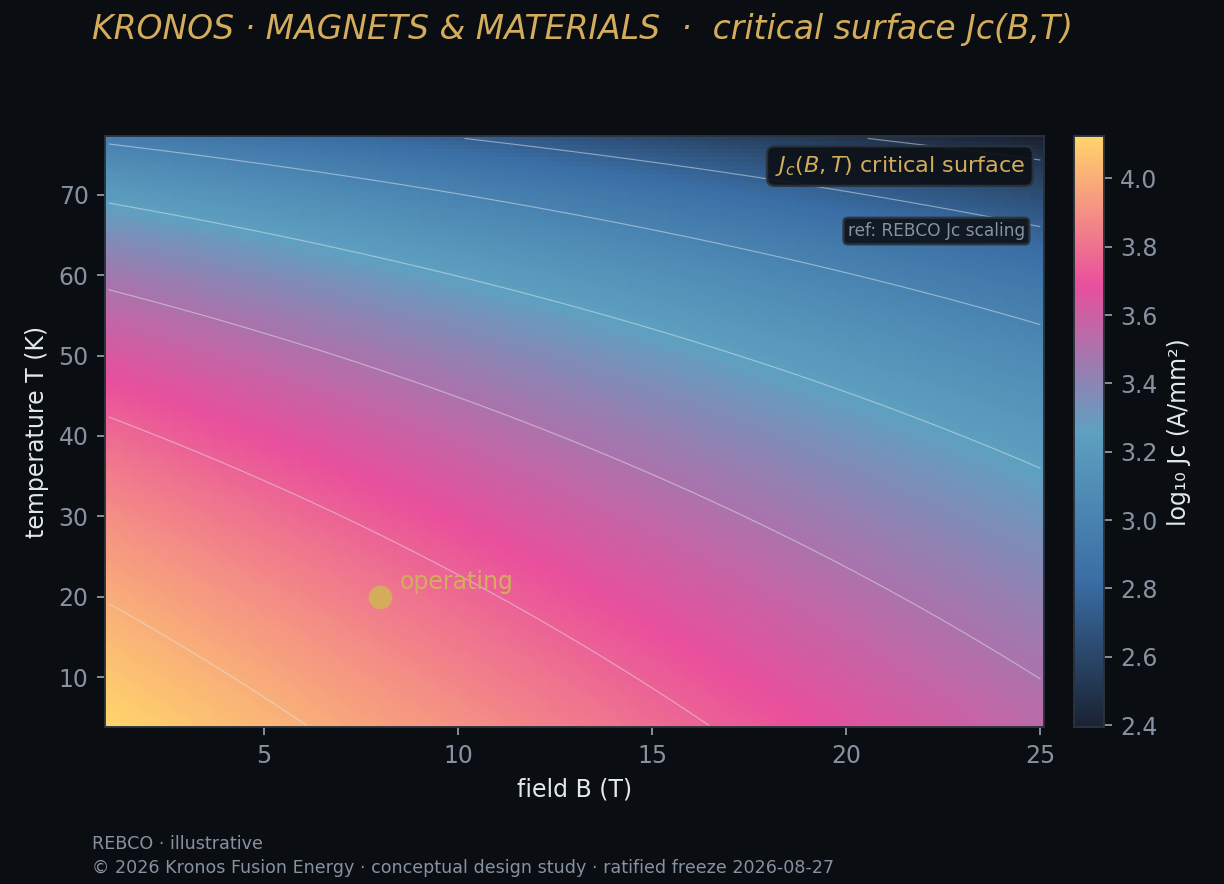
At the design bore, the burner's high-field plug magnet carries conductor and structural stress ~3–3.9× the allowable limit — as specified, it is not buildable.
What the simulation found
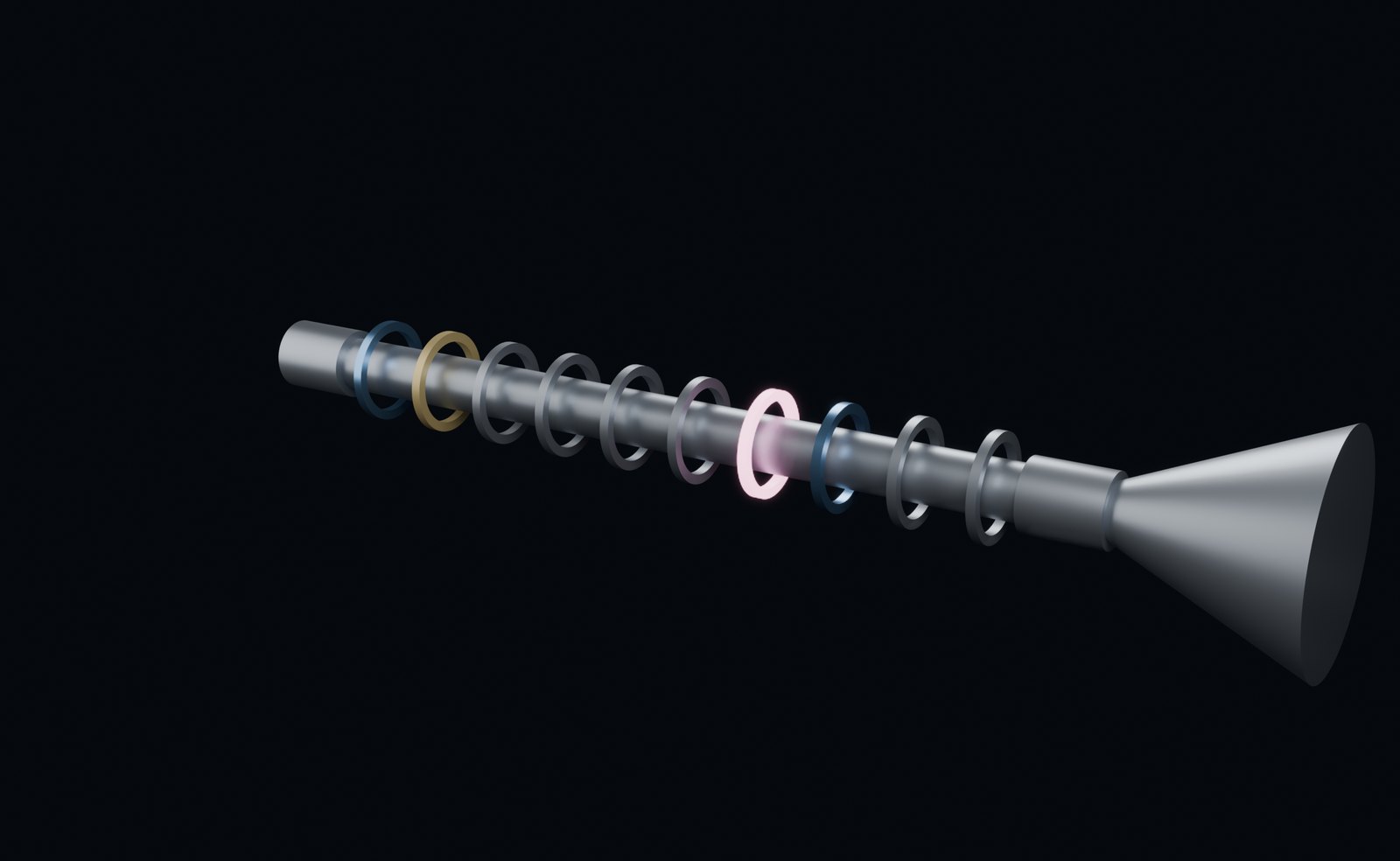
The burner (Aegis / MetroVolt) is a D–³He tandem mirror. End-plugging the central cell requires a high-field magnetic plug — 26.49 T at the plug, 17 T at the throat. Our design study finds that producing 26.49 T across the design bore drives the Lorentz (hoop) load in the plug coil's conductor and structure to ~3–3.9× the allowable stress of the best available REBCO-plus-steel magnet technology. As specified, the plug coil cannot be built.
| Quantity | As specified | Allowable |
|---|---|---|
| Peak conductor/structural stress | ≈3–3.9× | 1.0× |
| Plug field | 26.49 T | — |
| Throat field | 17 T | — |
Why we publish this
We found this on paper, in simulation — not on a construction site, and not after raising money to pour concrete. Surfacing the hardest structural gate before we build is the entire point of designing digitally first. A limit you can name is a limit you can engineer against.
The levers
- Reduce the plug bore (raises achievable field at fixed stress, but tightens every clearance downstream)
- Lower the field target (relaxes stress but weakens the electrostatic plugging — a coupled penalty, not a free move)
- Advance conductor and structural materials (higher-strength REBCO laminates, reinforced mandrels)
- Restructure the winding (graded, stress-managed, load-sharing coil architecture)
Honest status
This is a design and validation result. The burner is not built. No feasibility or net-power claim is made for the plug as currently specified; the number above is the gate we are engineering to close.
Sources. Kronos burner design study (DOI 10.5281/zenodo.21746479); these multipliers are our own simulation findings, stated against public benchmarks.