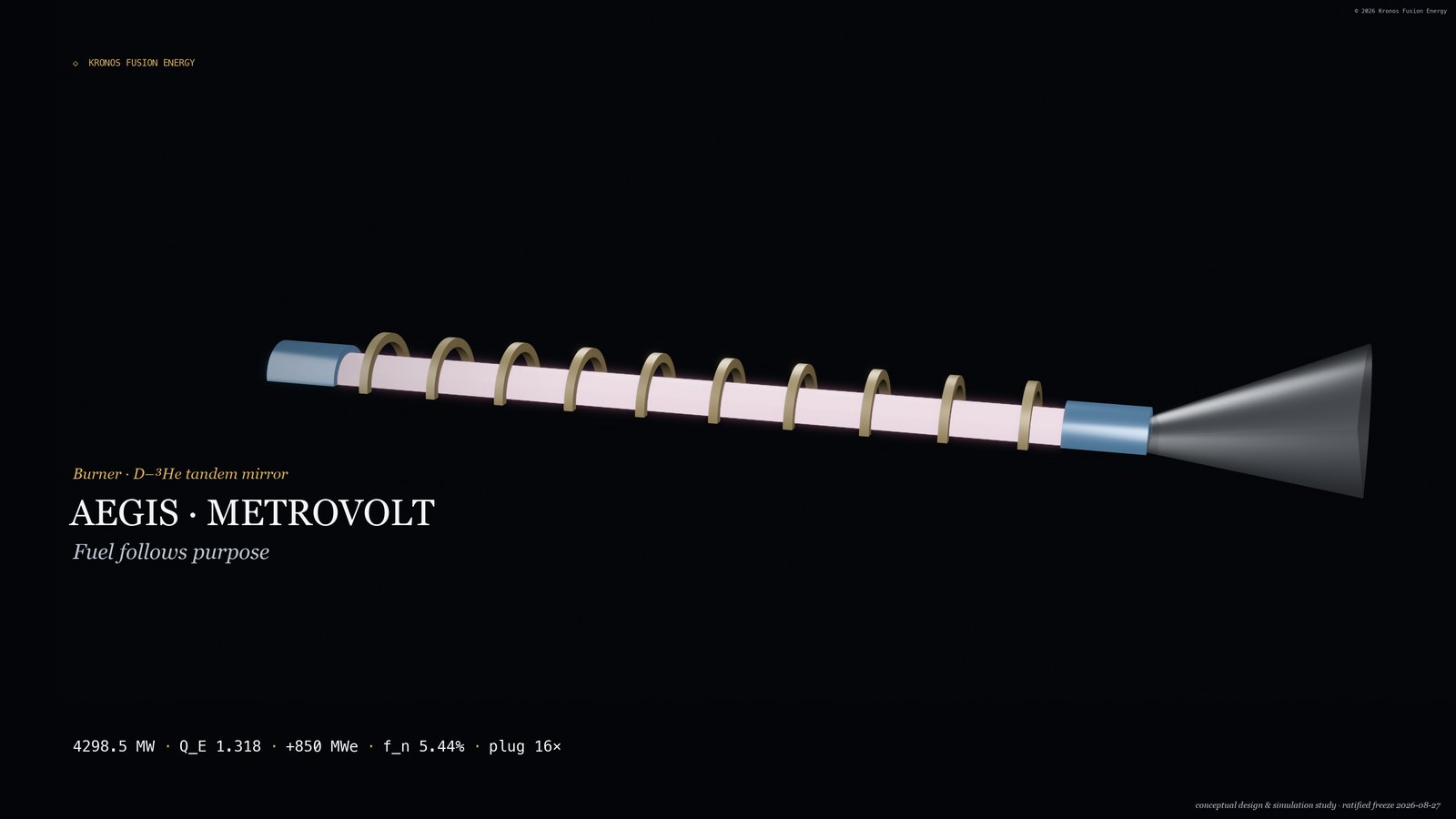
Electrostatic Plugging
The end plugs raise the electric potential above the central cell, forming a barrier that reflects escaping ions back into the burn.
Plugging with voltage, not just field
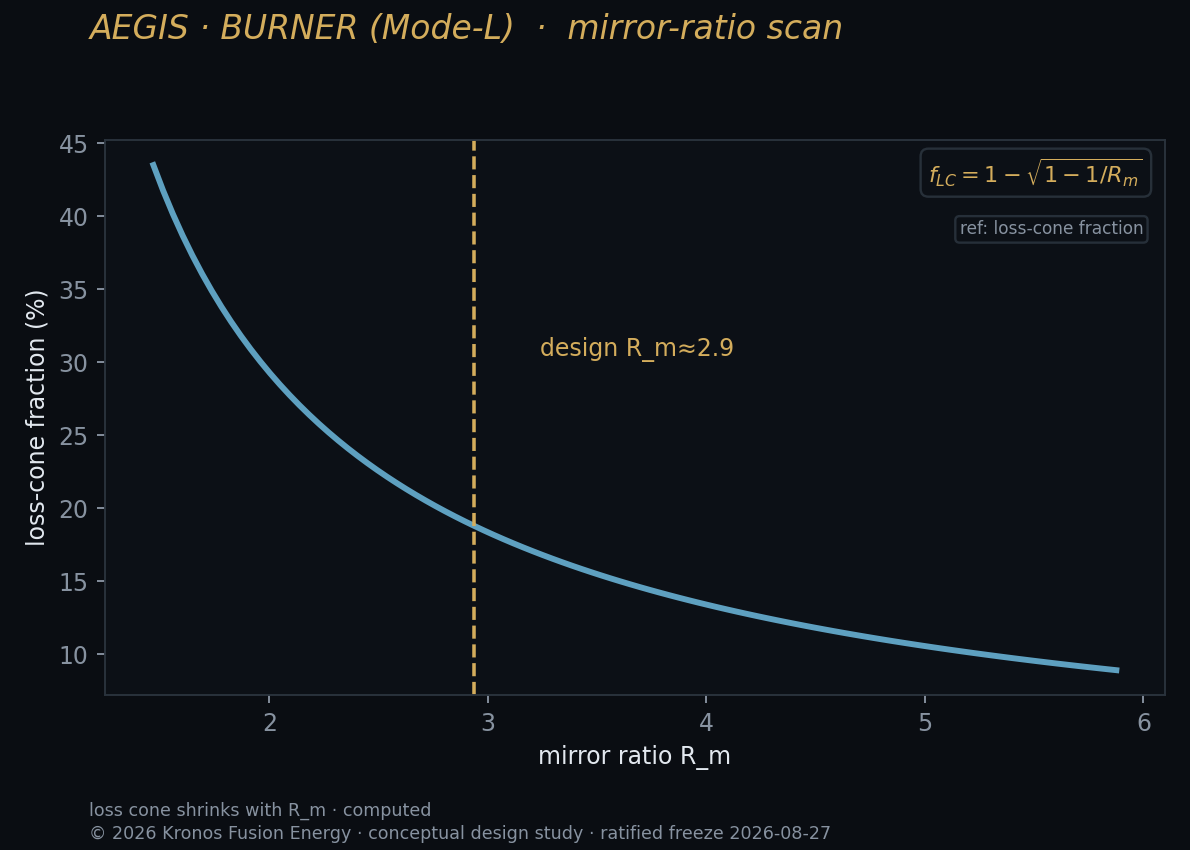
A conventional mirror confines with magnetic geometry alone and always leaks through the loss cone. Electrostatic plugging adds a second barrier: a region of raised electric potential at each end. A positive potential peak repels positive ions, closing much of the loss cone that the magnetic field alone leaves open.
The confining barrier for ions is the potential difference φp − φc. To keep it high, the plug plasma must be denser and hotter than the central cell, which is achieved with neutral-beam-injected sloshing ions and, in the thermal-barrier variant, by depressing the electron potential between cell and plug so the plug potential can rise further.
Where the difficulty concentrates
Everything hard about the tandem mirror sits in the plug: the highest field, the most radiation, the fast-ion population that must be sustained, and the stability that must be maintained. The two plug-related honest gates — coil overstress and an unprecedented operating regime — both live here.
The barrier only helps for ions with too little parallel energy to climb it, so plugging works best on the bulk thermal population and least on the fastest ions — which is acceptable, since it is the bulk that must be confined to make power. Matching the potential height to the ion temperature is therefore a design choice, and it ties the plug directly to the ~90 keV operating point.
- Positive potential peak repels central-cell ions
- Barrier height = φp − φc
- Requires dense, hot plug plasma
- Concentrates the burner's hardest physics