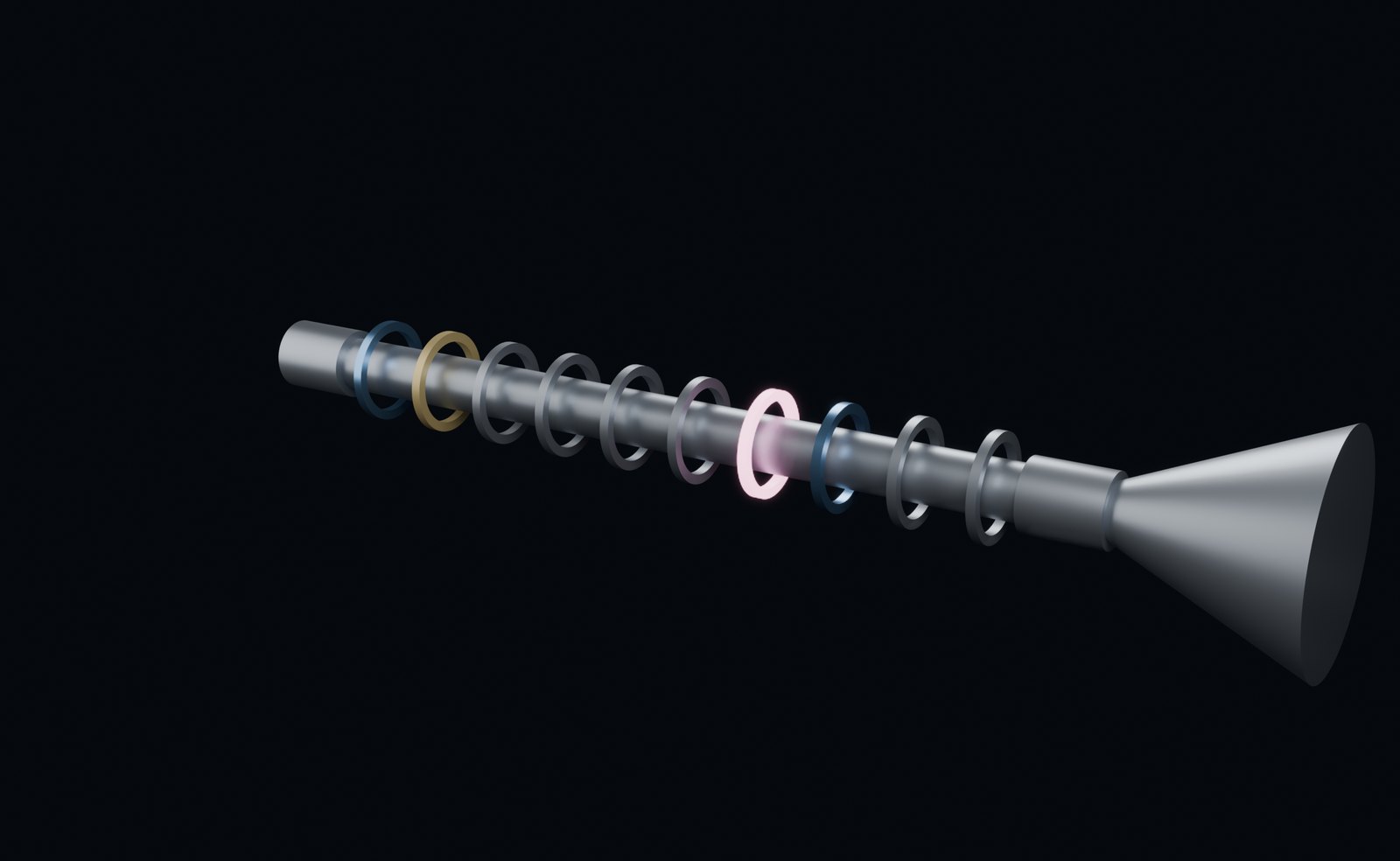
Beta Limits in the Mirror
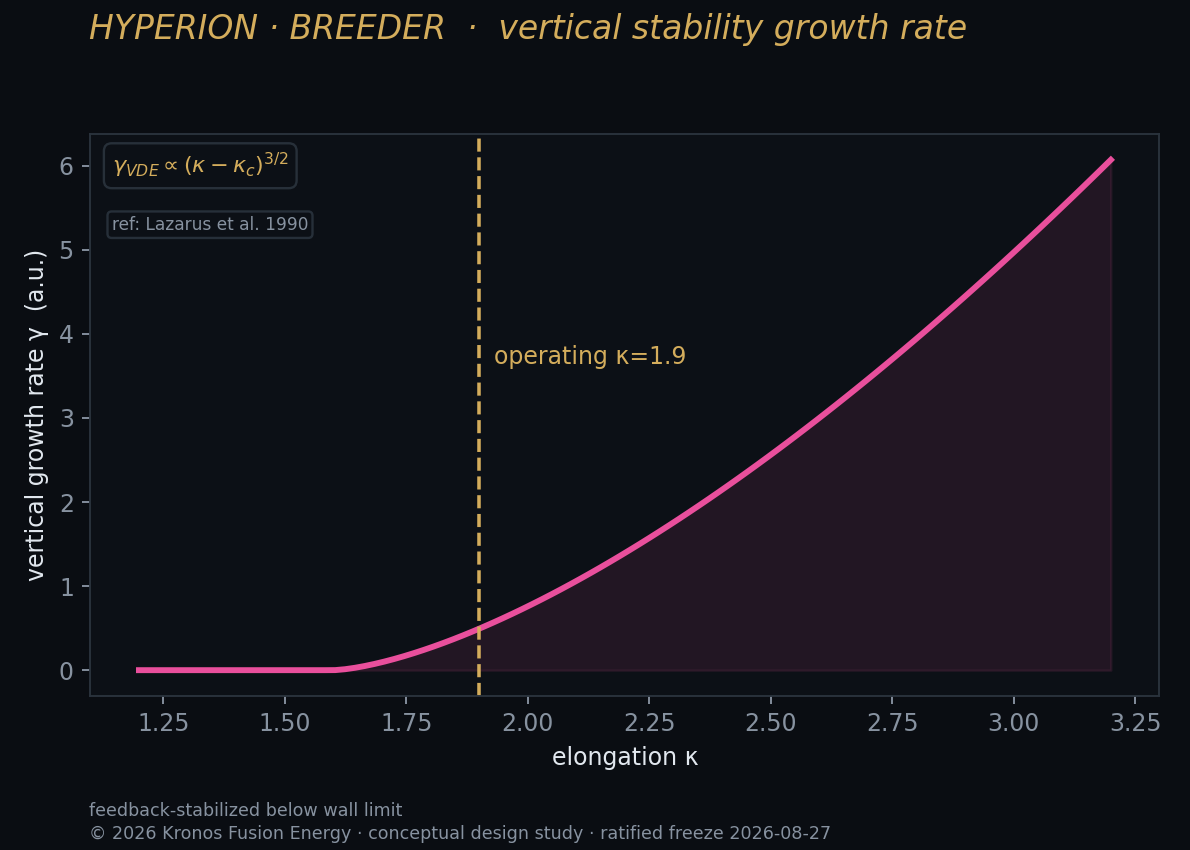
Beta is the ratio of plasma pressure to magnetic pressure; mirrors can run at relatively high beta, but stability caps how high.
Pressure against the field
Beta, β = plasma pressure / magnetic pressure, measures how much plasma a given field can hold. High beta is efficient — more fusion power per unit of expensive magnetic field. Mirrors are attractive partly because they can operate at higher beta than tokamaks, but there is still a ceiling set by stability.
As beta rises, pressure-driven instabilities — interchange and ballooning modes — become easier to excite, and at high enough beta the plasma pressure can locally cancel the mirror field (the "mirror instability"). The minimum-B well raises the beta limit by improving curvature, but it does not remove the ceiling.
Where it bites
The plug region operates at high field and high pressure to build the confining potential, so beta limits and the coil-stress gate interact: raising the field to buy stability margin worsens the coil stress, while raising beta to ease the coils worsens stability. This coupling is part of why the plug regime is unproven.
High beta is doubly attractive for D–3He because the fuel already demands so much field; every point of beta recovered is field the plug does not have to supply. But the same pressure that raises beta is what drives the instabilities the well must suppress, so the beta the machine can actually run at — not the beta it would like — is what the power balance must use.
- β = plasma pressure / magnetic pressure
- Mirrors tolerate higher β than tokamaks
- Interchange/ballooning/mirror modes cap β
- Beta and coil stress trade against each other