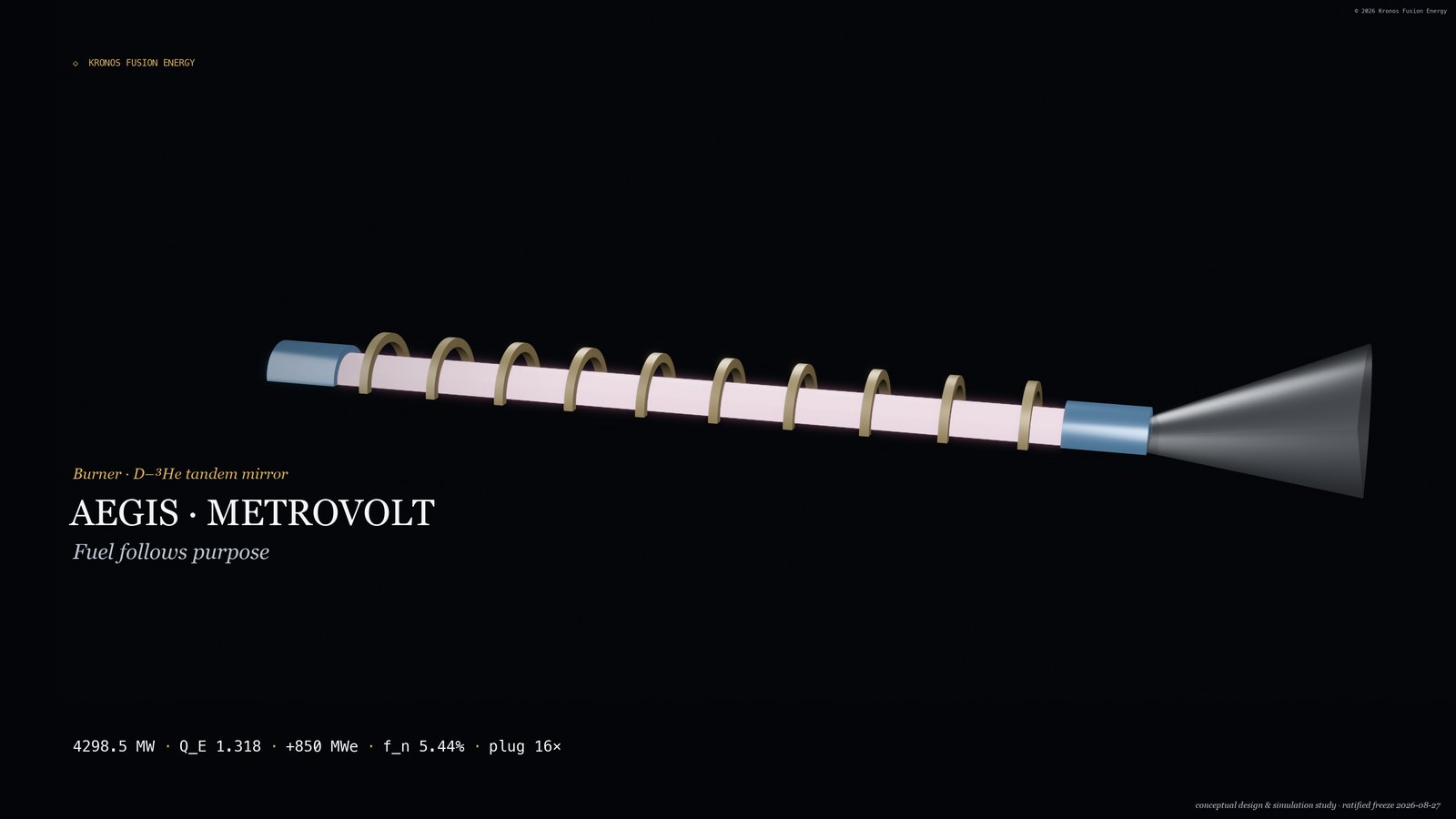
Plasma Initiation
Startup builds vacuum, cools the magnets, energizes the field, forms the plug plasmas and their potential, then brings the central cell to burn.
Bringing the burner from cold and empty to steady burn is an ordered sequence, and much of it is about the plugs. The confining potential must exist before the central cell can hold a burning plasma, so the plug plasmas are formed and their ambipolar potential established first. Only then is the central cell fueled and heated to burn conditions.
The sequence is: pump down to high vacuum, cool the superconducting magnets to operating temperature, ramp the plug, throat, and central-cell fields, initiate and build the plug plasmas, confirm the ambipolar potential, then fuel and heat the central cell up to the near-90 keV burn point. Each step is gated on the previous one being verified.
Startup steps
- Pump the vessel to high vacuum
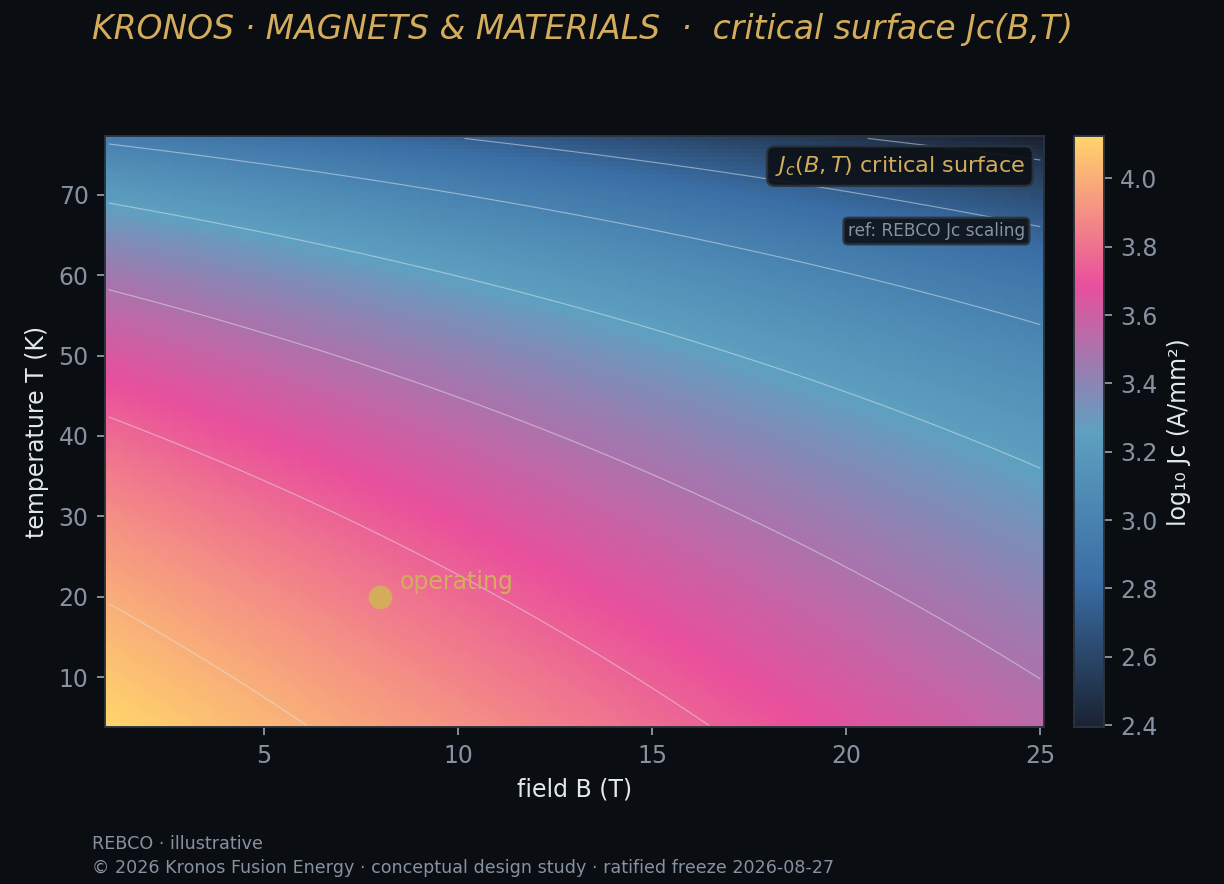
- Cool the superconducting magnets to operating temperature
- Ramp the plug (26.49 T), throat (17 T), and central-cell fields
- Form the plug plasmas and confirm the ambipolar potential
- Fuel and heat the central cell to the D–³He burn point
Why plug-first
The central cell cannot be held without the plug potential, so a burner startup that tried to build the central-cell plasma first would fail — the ions would stream out. Plug-first initiation is dictated by the tandem-mirror physics. It is also where the plug-regime gate is felt operationally: forming the plug plasma in an un-post-dicted regime is the least certain step of startup.
All figures are design and validation values for a machine not yet built.