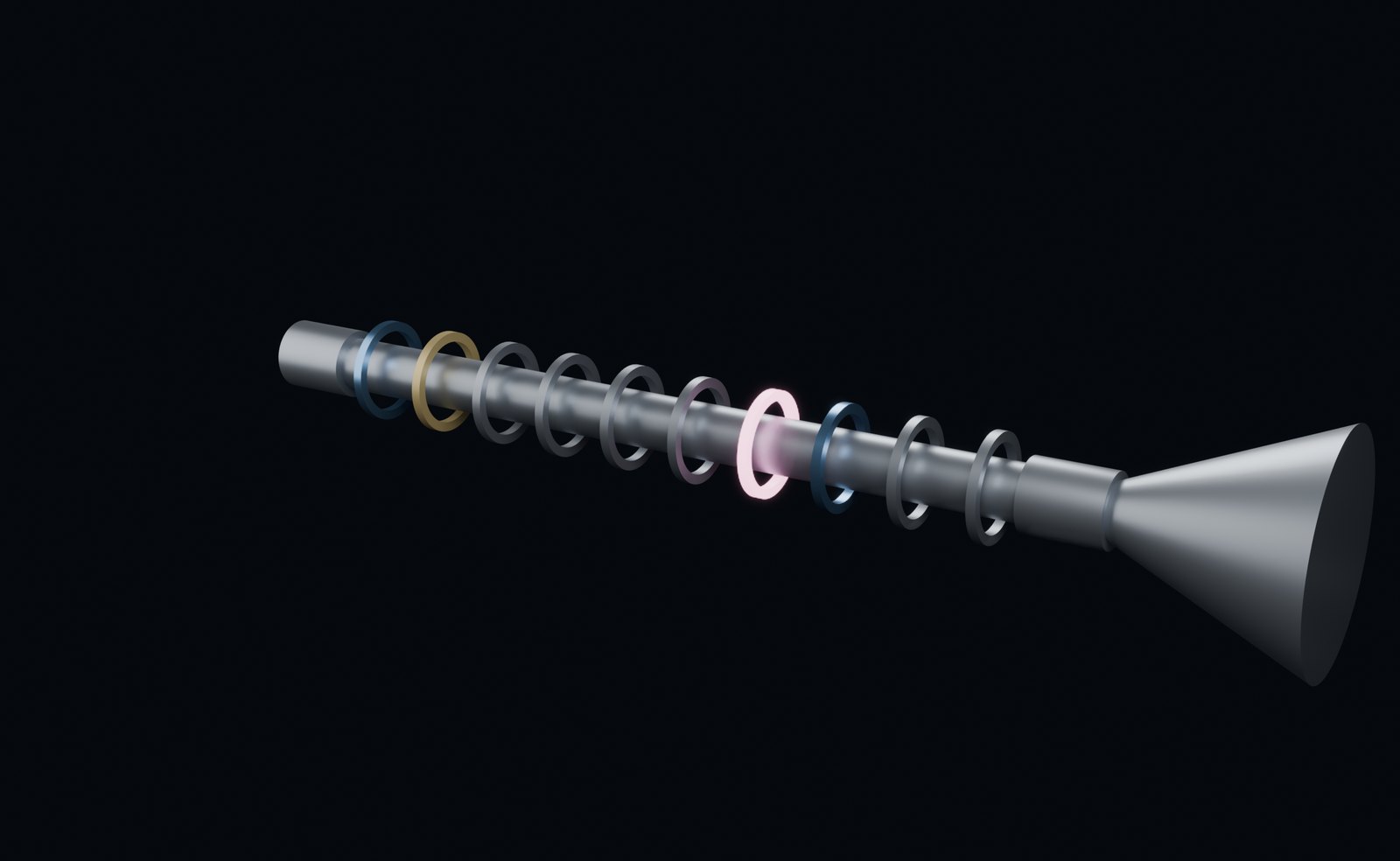
Magnet Structural Support
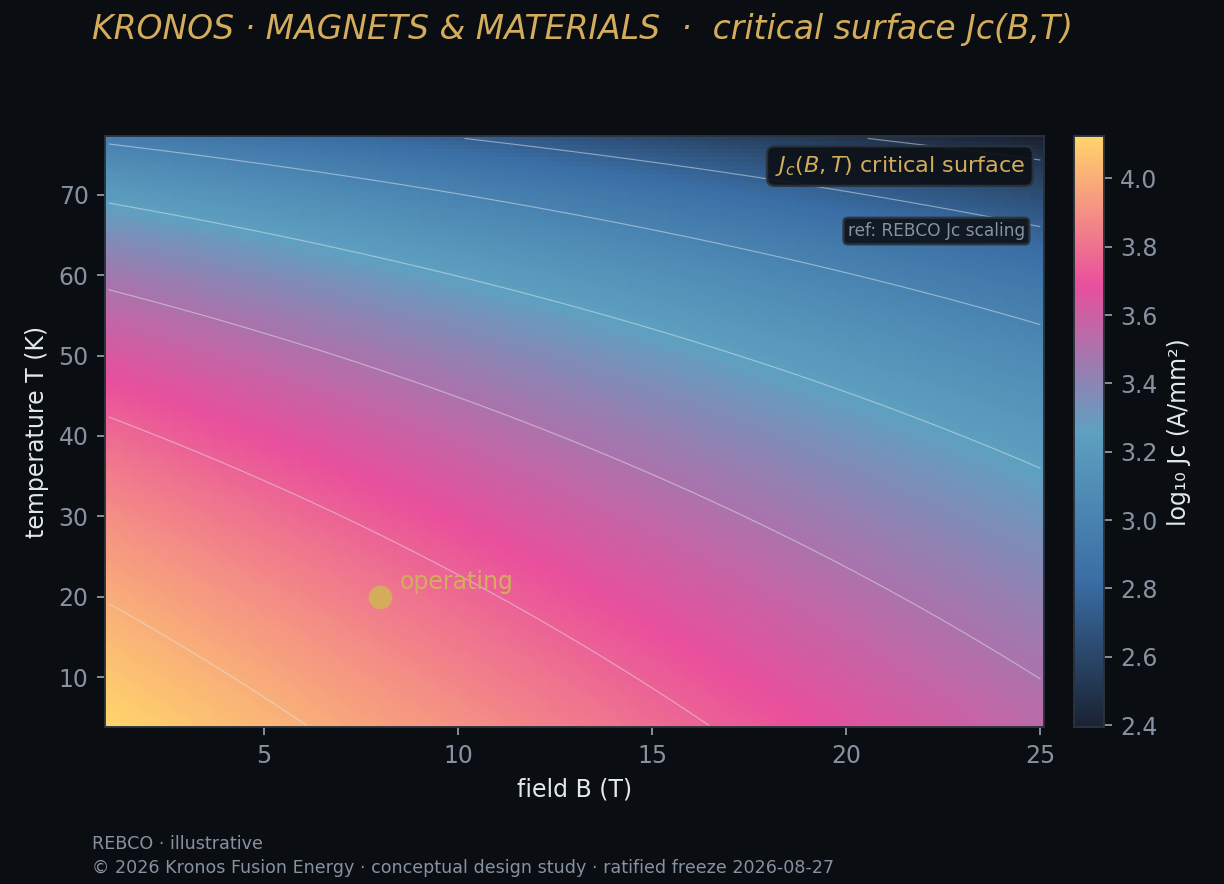
The structure that reacts magnetic forces on the coils is the burner's binding mechanical constraint, and at the plug it is overstressed as specified.
A magnet at high field pushes hard on itself and on its neighbors. Hoop forces try to expand each coil, and axial forces along the machine try to pull the coils together. The structural support system — the cases, spines, and ties that carry these loads — is what keeps the coils in place and the field geometry intact. At burner fields this structure, not the conductor, sets the feasibility limit.
The central-cell coils are relatively easy; the throat at 17 T is demanding; the plug at 26.49 T is the extreme. Because magnetic pressure scales with the square of the field, the plug load is more than double the throat load, and the specified support cannot carry it — the overstress is roughly 3–3.9x.
Load paths
- Hoop forces expanding each coil radially
- Axial forces pulling coils together along the machine
- Concentrated load at the 26.49 T plug
- Transfer of load into the machine's structural spine
- Coupling between magnet forces and field uniformity
The gate restated structurally
The plug-coil-stress gate is fundamentally a structural-support statement: the material and geometry specified to hold 26.49 T over the plug bore are overstressed by a multiple. Closing it means stronger structural materials, load-redistributing winding, a smaller bore, or a lower plug field — each of which changes the machine and must be re-analyzed. The candor here is deliberate: the binding constraint is named exactly.
All figures are design and validation values for a machine not yet built.