Neutron Shielding
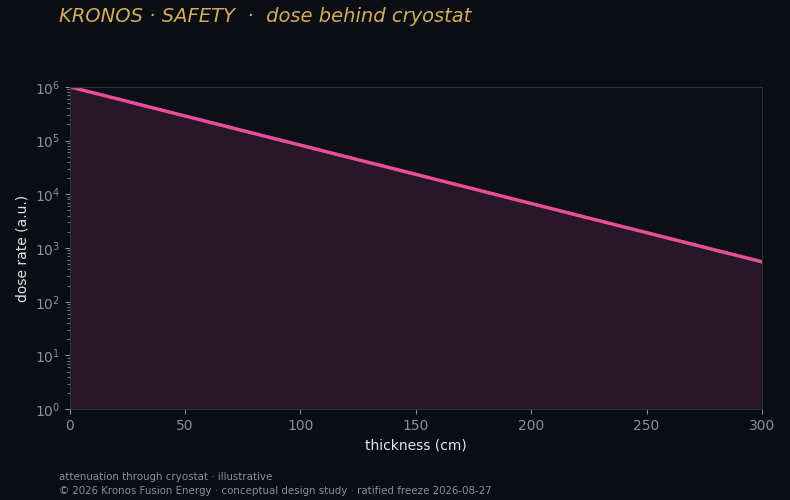
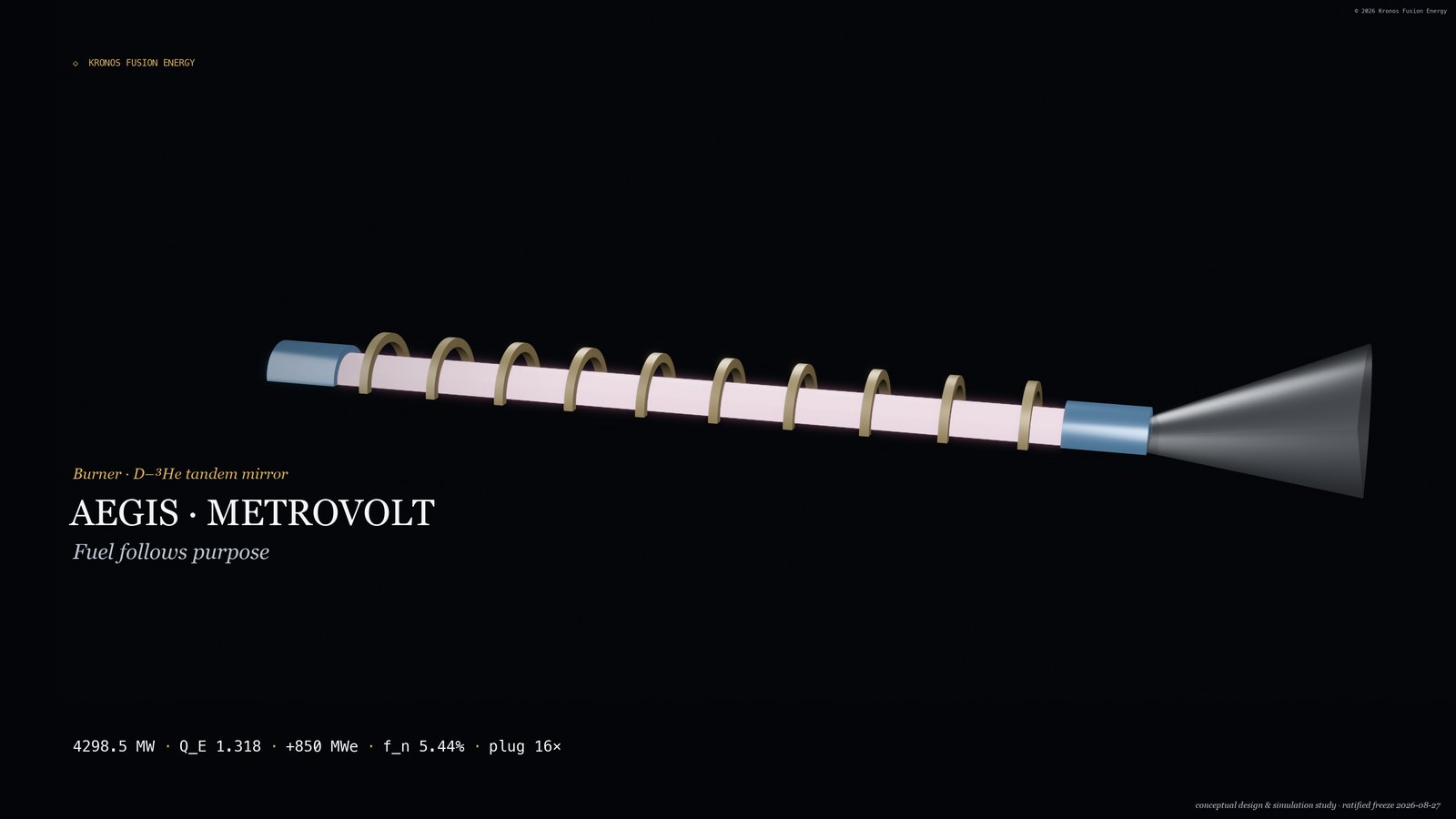
Shielding around the plasma absorbs the 5.44% neutron output, limits activation, and keeps radiation away from magnets, electronics, and staff.
Even at a 5.44% neutron fraction the burner needs neutron shielding. Neutrons penetrate deeply, activate structure, damage superconductor and insulation, and would deliver dose to anyone nearby. Shielding is the layered material — hydrogen-rich moderators and neutron absorbers plus gamma shielding — placed between the plasma and everything that must be protected.
The shielding protects three things in particular: the superconducting magnets, whose performance and insulation degrade under neutron flux; the electronics and diagnostics near the machine; and the occupied areas of the installation. Penetrations for beams, RF, pumping, and diagnostics are the weak points, so each is baffled to block direct neutron streaming paths.
What shielding must do
- Absorb the neutron flux from the 5.44% fraction
- Protect the superconducting magnets from damage and heating
- Limit activation of surrounding structure
- Block streaming through ports and penetrations
- Keep dose in occupied areas within limits
- Manage activation and heat within the shield itself
The shield also carries the neutron energy as heat, which the thermal system must remove, and it activates over time, which sets how it is handled at end of life. Because the neutron source is distributed along the central cell rather than a point, the shield runs the length of the burn volume and thickens where penetrations would otherwise let neutrons stream out.
Lighter than D–T, not absent
Because the neutron fraction is far below a D–T machine's, the shielding burden is correspondingly lighter — thinner shields, less activation, longer component life. But it is a real subsystem with real mass, and it is sequence-locked in installation because it is heavy and must be placed around the machine in order. The shielding design follows directly from the honest 5.44% figure.
All figures are design and validation values for a machine not yet built.