DEC Collector Stages
The converter uses multiple collector stages so ions of different energies are decelerated to near rest before being collected, raising efficiency.
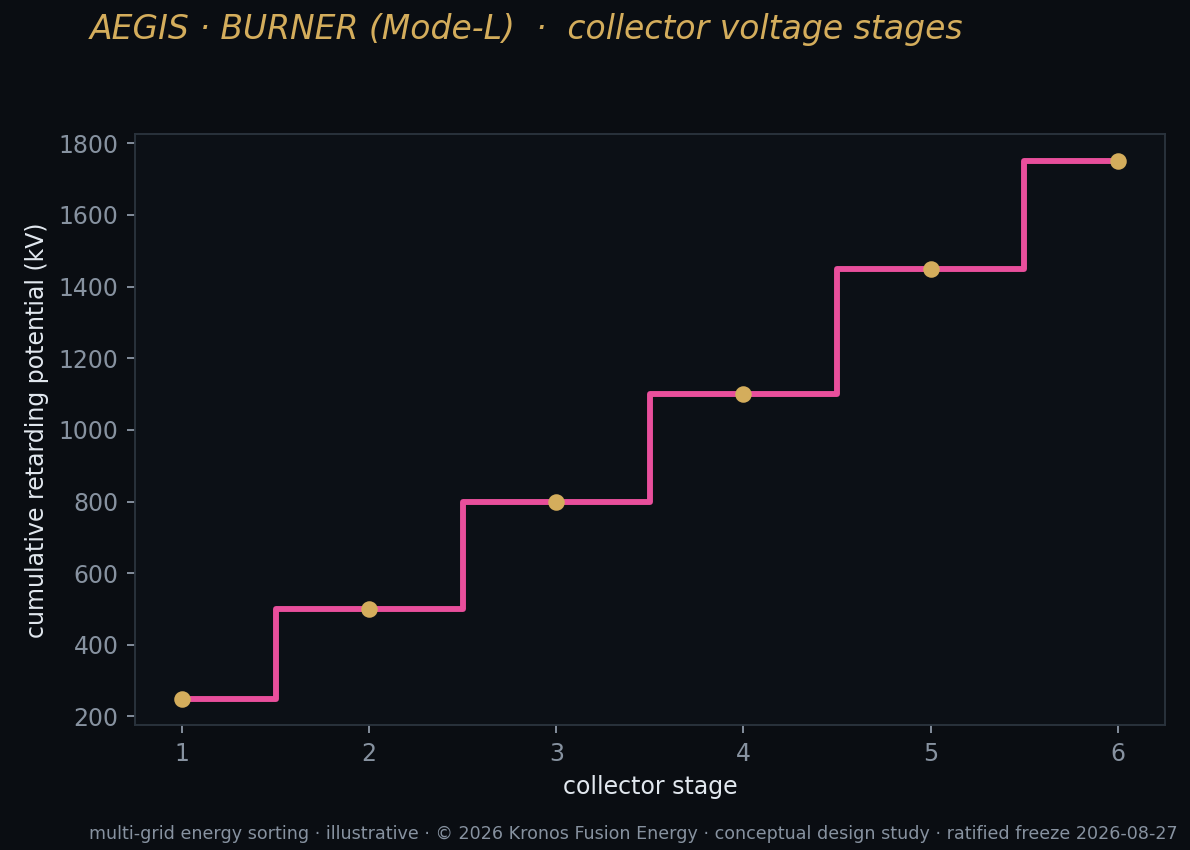
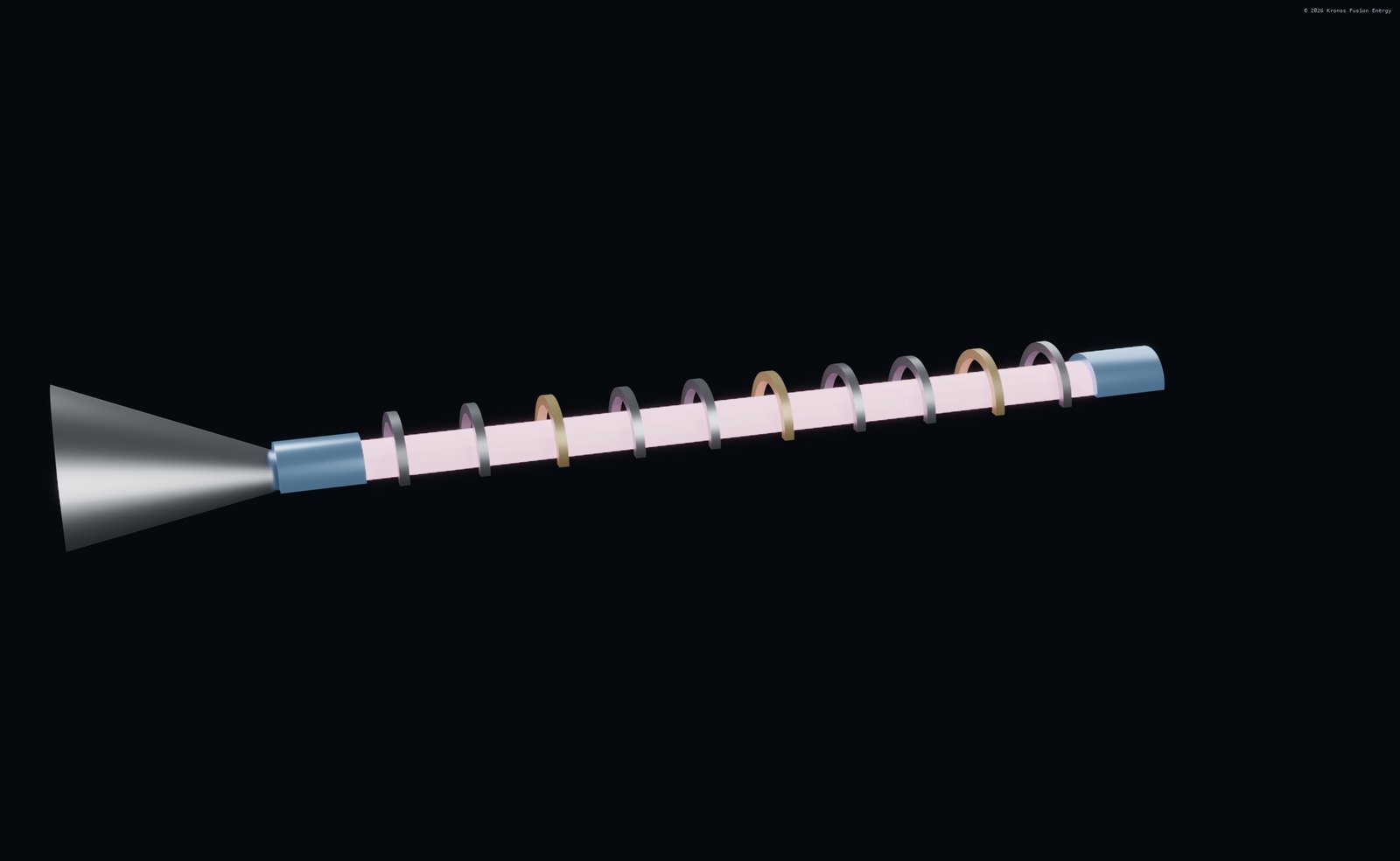
Ions arriving at the DEC do not share a single energy — the expander spreads the fusion-product stream over a band. A single collector plate at one voltage would recover only part of each ion's energy. The DEC therefore uses staged collectors: a sequence of electrodes at increasing potentials so each ion is decelerated to near rest at the stage matched to its energy before it is collected.
Staging is the electrostatic analogue of a multi-stage turbine. The more finely the energy band is subdivided, the closer each ion comes to giving up all its kinetic energy, and the higher the conversion efficiency. The practical limit is set by electrode complexity, voltage holding, and the accuracy with which the incoming energy distribution is known.
Staging trade-offs
- More stages recover more of each ion's energy
- Each stage adds electrode structure and control
- Voltage holding rises with the number and spacing of stages
- Stage voltages must track the expander's energy spread
- Collected currents from all stages combine in conditioning
Matching to the expander
The collector stages are designed against the ion-energy distribution the expander delivers. If the expander spreads the stream too widely, more stages are needed; if too little, the power density on each electrode rises. The expander ratio and the collector staging are chosen together, and both feed the overall converter efficiency figure.
All figures are design and validation values for a machine not yet built.