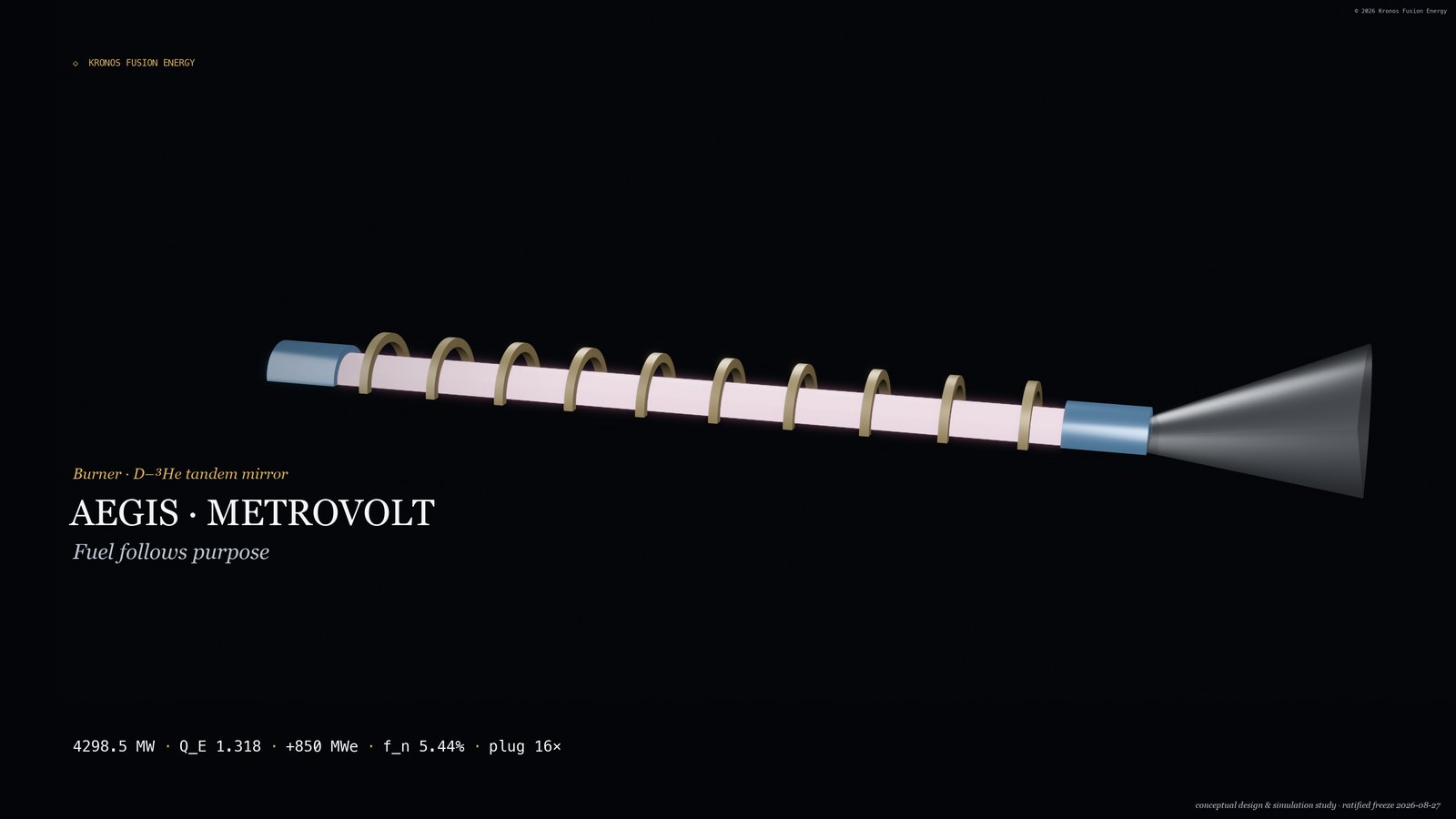
Low Neutron Fraction 5.44%
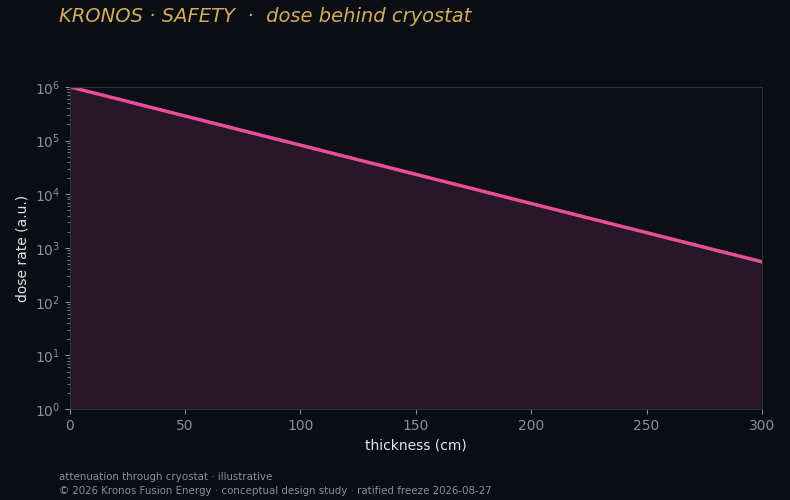
D–³He is low-neutron, not aneutronic: side reactions put 5.44% of fusion power into neutrons, which sets shielding and first-wall needs.
The main D–³He reaction produces only charged particles, but the fuel is not aneutronic. Deuterium–deuterium collisions in the hot plasma produce neutrons and tritium, and some of that tritium burns with deuterium to make more neutrons. In the burner design point these channels total a neutron fraction of 5.44% of the fusion power. The machine is low-neutron, and the design says so plainly rather than claiming zero.
5.44% is small compared with D–T fusion, where roughly 80% of the power is neutronic, but it is not negligible. It is enough to require neutron shielding around the plasma, to activate nearby structure over time, and to deposit heat that the direct converter cannot capture. Designing as if the fraction were zero would be dishonest and unsafe.
Consequences of the 5.44%
- Neutron shielding required around the plasma volume
- Gradual activation of structure near the plasma
- Heat load the DEC cannot convert — handled thermally
- A small tritium inventory produced in situ, which must be managed
- First-wall damage lower than D–T but not absent
Why it is stated up front
Calling the burner aneutronic would overclaim. The honest term is low-neutron. The 5.44% figure drives real subsystems — shielding, activation control, thermal handling of neutron heat, and management of the small tritium inventory — and it is reported so those subsystems are visible. It is a physics fact of the fuel, not an economic quantity.
All figures are design and validation values for a machine not yet built.