Expander Region
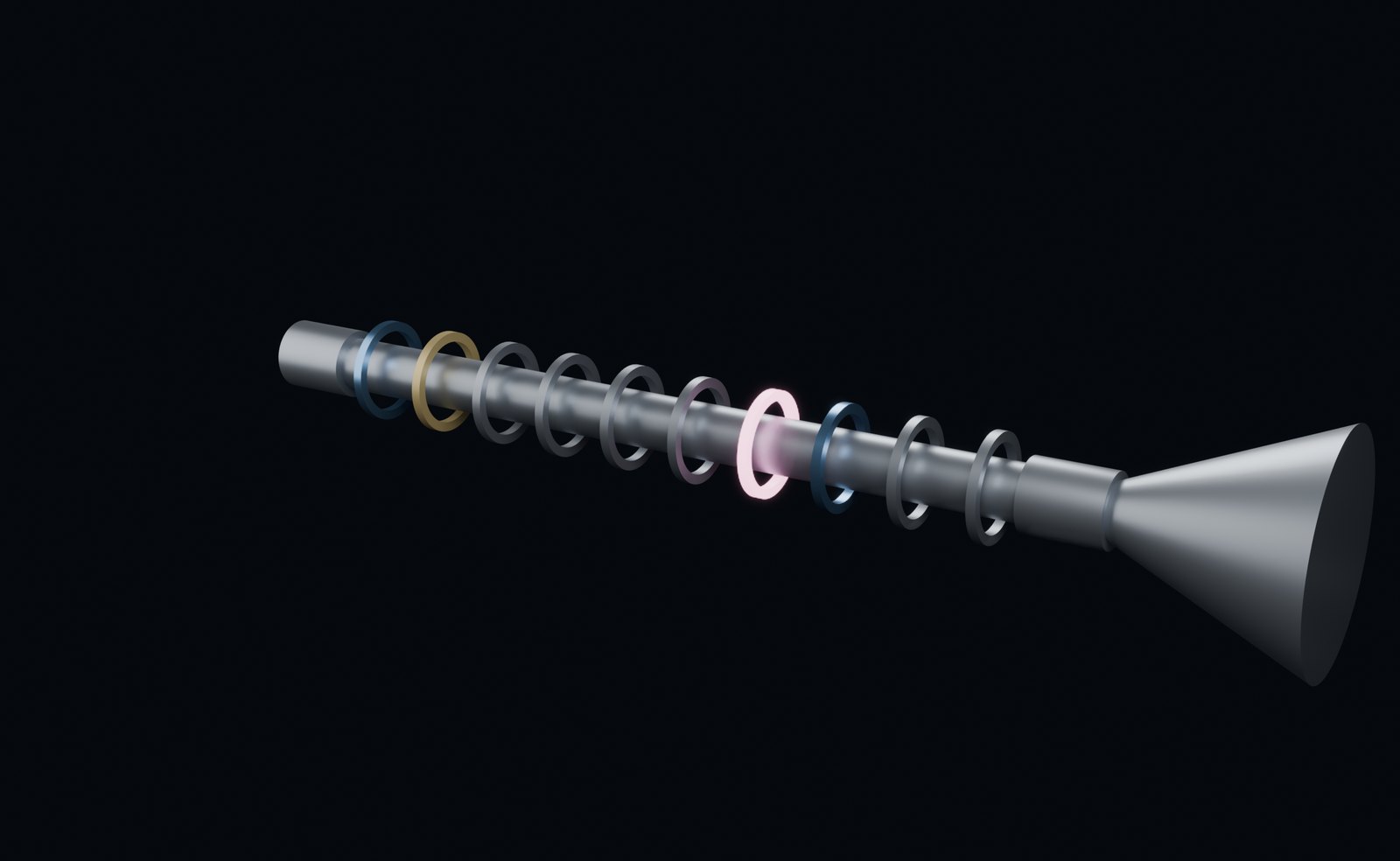
Beyond each throat the field fans out in an expander, spreading the escaping plasma over a large area before it reaches the direct-energy converter.
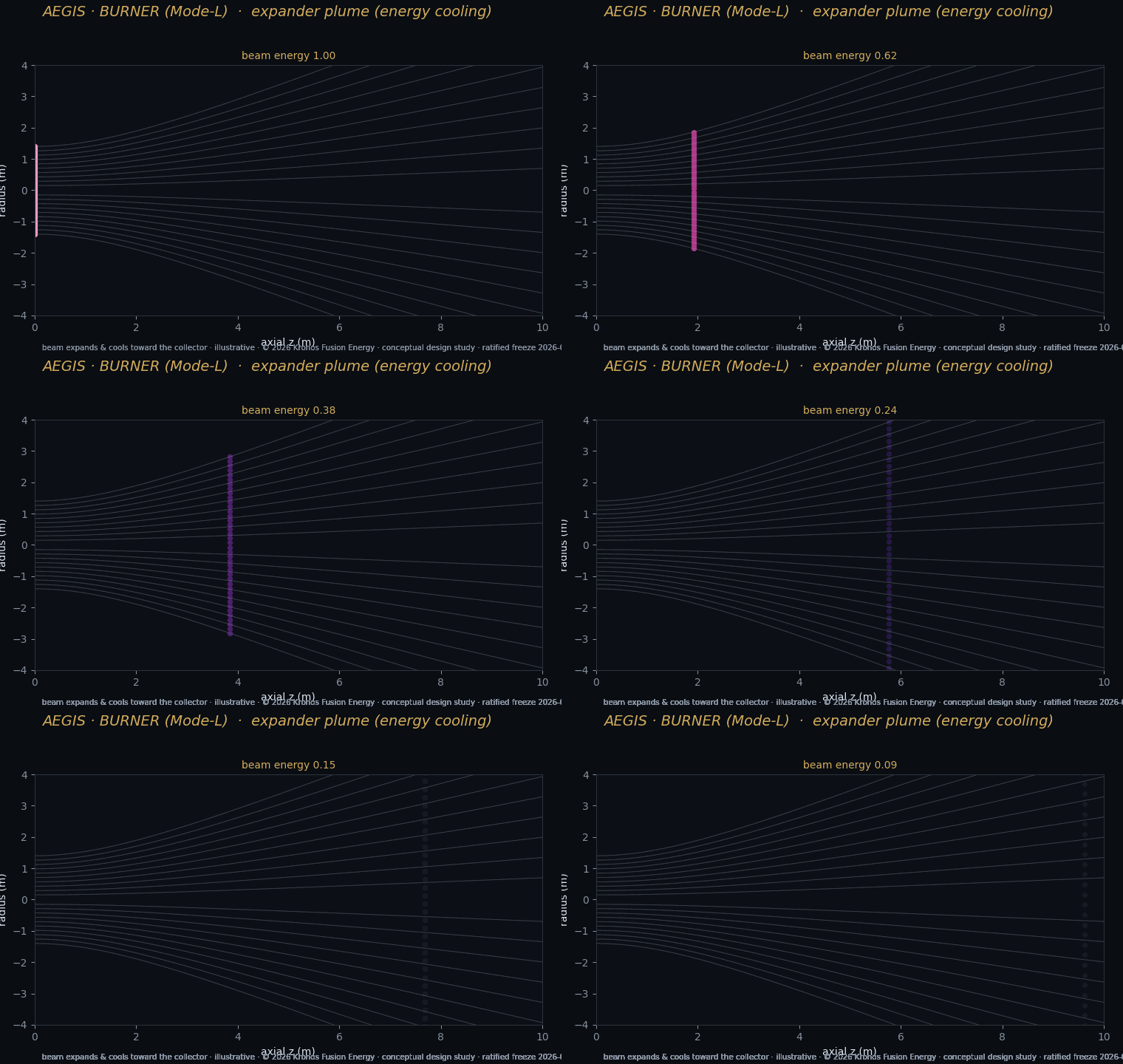
Past the plug and throat at each end, the magnetic field decreases and flares outward in the expander. Plasma that escapes the mirror follows the diverging field lines and spreads over a much larger area. The expander is the transition between the confined machine and the direct-energy-conversion train that collects the exhaust.
Expansion serves several purposes at once: it reduces the plasma density and power density before the exhaust hits any surface, it separates the escaping ions from the electrons along the field, and it slows the axial motion enough that the DEC electrodes can decelerate the ions and collect their energy. Without the expander, the end loss would arrive as an intense, concentrated stream no converter or surface could take.
What the expander controls
- Reduces exhaust power density onto surfaces
- Diverges field lines to spread the escaping plasma
- Sets up ion–electron separation for direct conversion
- Provides the volume for neutral pumping of exhaust
- Protects the DEC electrodes from an over-concentrated stream
Coupling to the DEC
The expander and the DEC are designed together: the expansion ratio sets the density and energy spread that arrive at the collector, and the collector geometry is matched to that. A large expansion ratio eases the converter's job but grows the end tanks and the machine footprint. This trade is one of the drivers of the burner's overall envelope.
All figures are design and validation values for a machine not yet built.