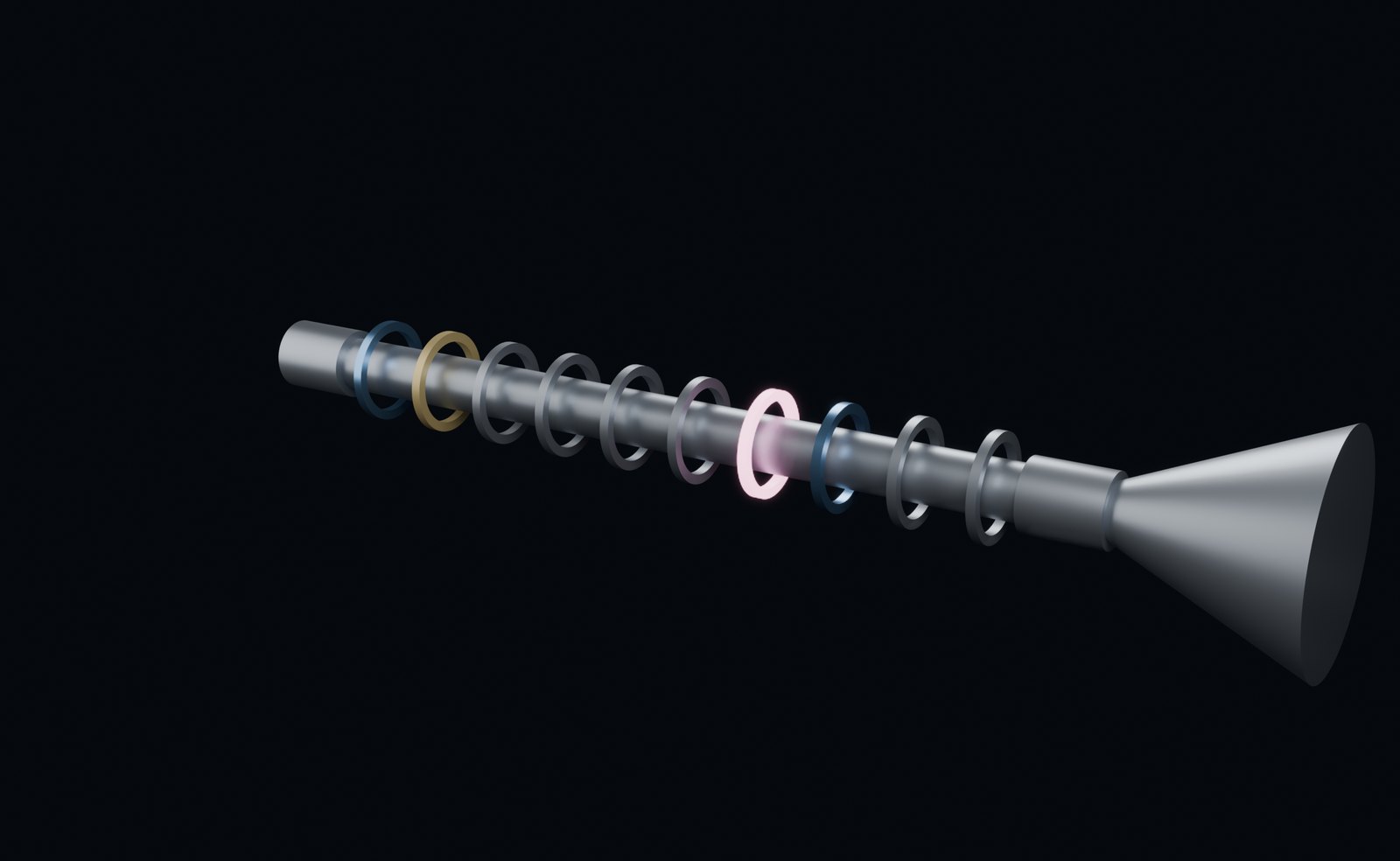
Control & Protection
The control system holds the coupled machine at its operating point; the protection system safely shuts it down and handles faults like a magnet quench.
The burner is a tightly coupled steady-state machine, so it needs continuous control to hold the plug plasma, central-cell burn, heating, and fields at their operating point against drift and disturbance. Layered on top is a protection system whose job is to detect faults and bring the machine to a safe state — including the fast, safe dump of magnetic energy if a coil quenches.
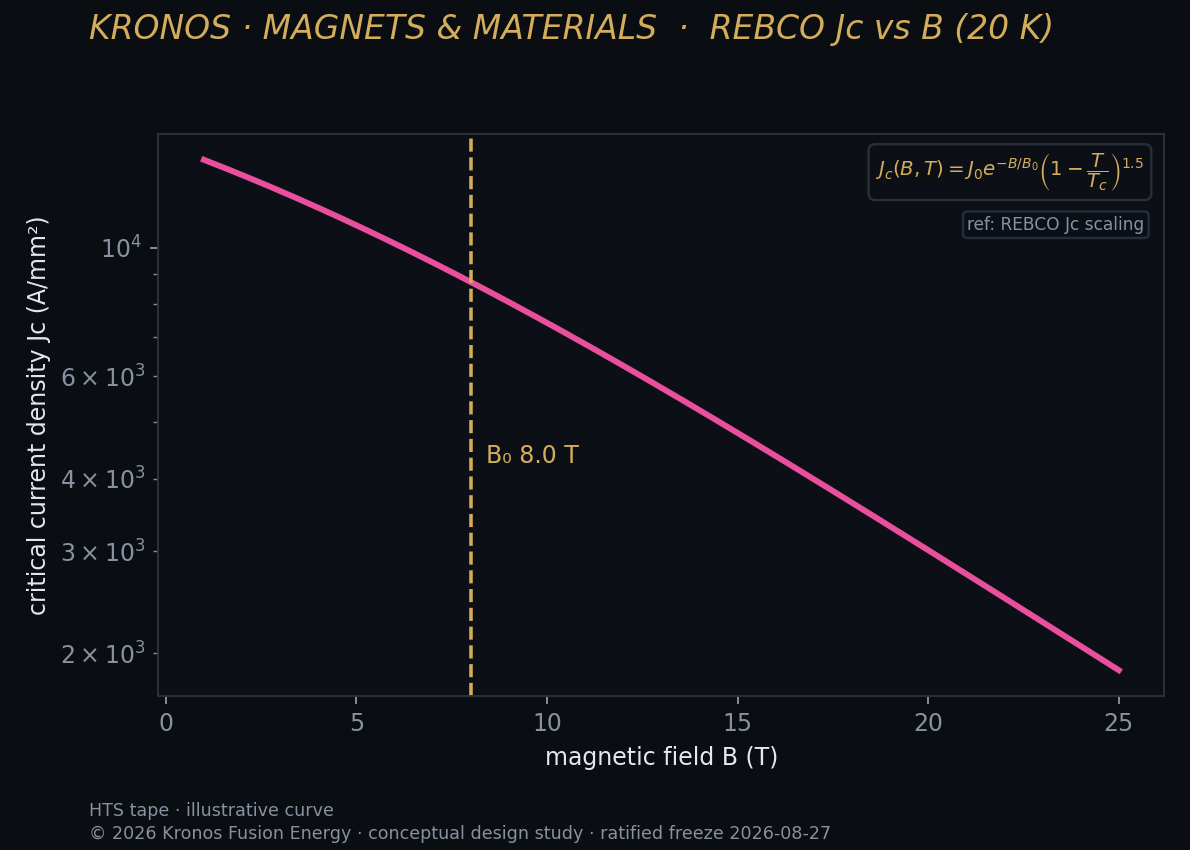
Control and protection are distinct. Control optimizes performance within normal bounds; protection acts when a limit is crossed, overriding control to prevent damage. In a machine with 26.49 T magnets and a plasma in an un-post-dictable regime, protection is not optional — a magnet quench or a loss of plug potential must be handled deterministically.
What each layer does
- Control: hold plug plasma, burn, heating, and fields steady
- Control: manage fueling, exhaust, and profile in real time
- Protection: detect magnet quench and dump stored energy safely
- Protection: respond to loss of plug potential or cooling
- Protection: bring the machine to a defined safe state on any fault
Link to availability
How often protection must act, and how long recovery takes, directly sets the machine's availability. Frequent trips or long quench recoveries lower it. The control-and-protection design aims to keep the machine inside its envelope so protection rarely fires, but the honest availability gate — 0.86 to 0.995 against a Tier III target of 0.99982 — reflects that faults and downtime are real and not yet at hyperscale reliability.
All figures are design and validation values for a machine not yet built.