Cryogenic Magnet System
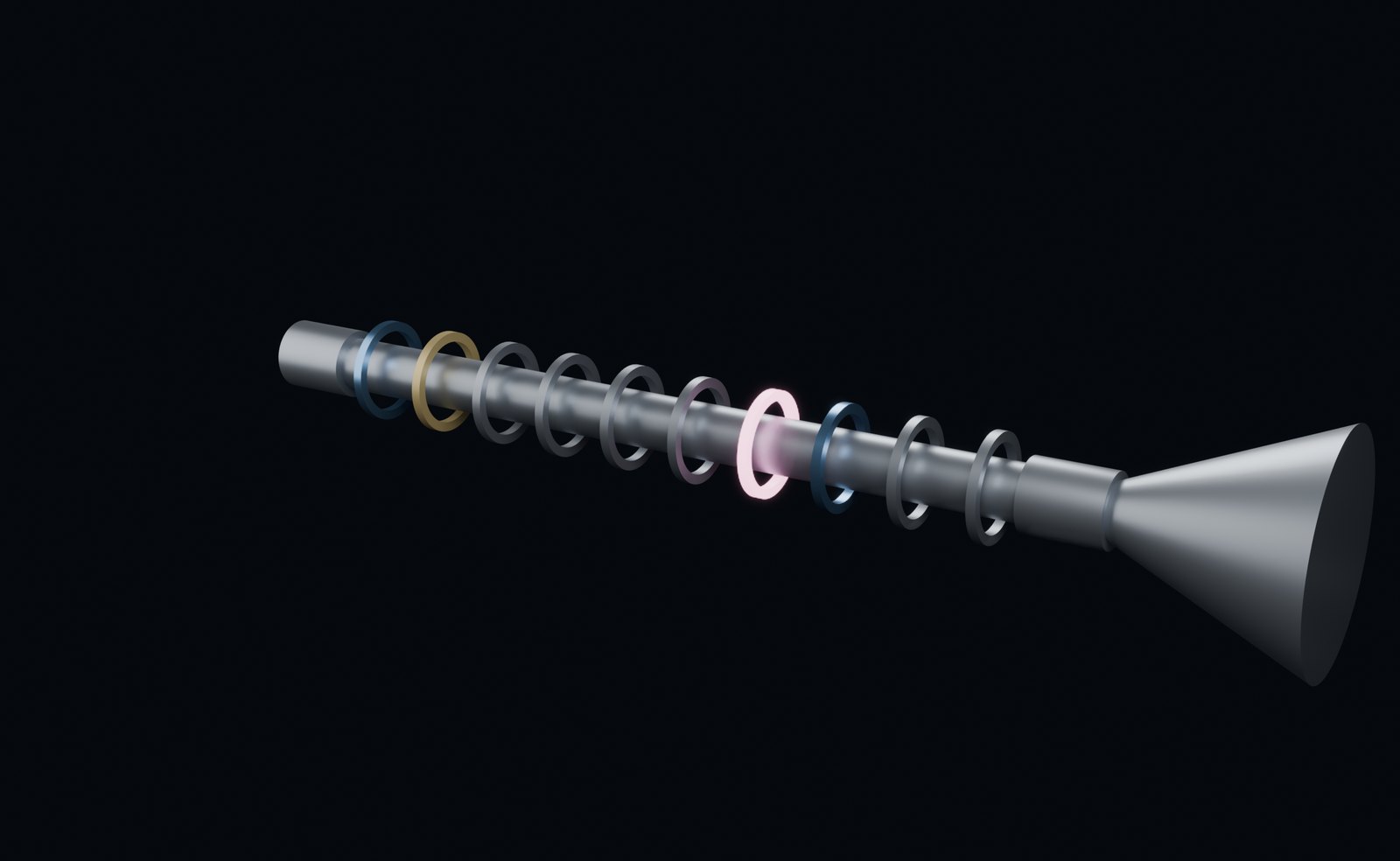
The plug, throat, and central-cell magnets are superconducting and must be held at cryogenic temperature by a dedicated refrigeration plant.
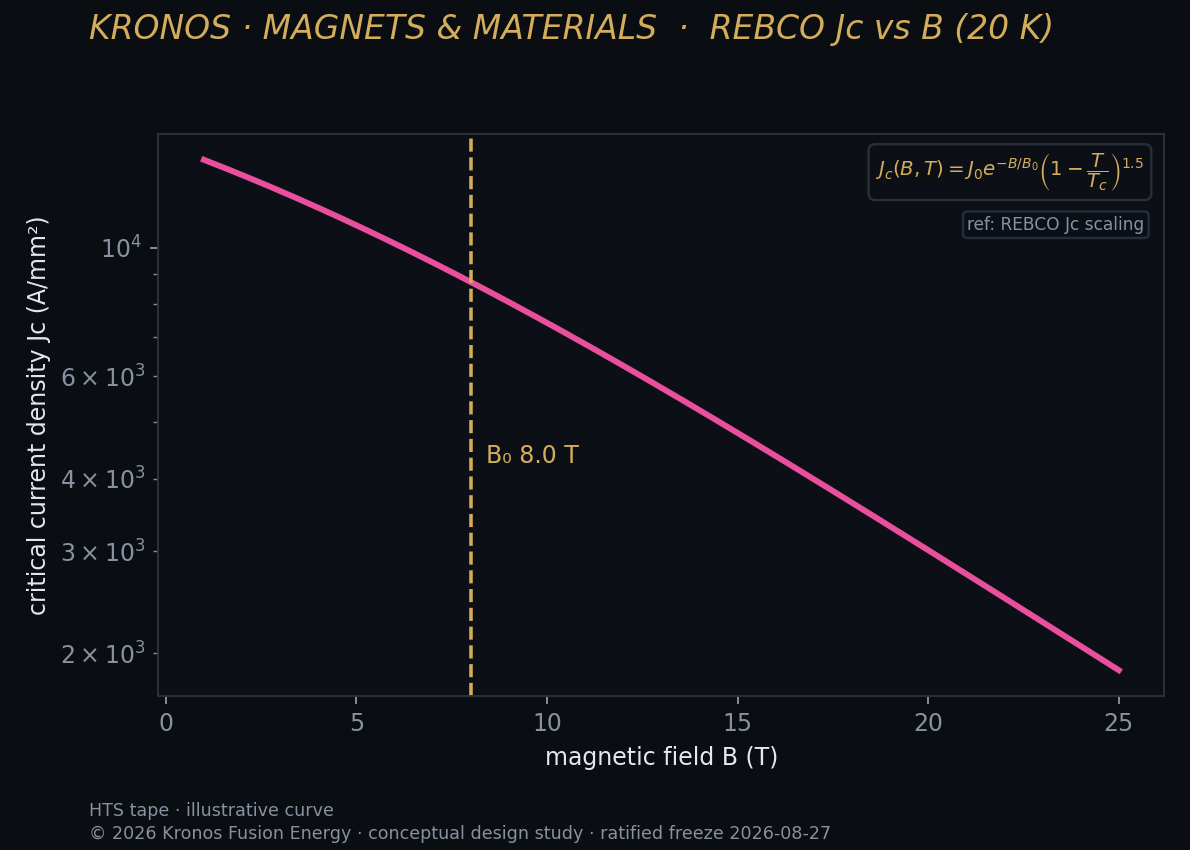
The burner's high fields — 26.49 T at the plugs, 17 T at the throats, and the central-cell field — are produced by superconducting magnets. Superconductivity is what makes steady-state operation at these fields possible without prohibitive resistive losses, but it requires the coils to be held at cryogenic temperature inside a vacuum-insulated cryostat with continuous refrigeration.
The cryogenic plant supplies coolant to every coil, maintains the temperature margin that keeps the conductor superconducting, and removes the heat that leaks in through supports, current leads, and radiation. A loss of cooling margin can drive a magnet to quench — a sudden transition to normal conductivity — which the protection system must handle safely by dumping the stored magnetic energy.
What the cryosystem must do
- Hold all coils below their superconducting transition
- Maintain temperature margin against transient heat loads
- Remove heat leaking through supports and current leads
- Cool down and warm up the magnets on a controlled schedule
- Support quench detection and protection
Why it drives availability
The magnets are the least forgiving subsystem: a cryogenic fault or a quench takes the machine offline and can require a long recovery. Refrigeration reliability, quench frequency, and cooldown time all feed the availability gate. The design goal is deep temperature margin and robust protection so cryogenic events are rare and recoverable, but the high plug field leaves little slack.
All figures are design and validation values for a machine not yet built.