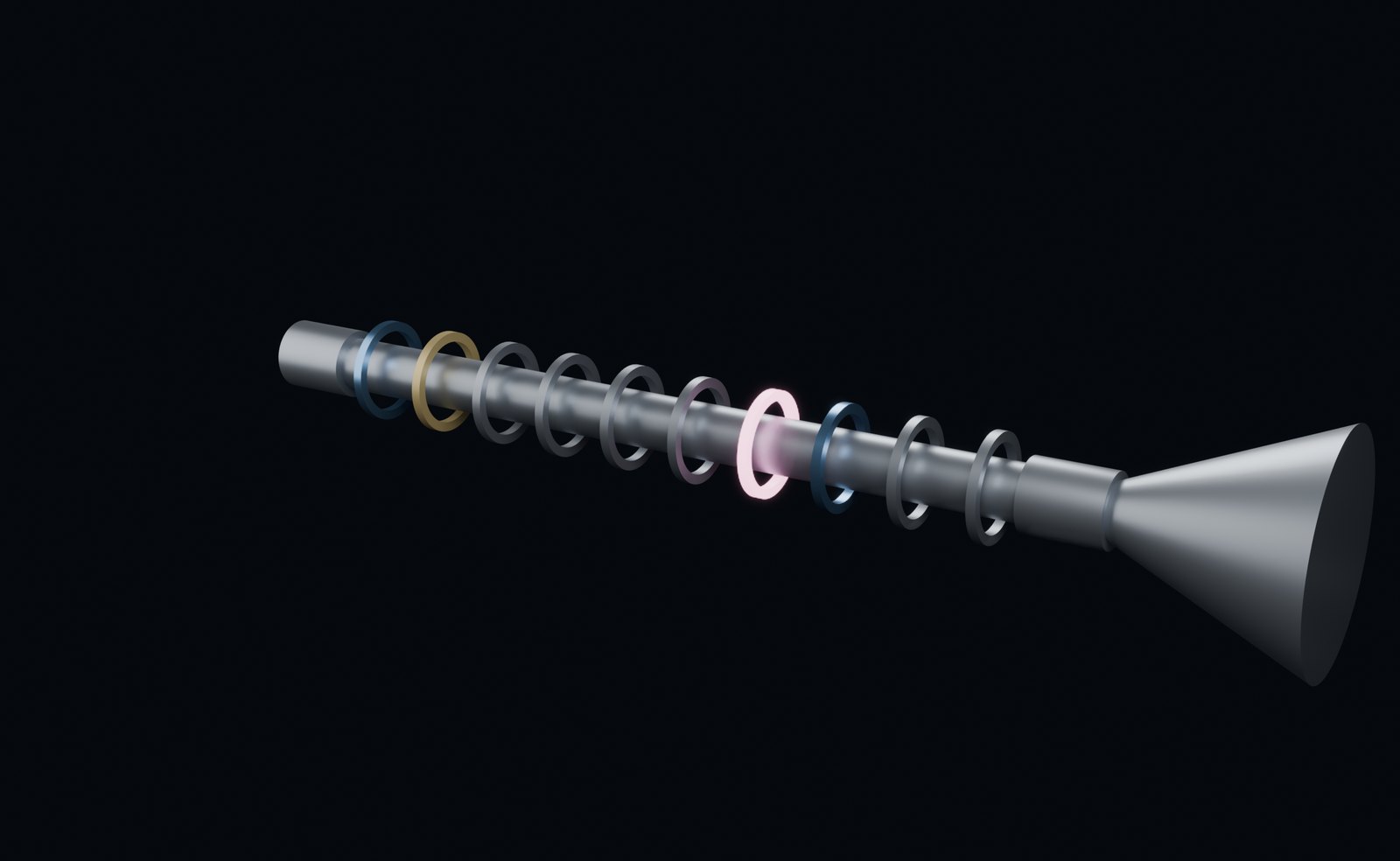
Axial Force Balance
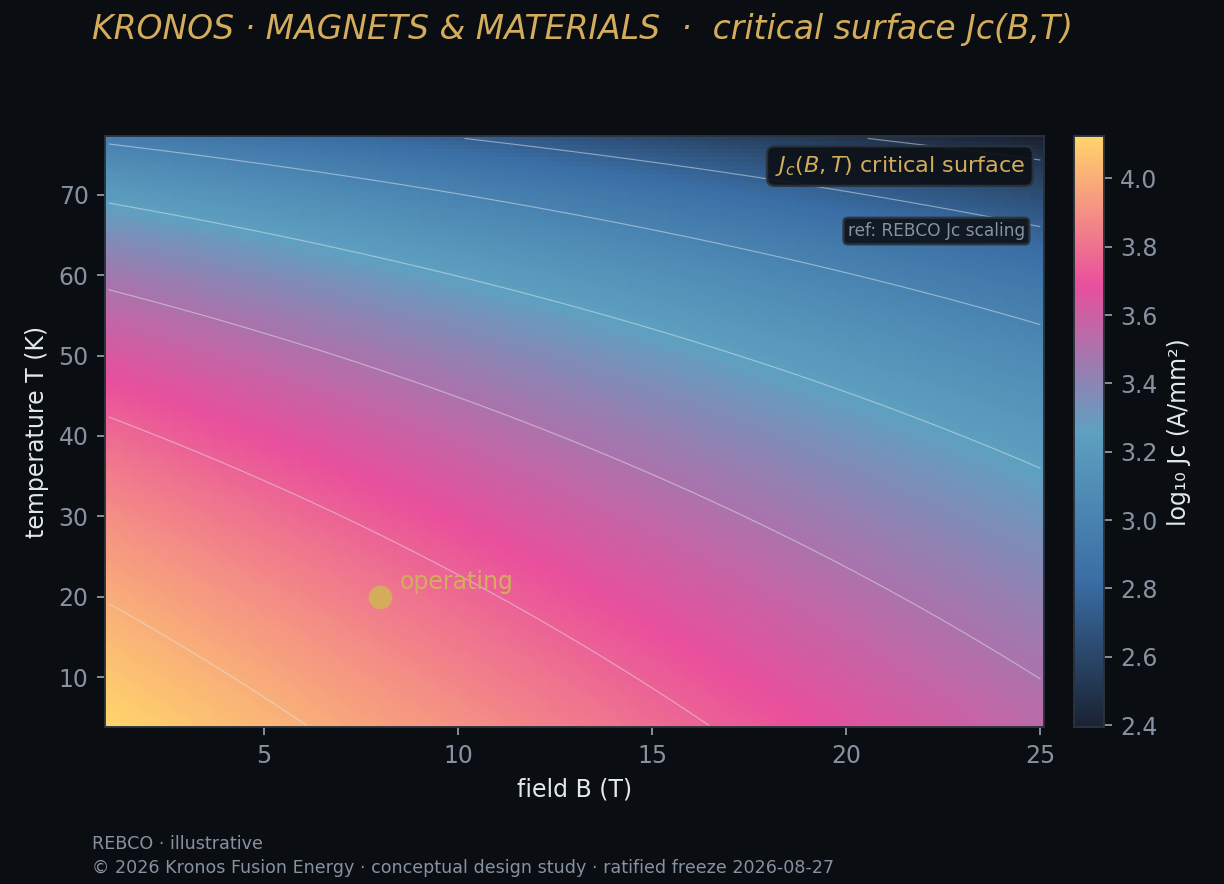
The strong end plugs pull axially on the whole coil set; balancing and reacting those forces along the machine is a core structural problem.
In a linear machine the magnets sit on a common axis, and their fields interact. The high-field plugs at each end exert large axial forces, and the throat and central-cell coils add their own. Unless these forces are balanced or carried by structure, the coils would be pulled together along the axis, distorting the field the machine depends on.
Symmetry helps: with matched plugs at both ends, the net axial force on the assembly can be balanced left-to-right. But the internal tension between cell and plug is still real and must be reacted by a structural spine strong enough to hold the coil spacing against it. This axial load is part of what makes the plug structure so demanding.
What must balance
- Axial attraction between the two end plugs and the cell
- Left–right symmetry to null the net external force
- Internal tension held by the structural spine
- Coil-spacing tolerance to preserve field uniformity
- Load transfer into the foundation and supports
Why it matters for the field
Field uniformity in the central cell depends on the coils staying exactly where they are designed to be. If axial forces shift a coil, the field ripples and confinement degrades. So axial force balance is not only a strength problem but a precision problem: the structure must hold the coils to tight tolerance under enormous load. It couples directly to the magnet-support and plug-stress gates.
All figures are design and validation values for a machine not yet built.