Tritium Handling and Safety
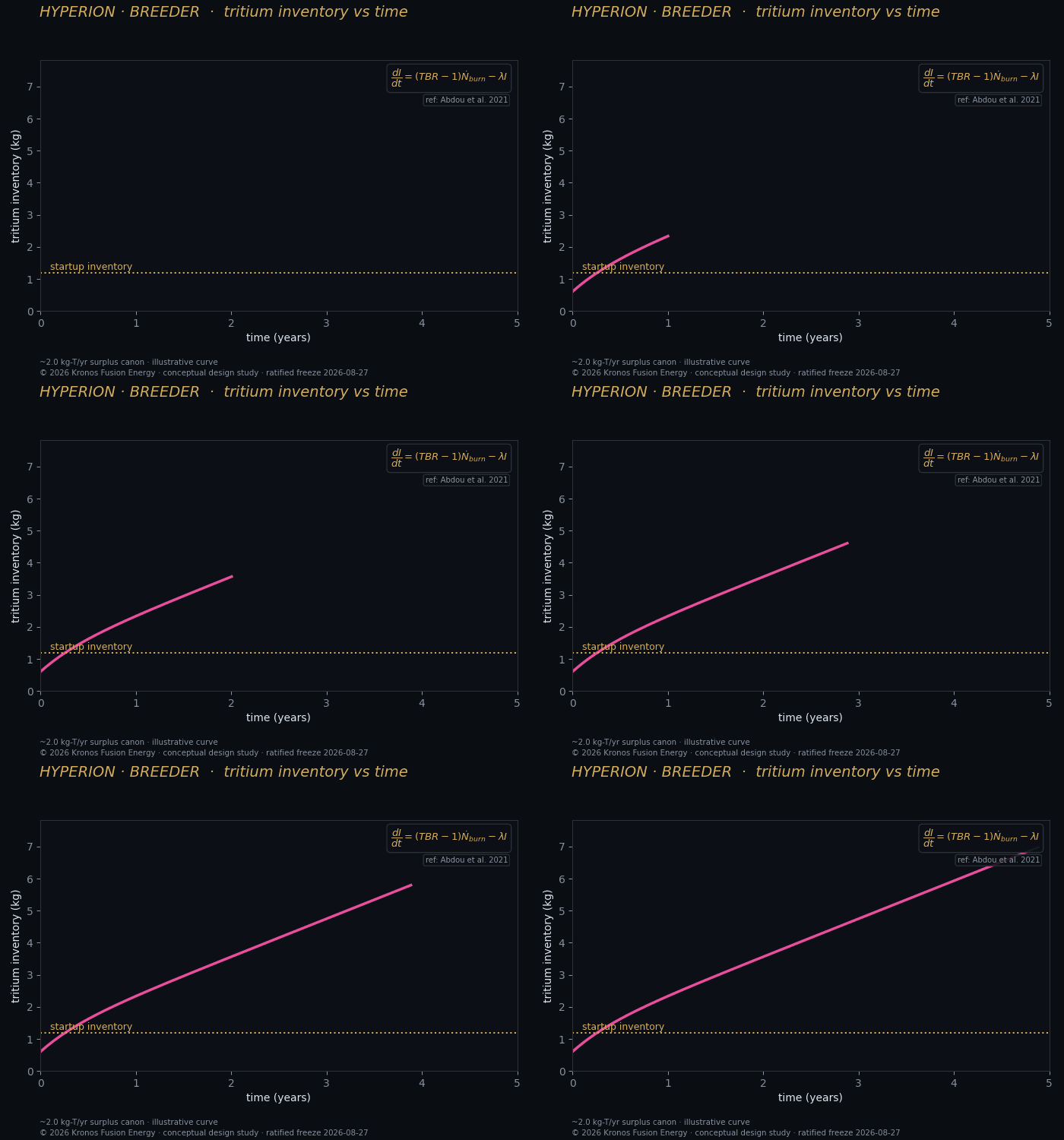
Tritium handling is a breeder-side discipline; because the burner's helium-3 comes from decayed tritium, tritium safety underpins the whole supply chain.
Where the radiological work lives
Tritium is the one radioactive isotope in the breeder–burner fuel story. It is a low-energy beta emitter — its radiation cannot penetrate skin — but it is a hazard if inhaled or ingested, and it is highly mobile because it behaves chemically like hydrogen and can permeate metals. Handling it safely is a mature engineering discipline: multiple containment barriers, tritium-compatible materials, atmosphere detritiation systems, and continuous monitoring.
Why it matters to the burner
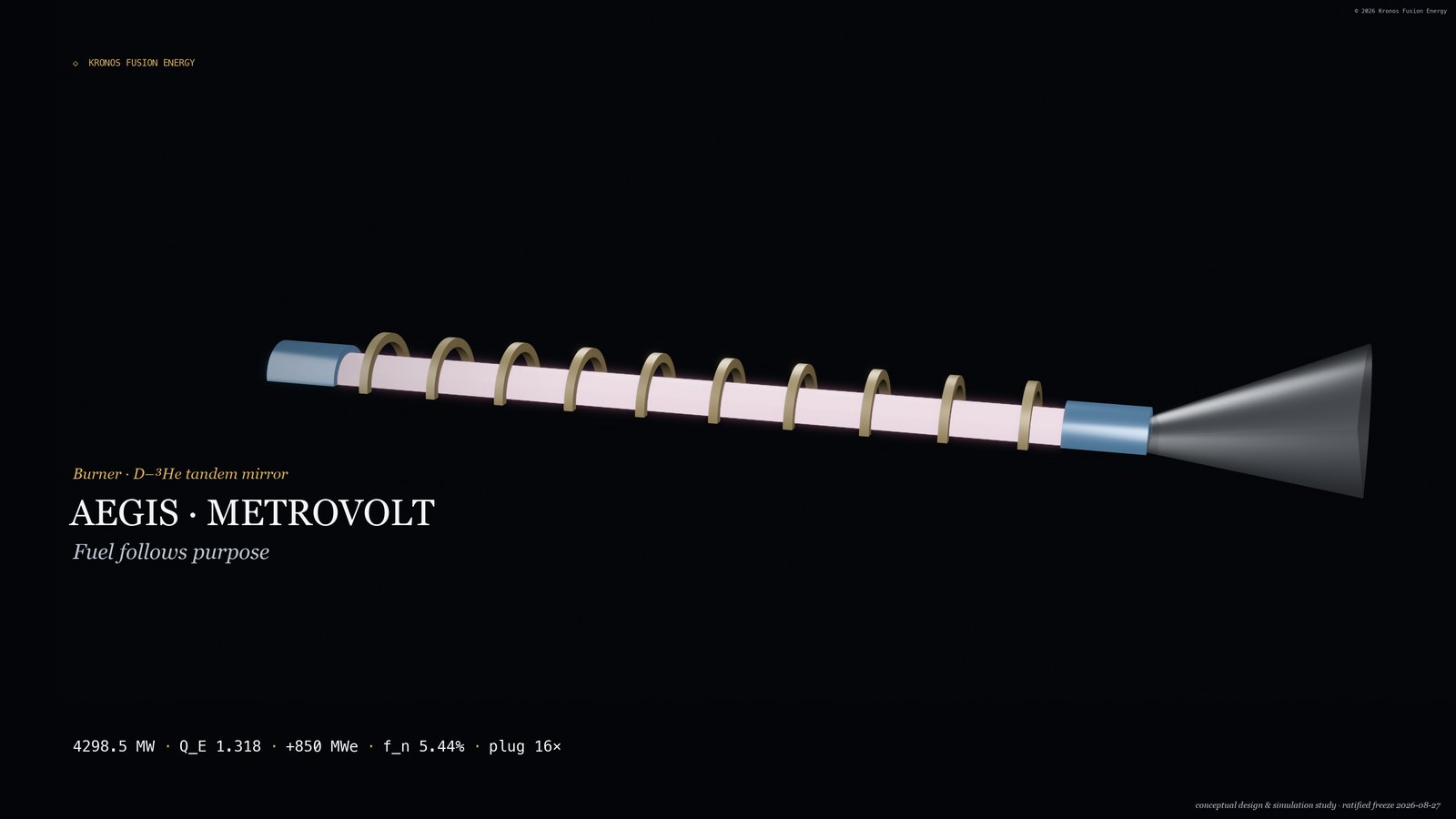
The burner does not use tritium as a primary fuel, so a fielded Aegis site carries a much smaller radiological inventory than the breeder. But the burner's fuel supply is built on tritium: the helium-3 it burns is what tritium becomes. Reliable, safe tritium handling on the breeder side is therefore a precondition for the burner's fuel to exist at all. When tritium is held for decay, safe long-term containment is the mechanism that converts it to helium-3.
- Tritium is a low-energy beta emitter — internal hazard, mobile
- Handled by layered containment, detritiation, and monitoring
- Burner site inventory is small; the tritium work is breeder-side
- Safe long-term containment is how held tritium becomes helium-3
In short, the fuel loop trades a demanding-but-mature tritium discipline at the breeder for a clean fuel at the burner. The safety burden is concentrated where the expertise and infrastructure sit.