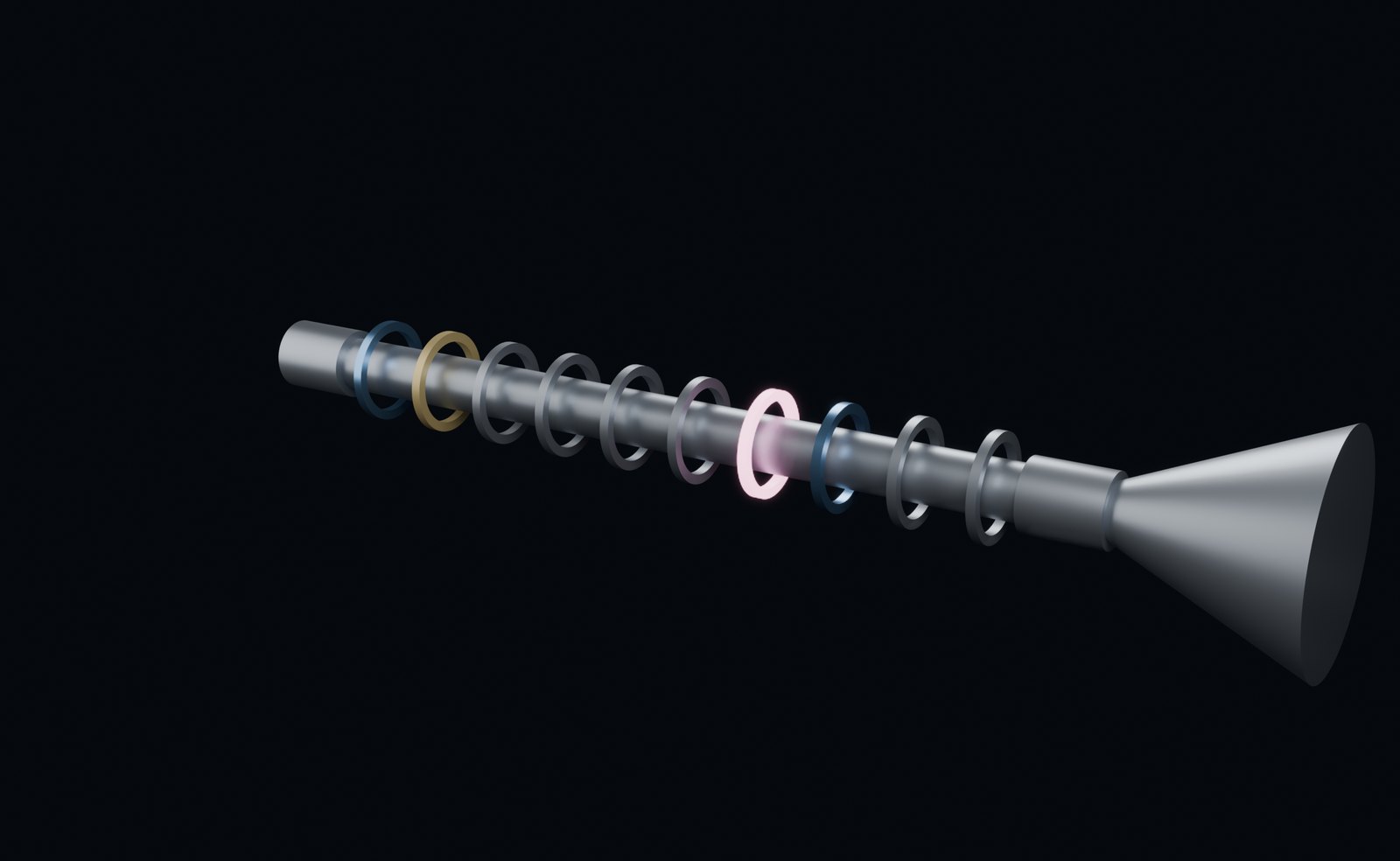
The Aegis Fuel Supply at a Glance
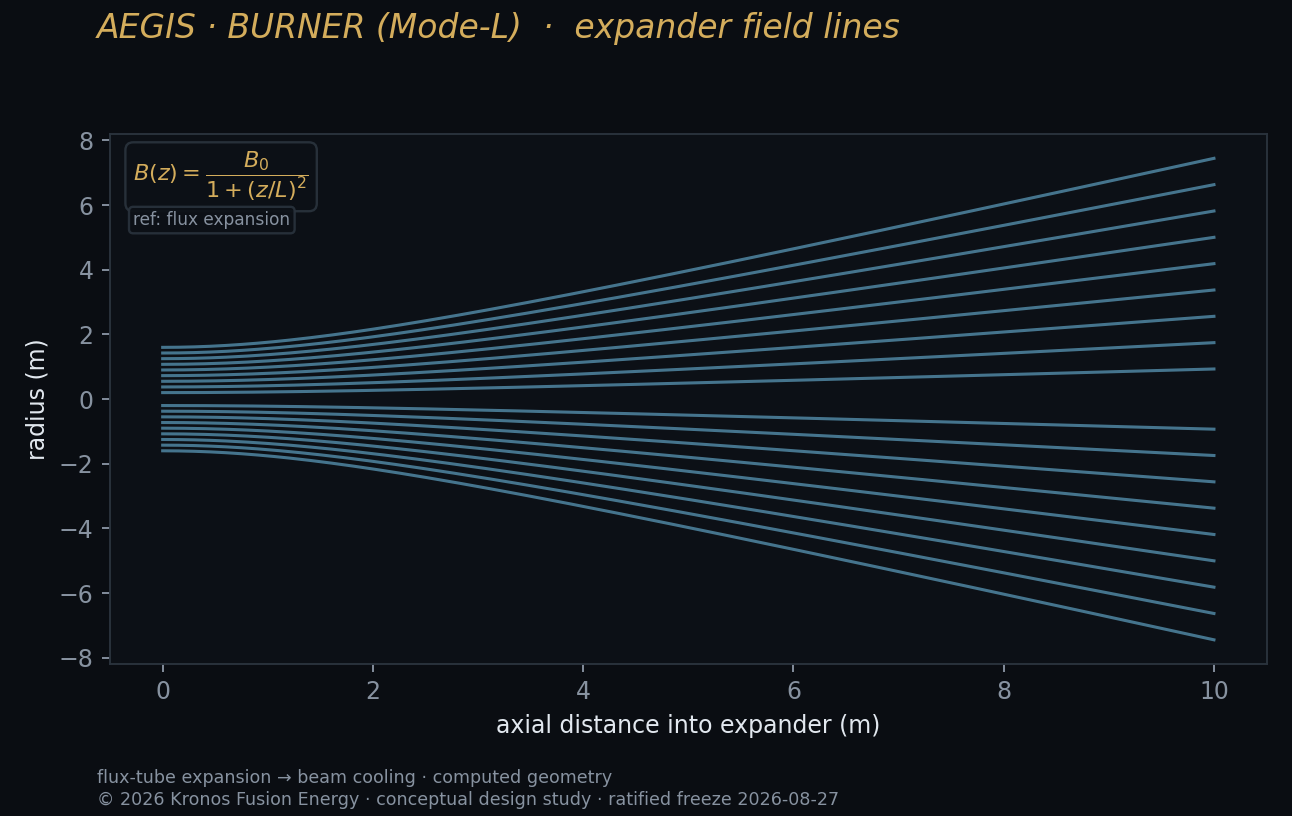
Aegis burns deuterium and helium-3; the helium-3 is bred on Earth by the Hyperion breeder, closing a fully domestic fuel loop.
One fuel loop, two machines
The burner (Aegis) runs the deuterium–helium-3 (D–3He) reaction. Deuterium is drawn from ordinary water and is effectively unlimited. Helium-3 is the scarce partner, and Aegis does not mine it or import it: it is produced as a by-product of the breeder (Hyperion), whose bred tritium decays into helium-3 on a fixed physical clock. This pairing is the reason Aegis can be described as a sovereign power source.
Why the pairing matters
The burner is at design stage. It is being perfected now, while the breeder is built (breeder construction begins Q2 2027; first-of-a-kind first tritium is expected around 2030; the first test burner follows around 2032). By the time a fielded burner needs a steady helium-3 stream, the breeder fleet is intended to be supplying it. Nothing in the burner fuel story depends on lunar mining or on a hardware net-gain claim that has not yet been demonstrated.
- Deuterium: from water, abundant, non-strategic
- Helium-3: bred on Earth via tritium decay in Hyperion
- Primary reaction is aneutronic; a small 5.44% neutron fraction comes from side reactions
- Charged fusion products enable direct energy conversion
The pages in this section trace each link: the physics of the fuel, where each isotope comes from, how it is stored and handled, how the supply is secured, and the honest limits of what has and has not yet been built.