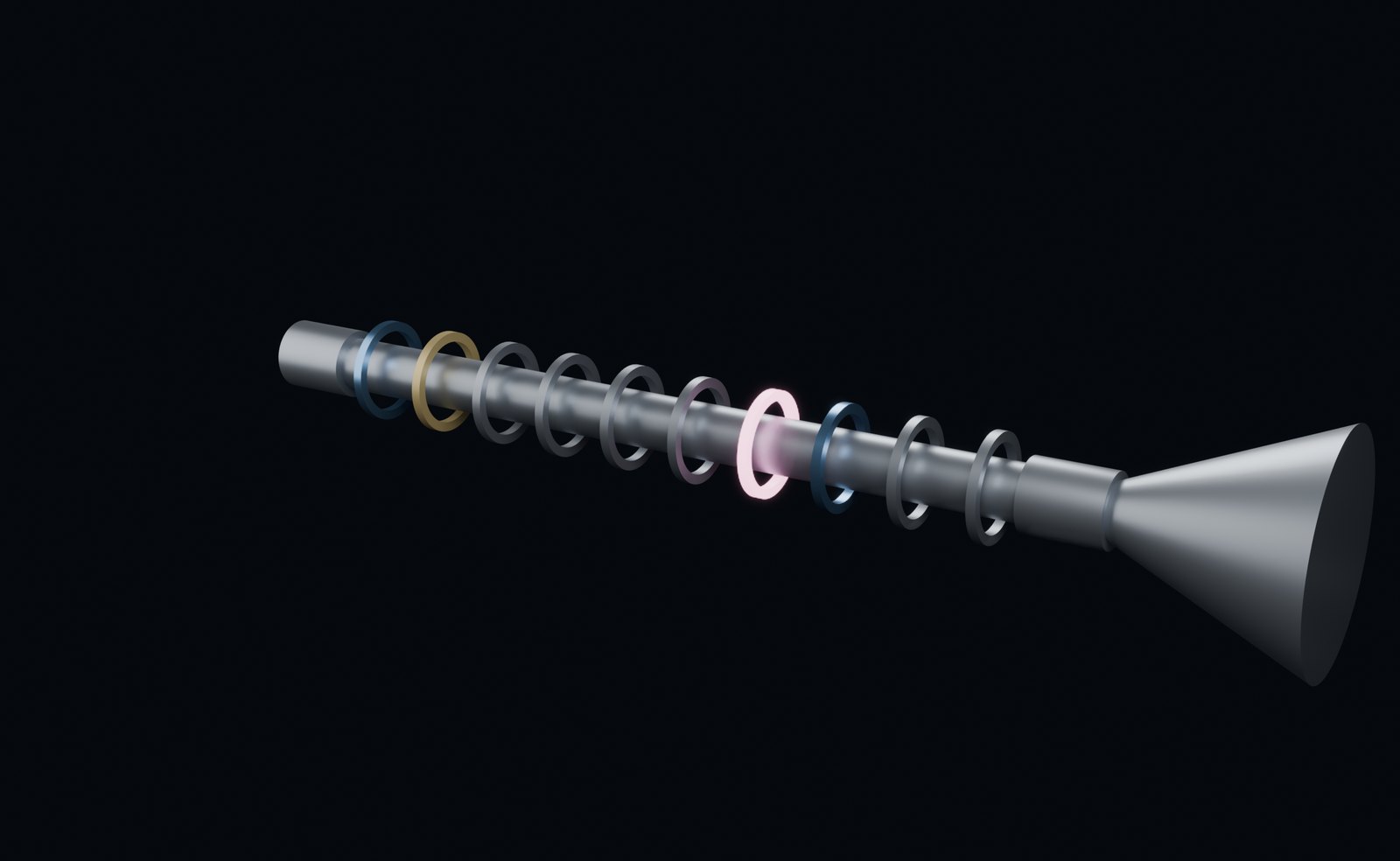
Fuel-Cycle Closure
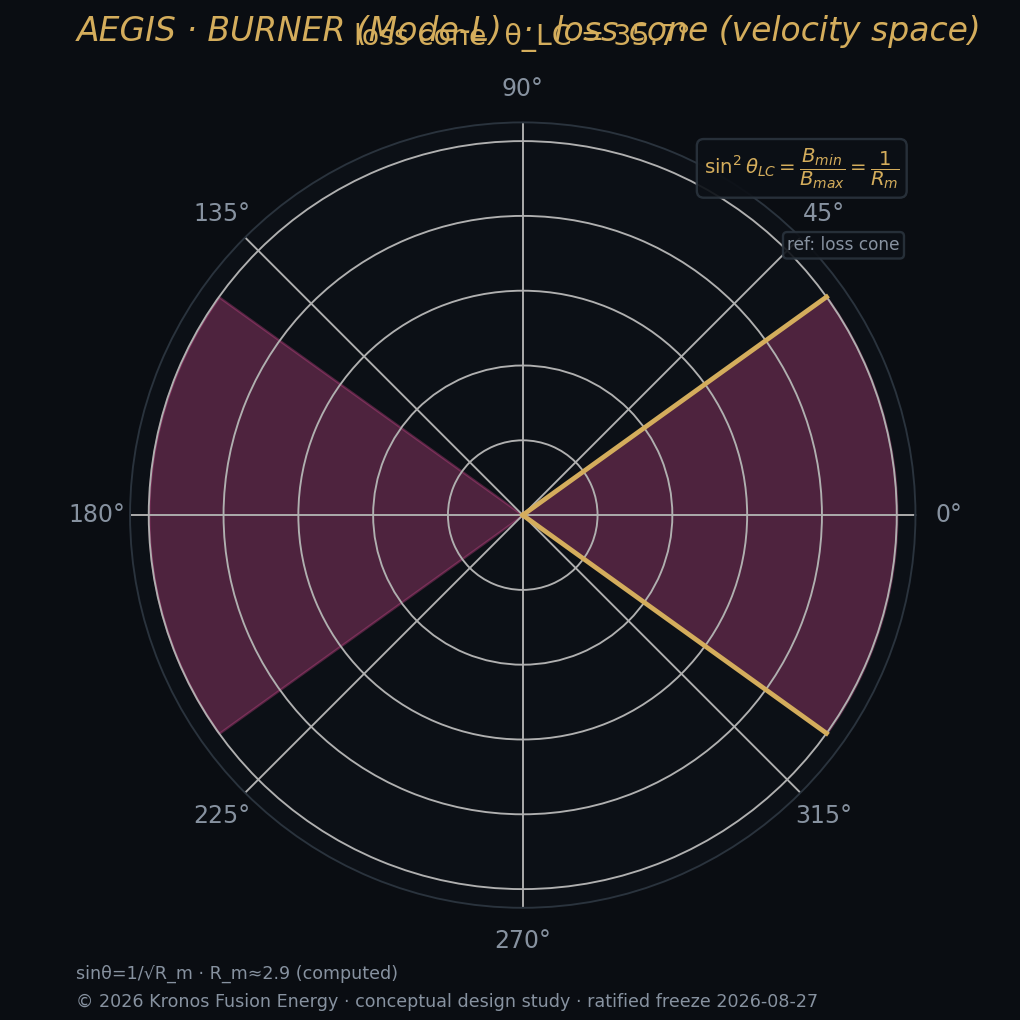
The burner's fuel cycle is deliberately open: it consumes bred helium-3 and returns helium-4 ash, and closure is achieved only at the two-machine system level.
The burner does not close its own cycle
A D–T reactor is often designed to breed its own tritium and approach self-sufficiency. The burner is different, and honestly so: it consumes helium-3 and deuterium and produces helium-4 ash plus power. Its internal side reactions make a trace of tritium and helium-3, but far less than it burns. On its own, the burner's fuel cycle is open — it is a net consumer of helium-3.
Closure at the system level
Where closure does apply is across the breeder–burner system. The breeder manufactures helium-3 from bred tritium; the burner consumes it. Deuterium is drawn from an effectively unlimited external source. Helium-4 ash is exhausted, and any helium-3 not fully burned is recovered and recycled. The loop that matters — helium-3 in, helium-4 out — is balanced by production at the breeder, not by breeding inside the burner.
- Burner is a net helium-3 consumer — cycle open at the machine
- Products: helium-4 ash, power, trace T and 3He
- Deuterium supplied externally and abundantly
- System closes when breeder production matches burner demand
Framing closure honestly is important: it makes clear why the breeder is not optional. The burner cannot be run at scale without a matching helium-3 source, which is precisely the breeder's role in the coupled system.