Fuel Supply Risk and Mitigation
The honest risks to the burner's fuel supply are breeder readiness, breeding ratio, and recovery efficiency — each with a defined mitigation.
Naming the risks plainly
A credible fuel plan states its risks. The burner's helium-3 supply depends on machines not yet built and on figures still being resolved, and pretending otherwise would be dishonest. The principal risks are the breeder's readiness on schedule, the tritium breeding ratio it actually achieves, the recovery efficiency the burner reaches, and any interruption to delivery. Each has a mitigation built into the programme's design and sequencing.
| Risk | Mitigation |
|---|---|
| Breeder readiness | Breeder built first; reserve accrues before burners |
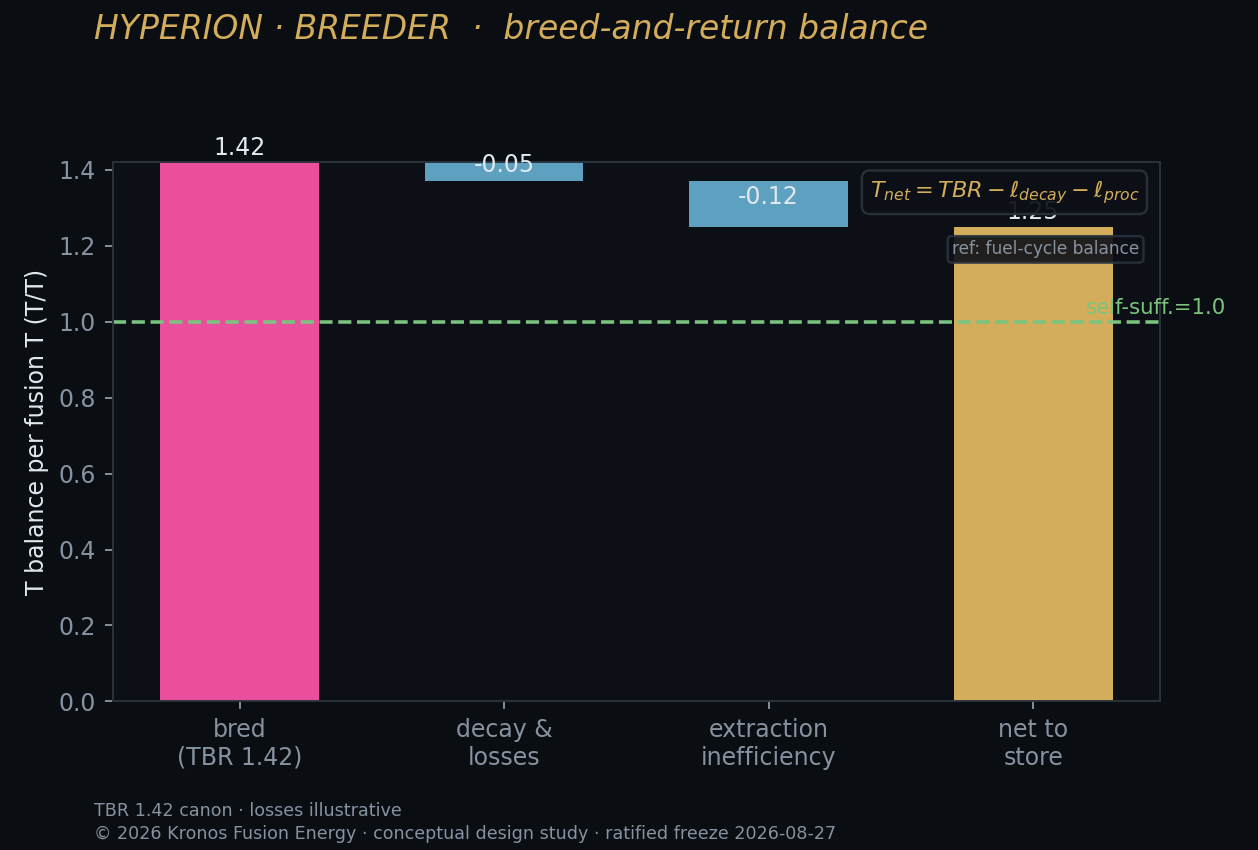
| Breeding ratio uncertain | Lever spans 1.1/1.5/1.8; plan to conservative end |
| Low recovery efficiency | Recycling engineered as a requirement, not option |
| Delivery interruption | On-site reserves + multiple breeders |
The honest bottom line
The fuel supply is a design-stage plan, not a demonstrated capability. Its strongest guarantee is sequencing: by building the breeder first and letting a reserve accumulate by passive decay, the programme puts most of the burner's future fuel into store before any burner needs it. Uncertain figures like the breeding ratio are planned to their conservative end, and no step assumes lunar supply or a hardware net-gain result that has not been shown.
- Risks: breeder readiness, breeding ratio, recovery, delivery
- Mitigations: reserve, conservative planning, recycling, fleet depth
- Sequencing puts fuel in store before it is needed
- No reliance on lunar supply or unproven net-gain claims
Stated this way, the fuel plan is defensible: real risks, concrete mitigations, and an honest acknowledgment that it is built and proven in the right order rather than assumed.