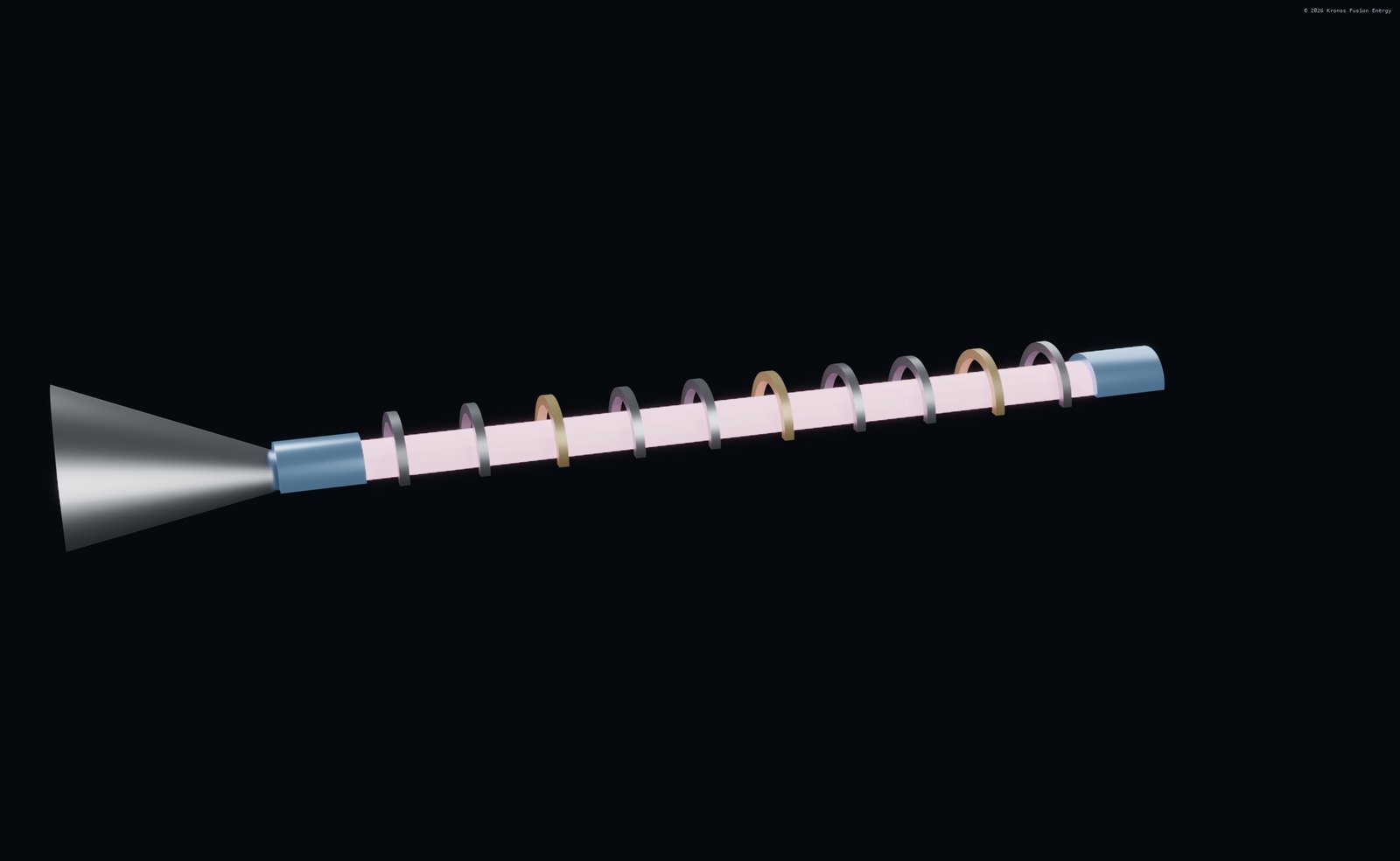
The Tritium Breeding Ratio Lever
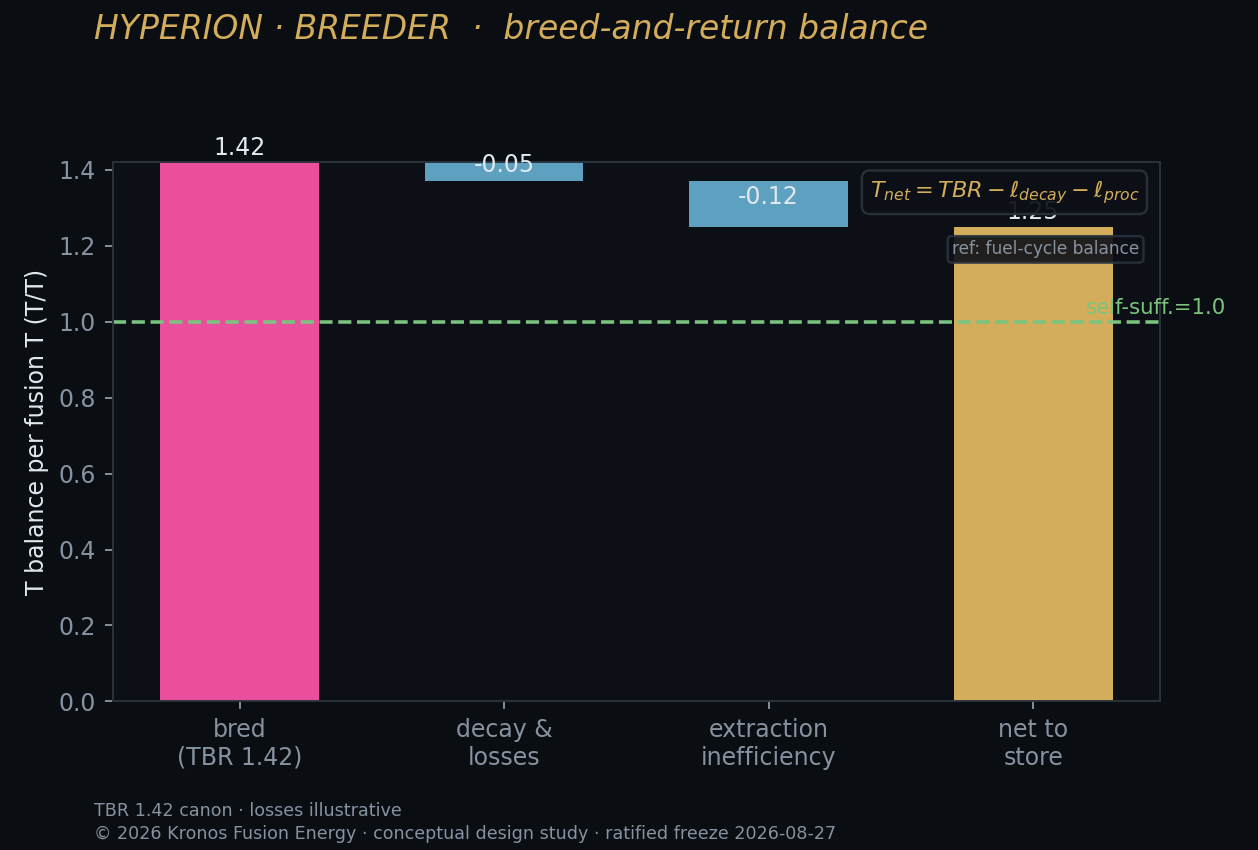
In the breeder, the tritium breeding ratio is a design lever spanning 1.1, 1.5, and 1.8 — and it directly sets how fast helium-3 can be supplied.
One number, two consequences
The tritium breeding ratio (TBR) measures how many tritium atoms the breeder's blanket produces per tritium atom consumed in its D–T reaction. Hyperion treats TBR as a design lever explored across three values: 1.1, 1.5, and 1.8. A higher ratio means more surplus tritium beyond what the breeder needs to sustain itself — and that surplus is exactly what decays into the helium-3 the burner runs on.
Lever, not a claim
It is important that TBR is presented as a lever, not as a single settled value. The physics of achieving a high, net-positive breeding ratio in a real blanket — including the difference between a local breeding figure and a whole-system net after losses — is an open engineering question that the breeder programme is designed to resolve. The three values bracket the plausible range; the helium-3 supply story scales with wherever it lands.
- TBR = tritium atoms produced per atom consumed
- Explored as a lever at 1.1, 1.5, and 1.8
- Surplus above self-sufficiency becomes helium-3 by decay
- Net vs local breeding is an open question the breeder resolves
For the burner, the practical reading is simple: the breeder's breeding-ratio choice is one of the main dials that sets how large and how fast the helium-3 reserve can grow, and therefore how many burners a breeder fleet can feed.