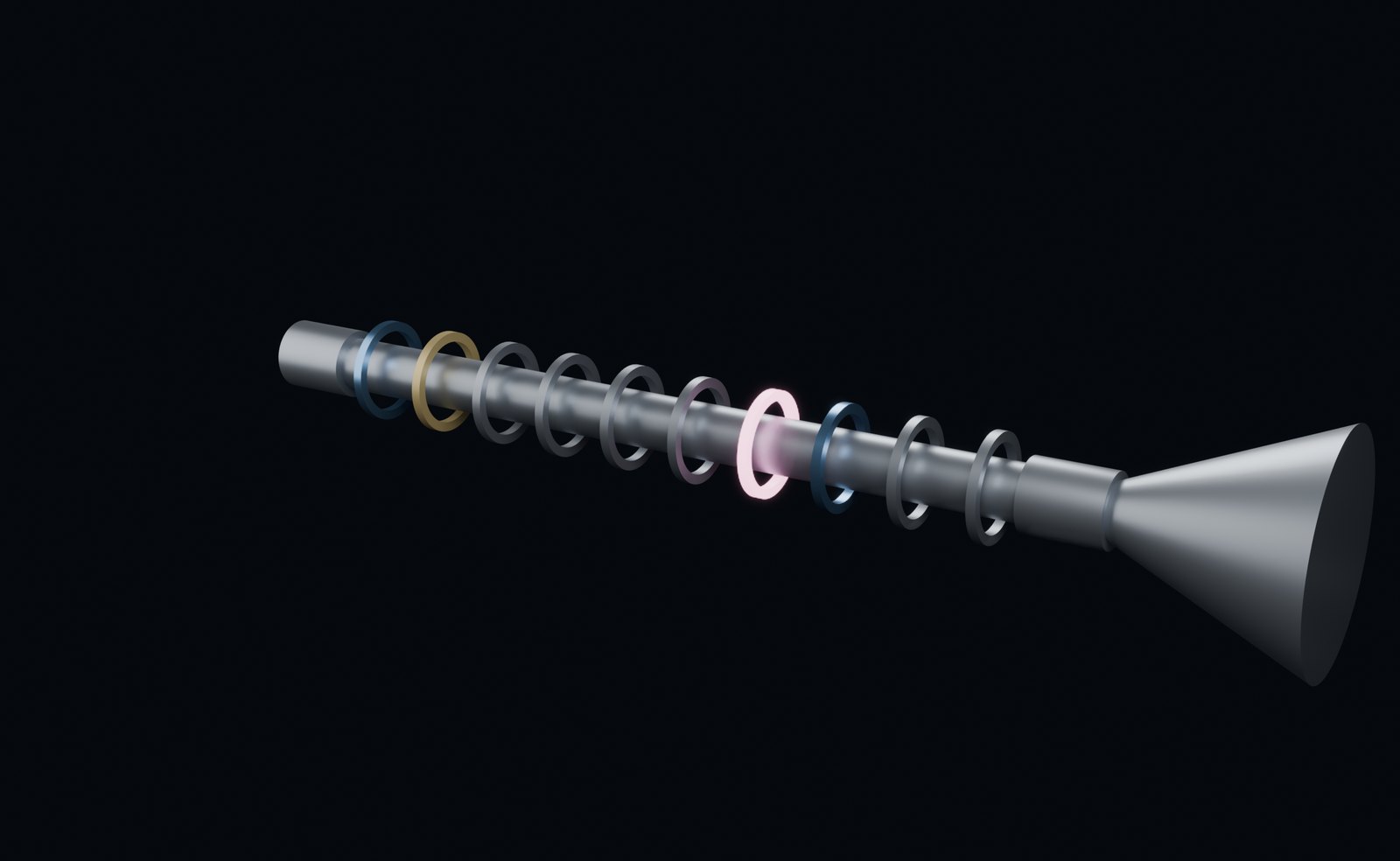
Fuel Supply Redundancy

Resilient power needs resilient fuel; redundancy comes from on-site reserves, multiple breeders, and the abundance of deuterium.
No single point of failure
A fixed installation valued for resilience cannot depend on a single, fragile fuel path. The burner's fuel supply is made redundant in several independent ways so that no one disruption stops it. On-site helium-3 reserves buffer against interruptions upstream; multiple breeders mean production does not rest on one machine; and deuterium's abundance removes half the fuel from the risk picture entirely.
How the layers combine
Redundancy is strongest when the layers are independent. A local reserve covers short interruptions in delivery. A fleet of breeders covers the loss of any single production unit. The slow, predictable nature of decay-based supply means shortfalls appear gradually and can be managed, not suddenly. And because deuterium is effectively unlimited, only the helium-3 side needs this protection — halving the problem.
- On-site reserve buffers delivery interruptions
- A breeder fleet removes single-source production risk
- Slow decay supply gives early warning of any shortfall
- Deuterium abundance removes half the fuel from risk
Redundancy is a design-stage commitment that becomes real as the breeder fleet grows. Until then it is planned into the fuel-foundry model, sizing reserves and breeder count to the resilience the installations require.