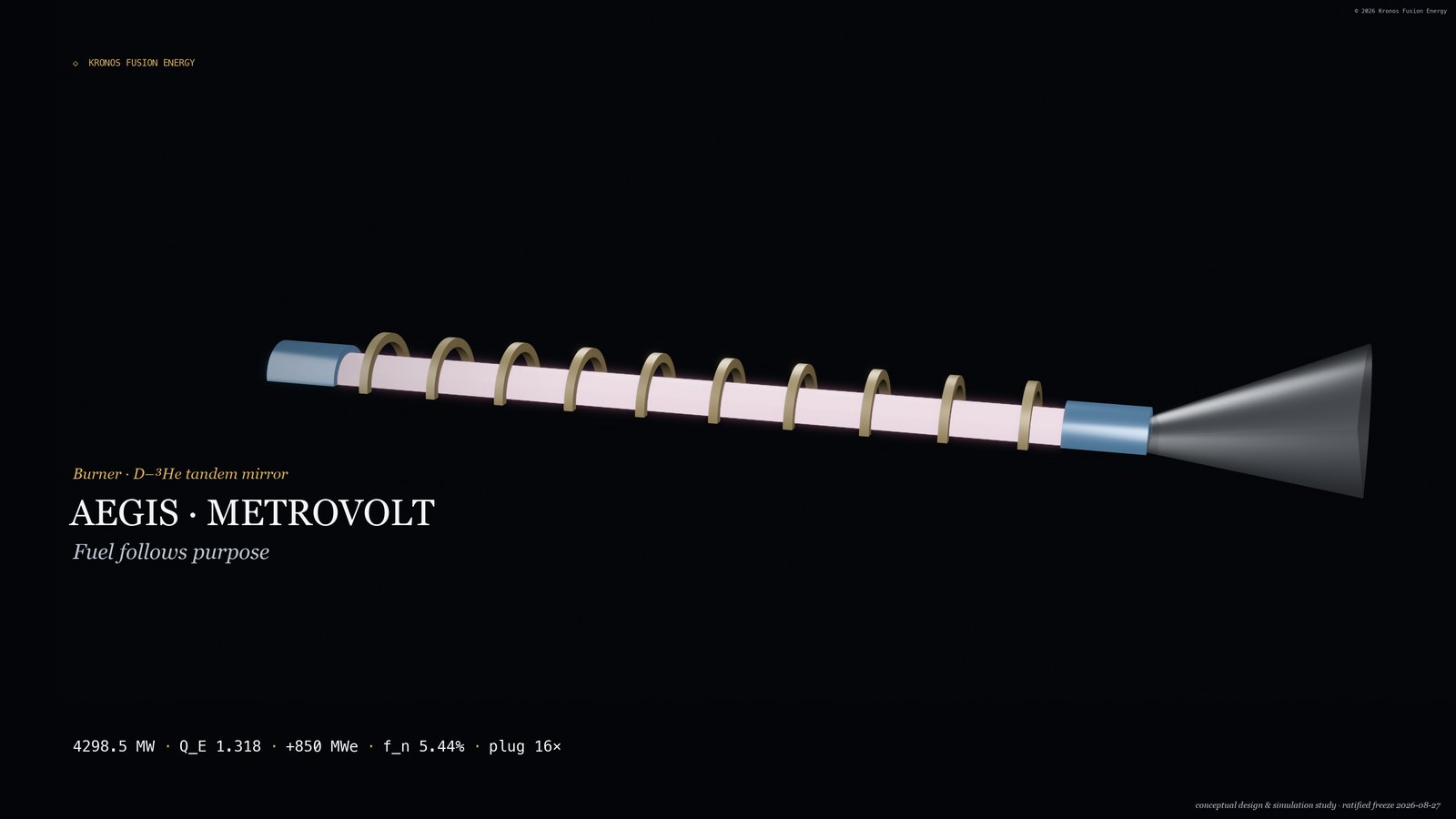
Startup Fuel Inventory
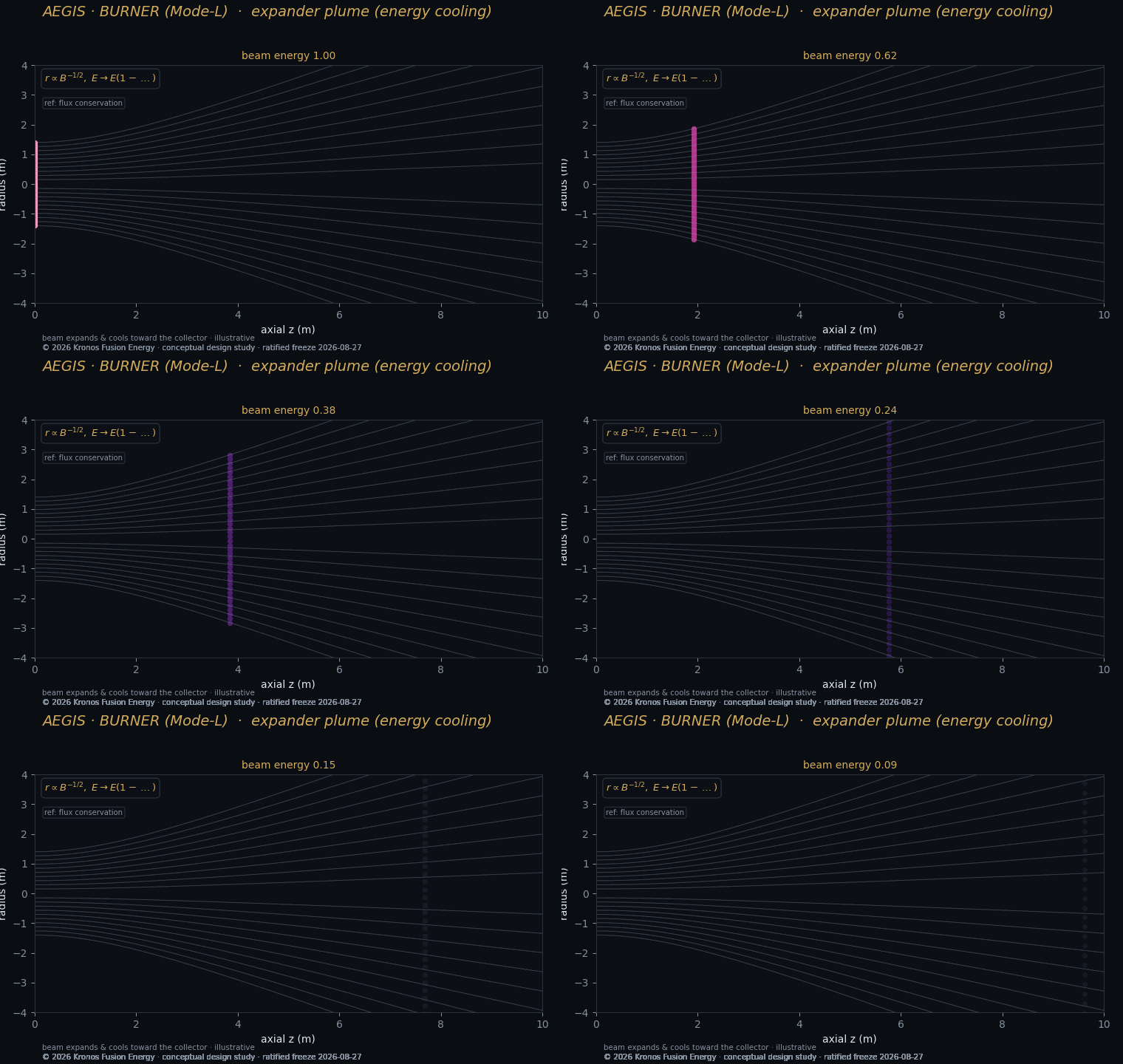
Bringing a burner online requires an initial helium-3 charge; this startup inventory is drawn from the reserve the breeder builds ahead of demand.
The first charge
A burner cannot begin operating with an empty fuel store. It needs an initial helium-3 inventory large enough to fill the storage and conditioning systems, establish the recycle loop, and sustain the plasma while the recovery system reaches steady operation. This startup charge is a one-time draw on the helium-3 reserve, distinct from the ongoing consumption that recycling holds low.
Why the reserve matters
The startup charge is exactly why the breeder is built first and the reserve accumulated ahead of demand. By the time the first test burner is ready around 2032, the breeder — running since roughly 2030 — should have built a helium-3 reserve from decayed tritium sufficient to charge it. Fleet growth is then paced by how quickly the reserve can supply successive startup charges plus the modest steady-state draw of the burners already running.
- Startup requires a one-time helium-3 charge to fill the loop
- Distinct from low, recycled steady-state consumption
- Drawn from the reserve built during the breeder-first period
- Fleet growth paced by reserve size and charge cadence
Planning the reserve therefore means summing all the startup charges for a planned burner fleet plus their running demand, and matching that against breeder production over time — the core calculation of the fuel-foundry model.