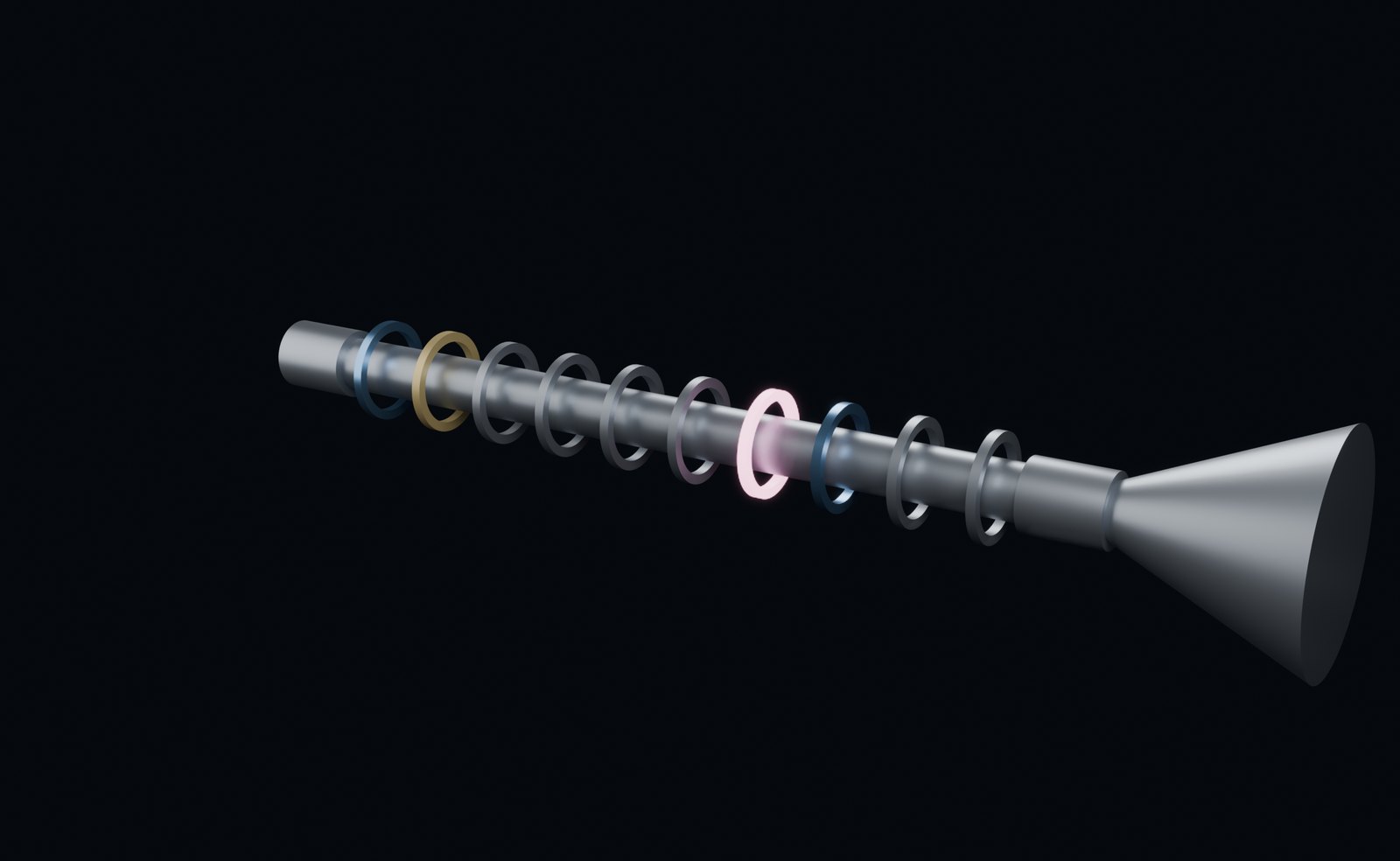
Fuel Quality Assurance
Every batch of fuel is verified for isotopic purity and composition before it reaches the plasma, protecting both machine performance and the fuel ledger.
Verify before it burns
Fuel quality assurance is the set of checks that confirm what is about to be injected is actually what the plasma needs. It verifies isotopic purity — that helium-3 is not diluted with helium-4 — and confirms the deuterium-to-helium-3 blend and the absence of contaminant gases. Because off-spec fuel degrades confinement and confuses accounting, quality is checked as a gate, with out-of-tolerance batches diverted for reprocessing rather than injected.
What is measured
Analysis combines composition measurement (which isotopes and gases are present and in what proportion) with purity measurement (how much helium-4 and other contamination remains). Mass spectrometry and related techniques distinguish helium-3 from helium-4 despite their chemical identity. The results feed two systems at once: the plasma control system, which needs to know the exact mix it is fuelling, and the fuel-accountancy ledger, which needs to know the helium-3 content of every batch.
- Verifies isotopic purity and the D:3He blend
- Detects contaminant gases before injection
- Mass spectrometry distinguishes helium-3 from helium-4
- Results feed both plasma control and fuel accounting
Quality assurance sits between conditioning and injection as the last checkpoint before the plasma, and it is what lets the composition delivered to the burn be a measured fact rather than an assumption.