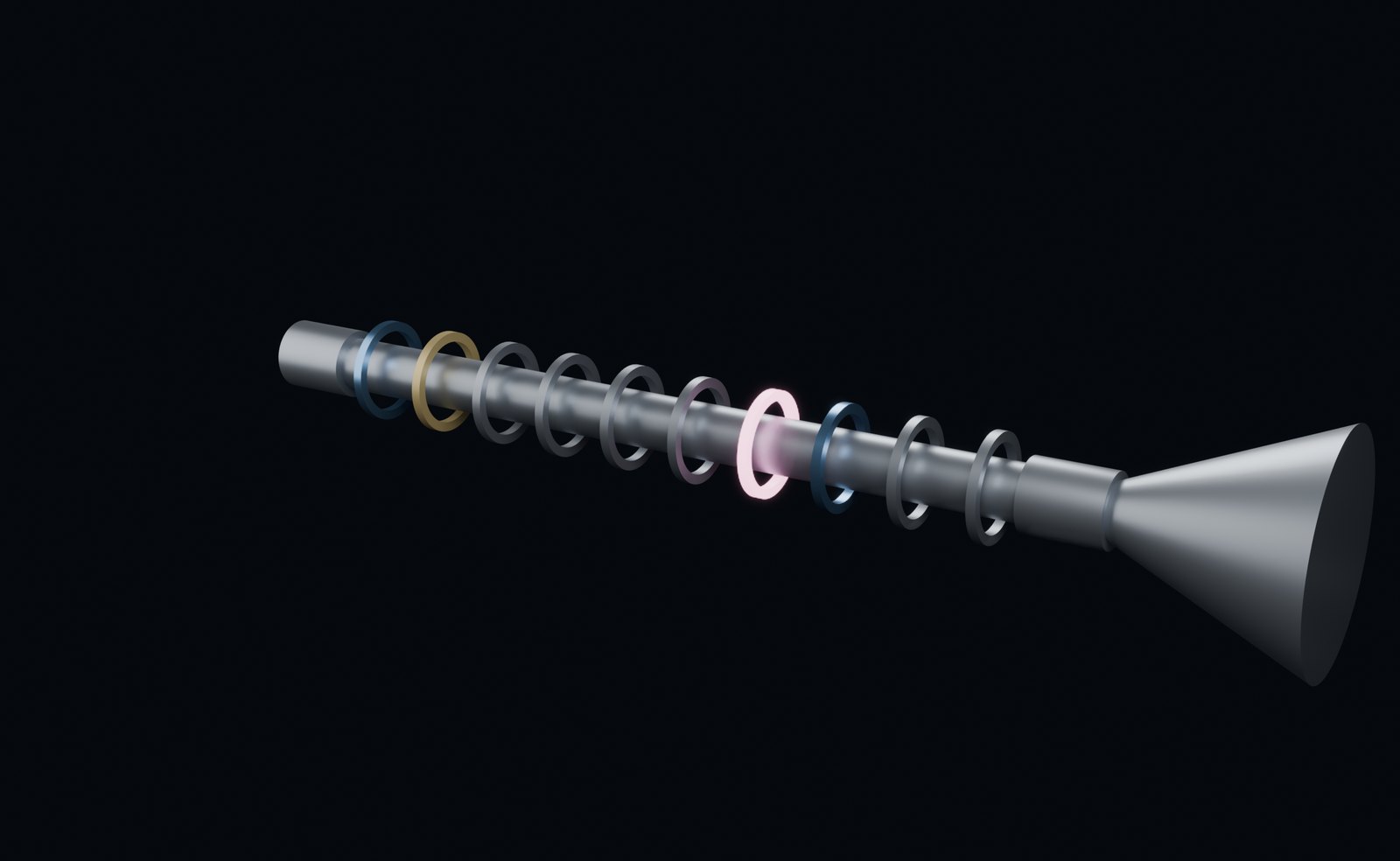
Fuelling Rate and Burn Fraction
The rate fuel is injected and the fraction that burns per pass together set how much helium-3 a burner consumes to hold a given power.
Two numbers that size demand
Helium-3 demand at an installation follows from two quantities. The fuelling rate is how fast fresh and recycled fuel must be injected to sustain the plasma density against burn and loss. The burn fraction is what proportion of injected fuel reacts before leaving. A low burn fraction means fuel must be cycled many times, which raises the importance of recovery; the fuelling rate then sets the throughput the fuel plant must handle.
Why recovery dominates
Because the per-pass burn fraction is well below one, most injected helium-3 is not consumed on any given pass — it leaves in the exhaust. If that fraction is recovered and recycled, the net consumption is small relative to the throughput. If it were not recovered, net consumption would balloon and no realistic breeder supply could keep up. This is why recycling is not an optimization but a requirement for a scarce, bred fuel.
- Fuelling rate sustains plasma density against burn and loss
- Burn fraction per pass is well below one
- Net demand = injected minus recovered unburned fuel
- High recovery keeps net helium-3 consumption low
For fleet planning, net helium-3 demand per burner is the figure that must be matched against the breeder's ~1.97 kg/yr-class output per unit to decide how many burners a breeder can feed.