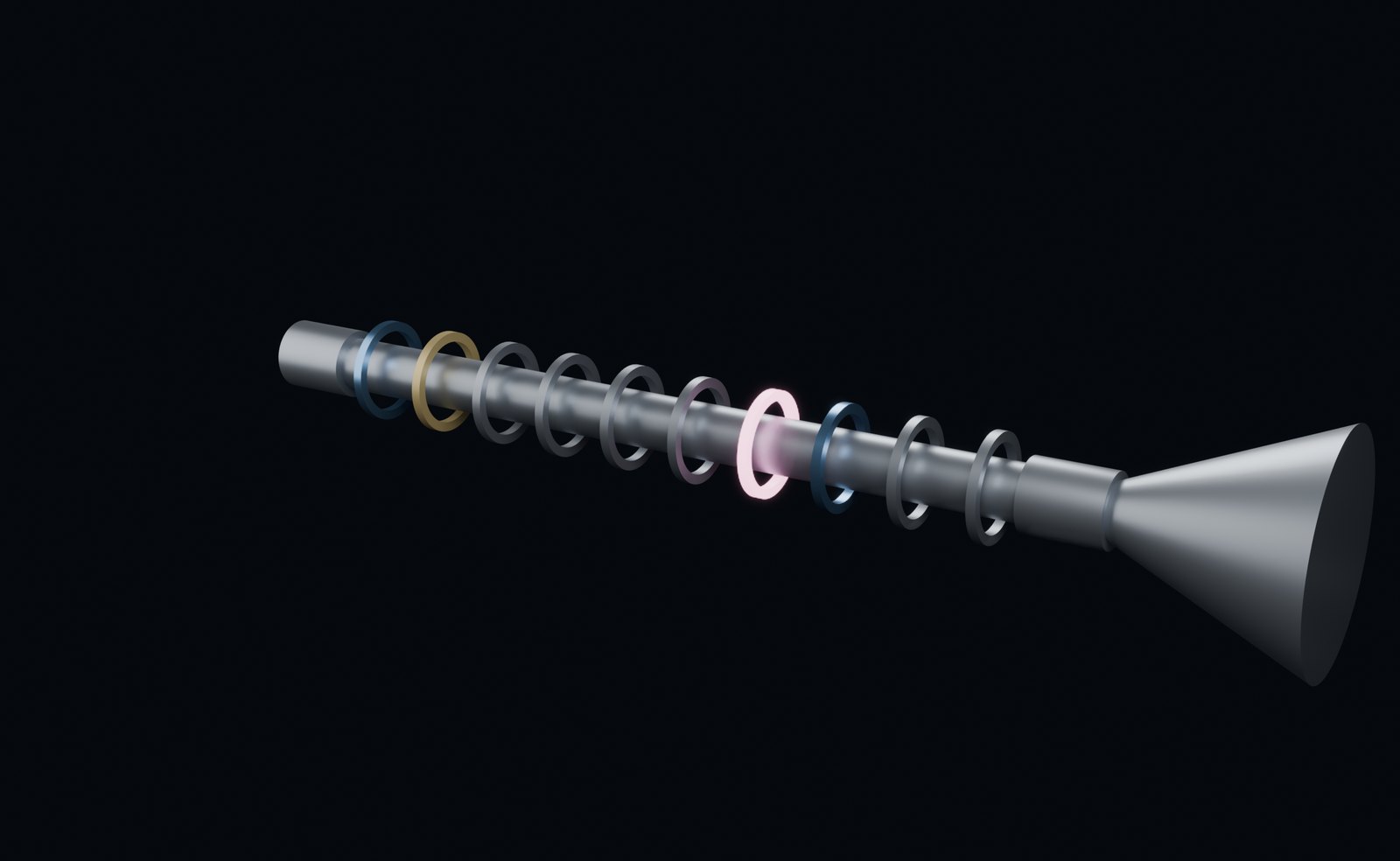
Simulated Versus Demonstrated
A line-by-line separation of what the models predict from what has actually been shown in hardware, on this program or elsewhere.
The honest ledger
Confusing a modelled result with a measured one is the most common way fusion claims mislead. Below, each burner capability is tagged: done where hardware exists somewhere in the field, simulated where only models support it, and open where neither yet applies.
Where the field has real hardware
The D–3He reaction itself is textbook physics, and direct energy conversion of charged particles has been demonstrated at small scale in earlier mirror experiments. Those are not in dispute. What is unproven is the combination at the Aegis design point: the plug field, the confinement regime, and the fuel supply all at once.
Where only models exist
Everything specific to the Aegis design point — the 26.49 T plug, the 17 T throat, the integrated fuel-to-DEC chain — is simulation. The test burner around 2032 is the first step that converts the middle rows of the ledger from simulated toward demonstrated.
The value of this ledger is that it never lets a modelled number borrow the credibility of a measured one. Anyone can read down the column and see exactly which rows rest on operated hardware and which rest on codes. As the program advances, rows move upward one at a time, each promotion backed by a specific test rather than by a revised assumption.