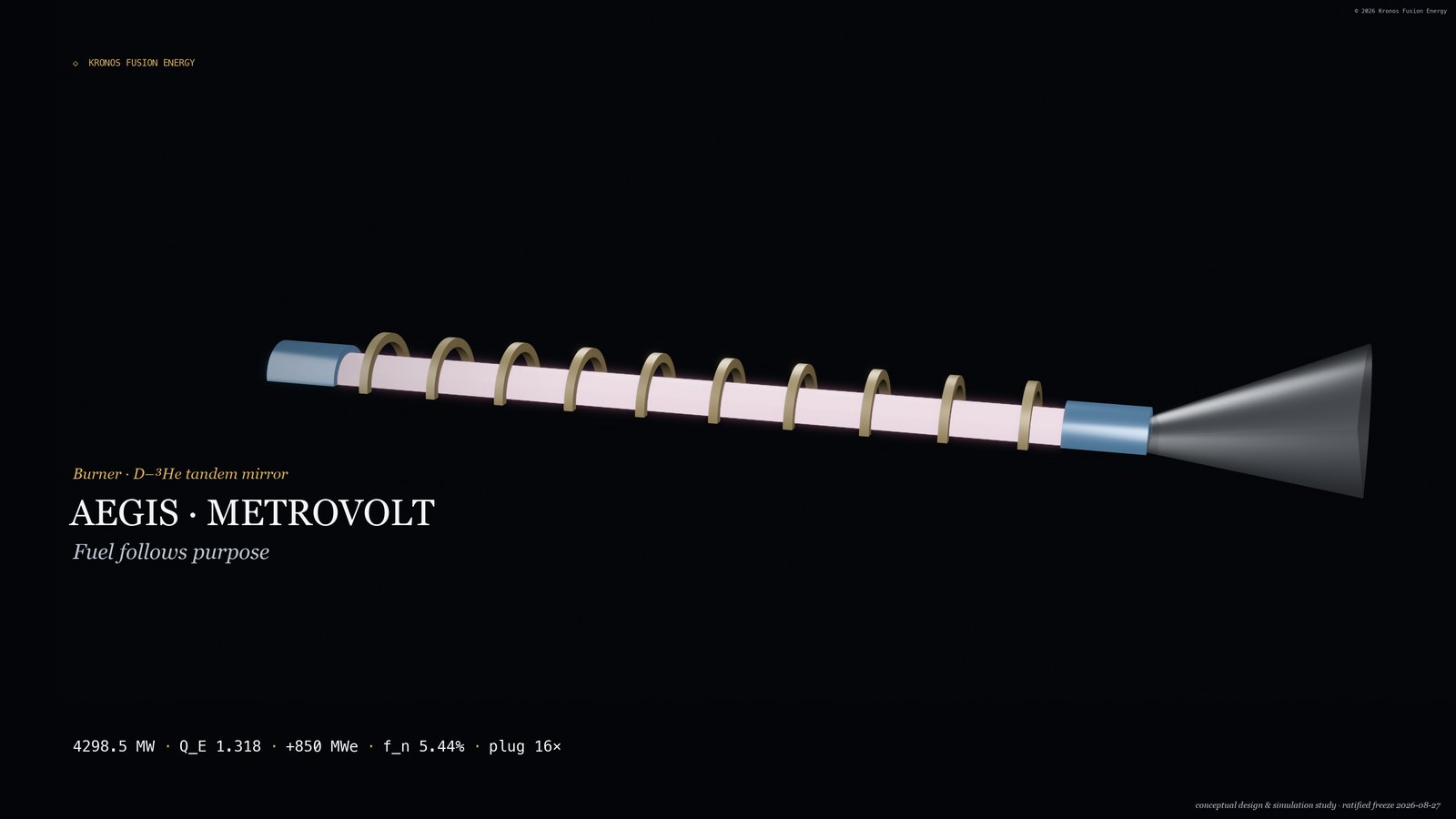
From Simulation to Test Burner
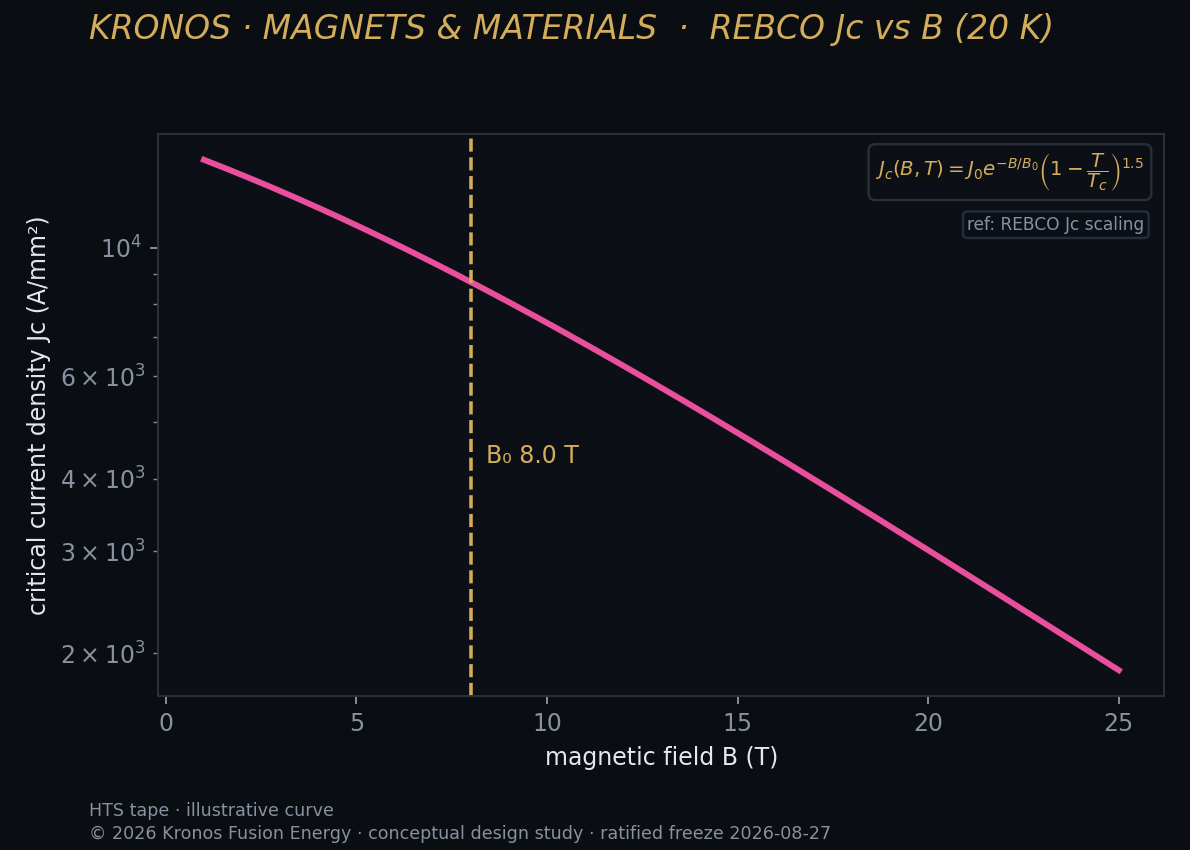
The bridge years between today's models and the ~2032 test burner: coupon magnets, regime experiments, and a fuel supply that has just begun.
What has to happen in between
There is real work between a design study and a test machine. Between now and ~2032 the plug coil must move from a 3–3.9x overstress result to a tested coupon; the regime must be walked outward in experiments; and the breeder must reach FOAK so that any burner fuel exists.
Parallel, not sequential
These threads run in parallel. Magnet, plasma-physics, fuel-supply, and materials programs advance together because a test burner needs all of them at once. The breeder's 2030 first tritium is the pacing item for fuel; the magnet program is the pacing item for the plug.
Exit condition
The bridge ends when an integrated machine can be built with a survivable coil, a fuel supply, and codes validated close enough to the design point to be trusted. That machine is the test burner.
The bridge years are where a design study either becomes an engineering program or reveals that it cannot. Running the magnet, plasma-physics, fuel-supply, and materials threads in parallel is not efficiency for its own sake; a test burner needs all of them at once, so a lag in any one is a lag in the machine. The breeder paces fuel; the magnet program paces the plug.
See the prototype program and regime experiments.