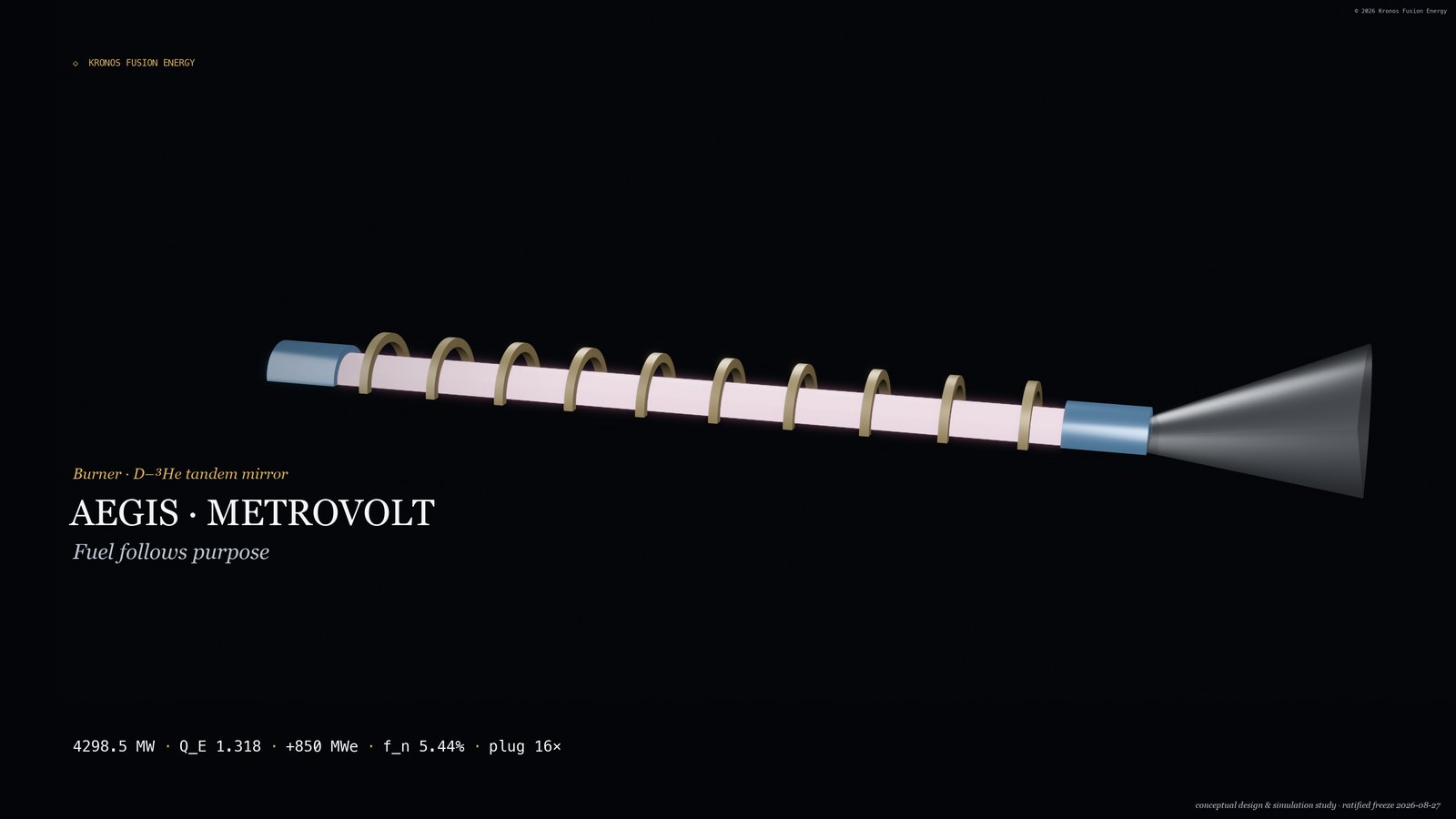
Neutron Fraction and Material Readiness
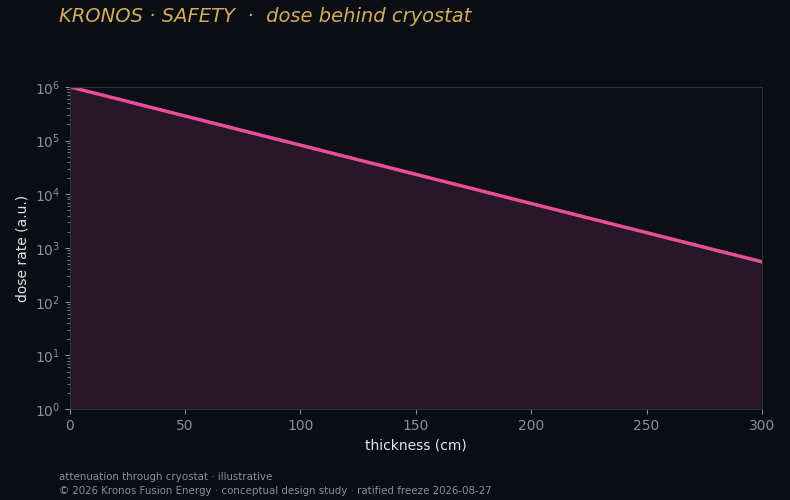
The 5.44% neutron fraction is low but not zero; qualifying materials for it is part of readiness, not an afterthought.
Low-neutron, not aneutronic
D–3He is often called clean, but Aegis carries a 5.44% neutron fraction from side reactions. That is far below a D–T machine, yet high enough to drive material damage, activation, and component wear that must be characterised before availability and lifetime can be trusted.
What must be qualified
- First-wall and plasma-facing materials under 14 MeV-relevant flux
- Activation and handling of neutron-exposed components
- Insulation and structural degradation over service life
- Shielding sufficient to protect coils and personnel
Readiness link
Material qualification feeds directly into the availability and lifetime gates: you cannot state a maintenance interval you have not measured. The test burner around 2032 is where these materials first see real flux.
Describing D–³He as clean is only half true, and we keep the other half in view. A 5.44% neutron fraction is far below a D–T machine, but it still activates components, damages structure, and sets shielding requirements. Qualifying materials for that flux is not housekeeping; it is a precondition for any honest statement about component lifetime and therefore about availability.
See component lifetime and neutron fraction and fuel choice.