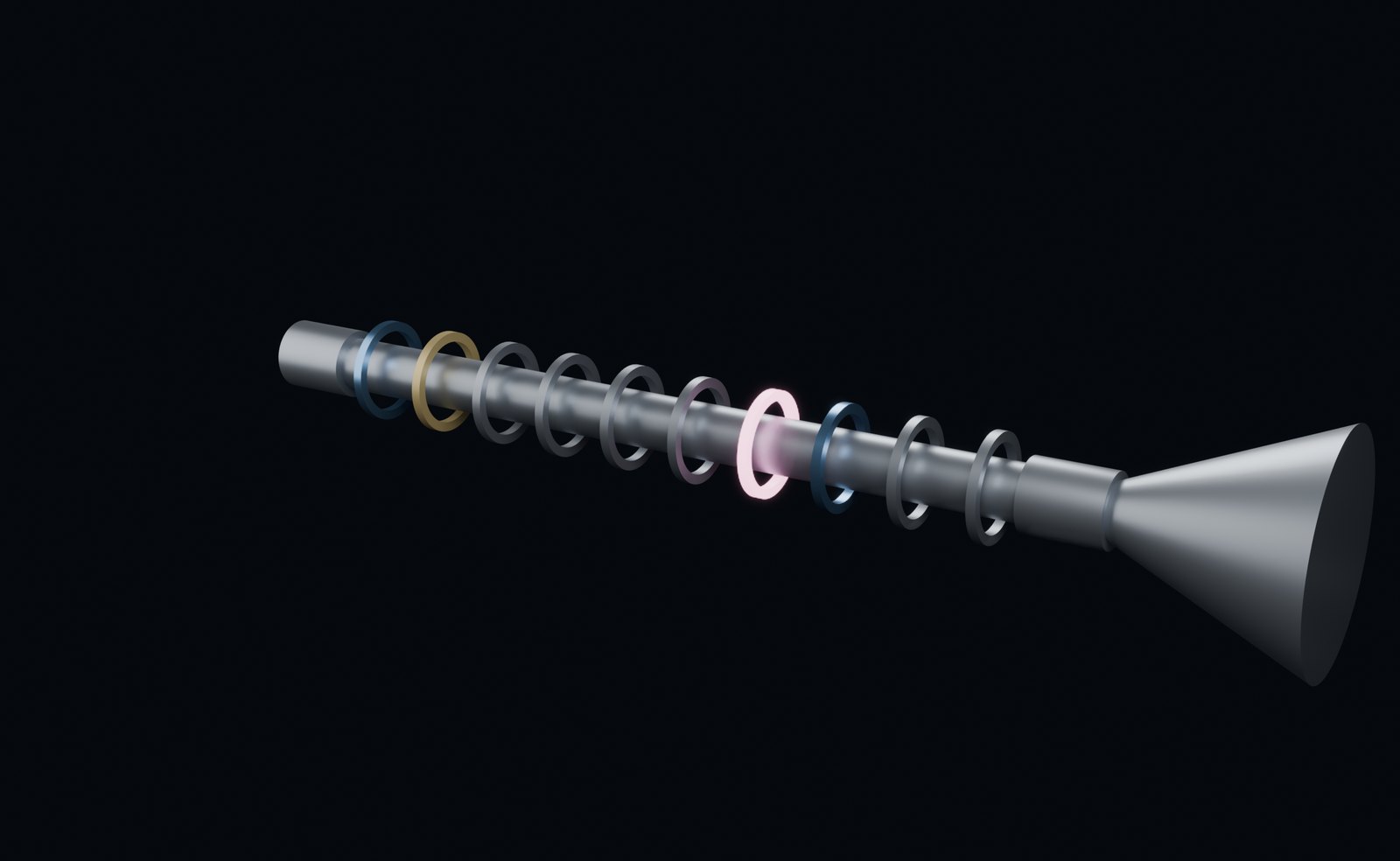
Gate One in Depth: Plug Coil Feasibility
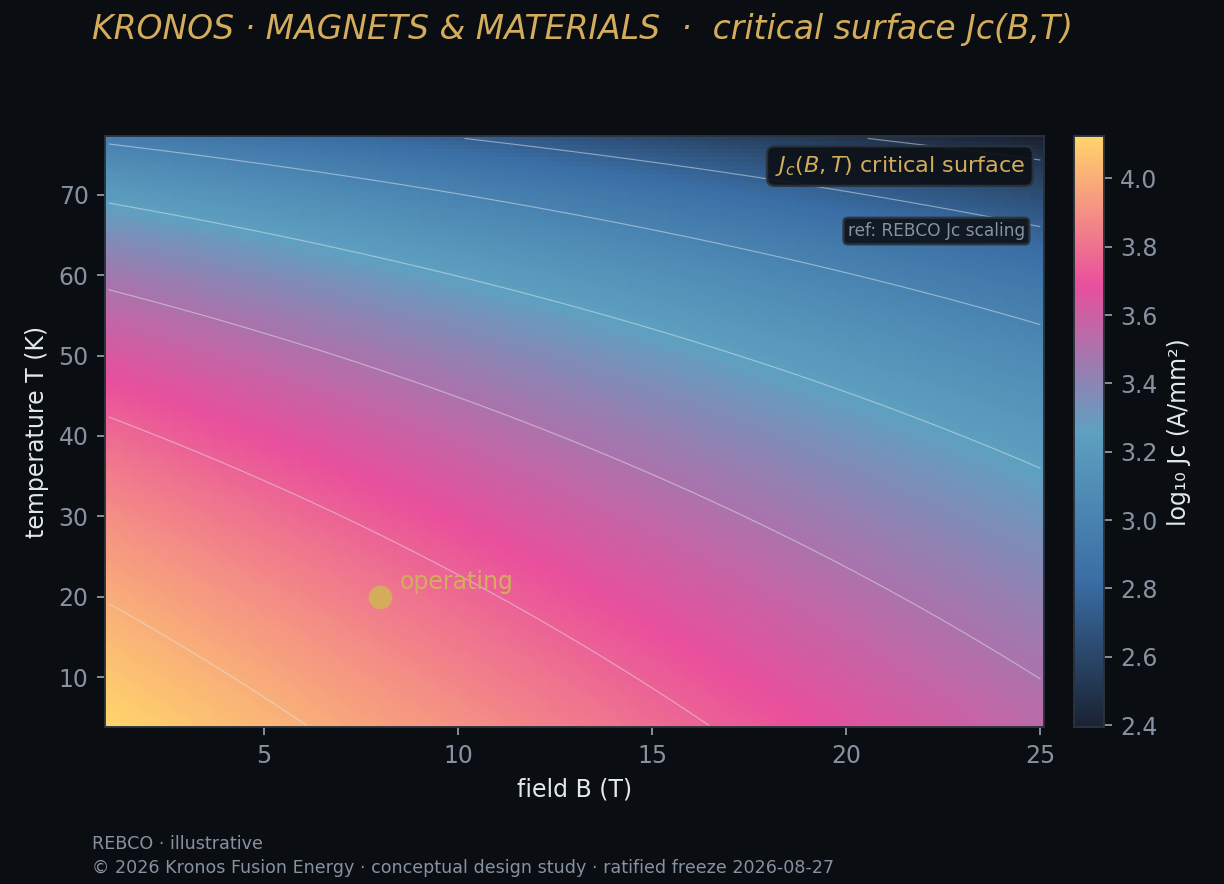
At the 26.49 T design bore the plug magnet is overstressed by roughly 3 to 3.9 times its allowable, making the coil infeasible exactly as currently drawn.
What the model shows
The tandem-mirror end plugs must produce 26.49 T to confine the central-cell plasma electrostatically. At the bore the design requires, the structural stress in the conductor and its support runs about 3–3.9x the allowable for the materials assumed. That is not a tuning problem; it is a statement that the coil as specified cannot survive its own field.
Why it is a hard gate
Magnet stress scales steeply with field and inversely with bore. You cannot simply thicken structure without pushing bore, current density, and quench behaviour into their own limits. The 26.49 T plug is the single most demanding structural requirement in the machine.
What could close it
- Higher-strength structural alloys and reinforced winding packs
- REBCO high-temperature superconductor operated with more conservative current density
- A revised bore/field trade that lowers peak stress while preserving confinement
- Sub-scale coil coupons tested to the modelled stress to validate margins
None of these is proven at 26.49 T today. The plug-coil prototype program is the route from this simulation result to a testable coil. See closing the plug-stress gate.
The plug-stress result is the reason the whole roadmap is staged rather than aggressive. A coil that cannot survive its own field is not a detail to be optimised later; it is a question that must be answered before an integrated machine is committed. We treat a possible outcome — that the design point itself must move — as legitimate rather than unthinkable.
Cross-reference: gate summary and magnet readiness.