Component Lifetime and Readiness
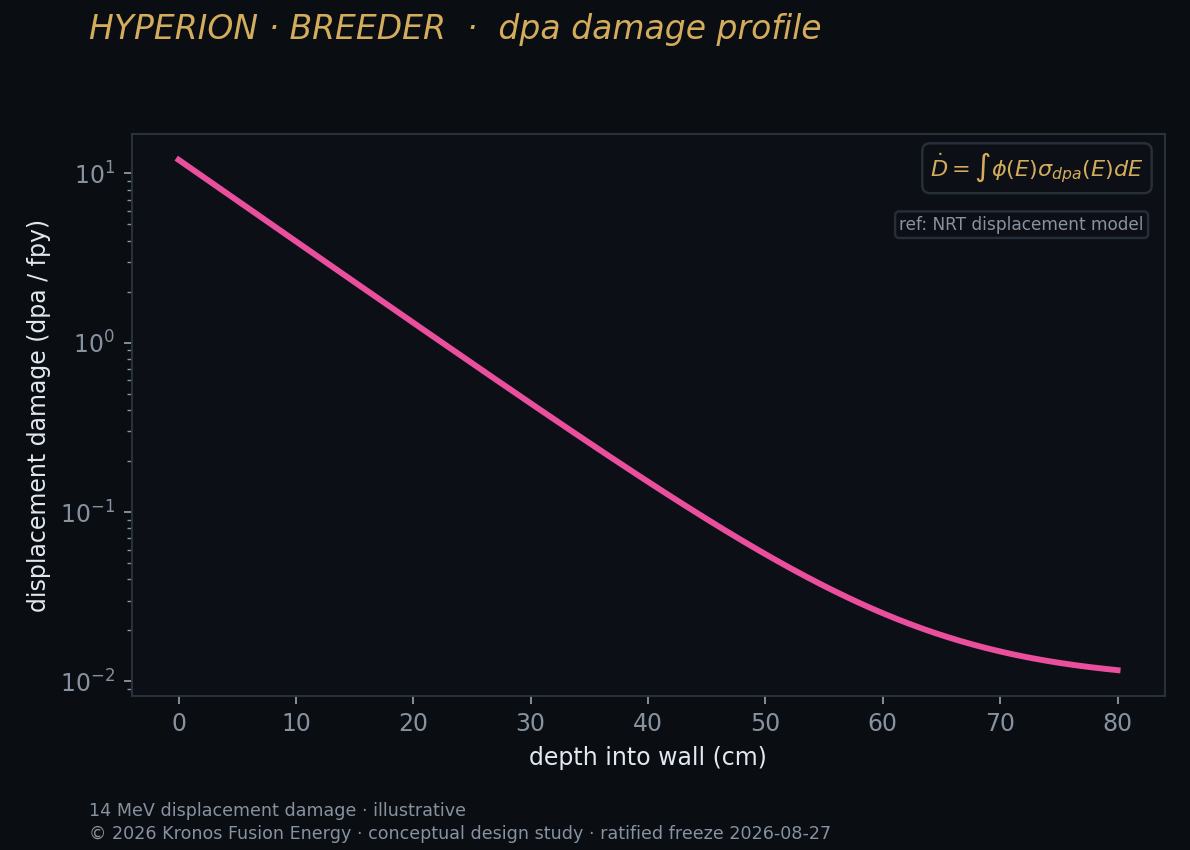
Availability and maintenance plans depend on component lifetimes that no burner has yet accumulated; measuring them is a readiness task.
Lifetime is measured, not assumed
You cannot state a maintenance interval you have not observed. Component lifetimes under the 5.44% neutron fraction — first wall, magnets, DEC collectors, insulation — are modelled today and unmeasured. That gap feeds directly into the availability gate.
What drives wear
- Neutron damage and activation from the 5.44% fraction
- Thermal and mechanical cycling of high-field magnets
- Erosion of plasma-facing surfaces
- Degradation of DEC collector grids under continuous flux
Readiness consequence
Until lifetimes are measured, availability, maintenance planning, and outage scheduling all rest on estimates. The test burner around 2032 provides the first real-flux data; fleet hours provide the rest.
Until lifetimes are measured, every maintenance interval, outage schedule, and availability estimate rests on a projection. The 5.44% neutron fraction drives wear across the first wall, magnets, conversion collectors, and insulation, and the only way to convert those estimates into commitments is real-flux data. The test burner supplies the first such data; fleet hours across staged units supply the rest.
See availability roadmap and material readiness.