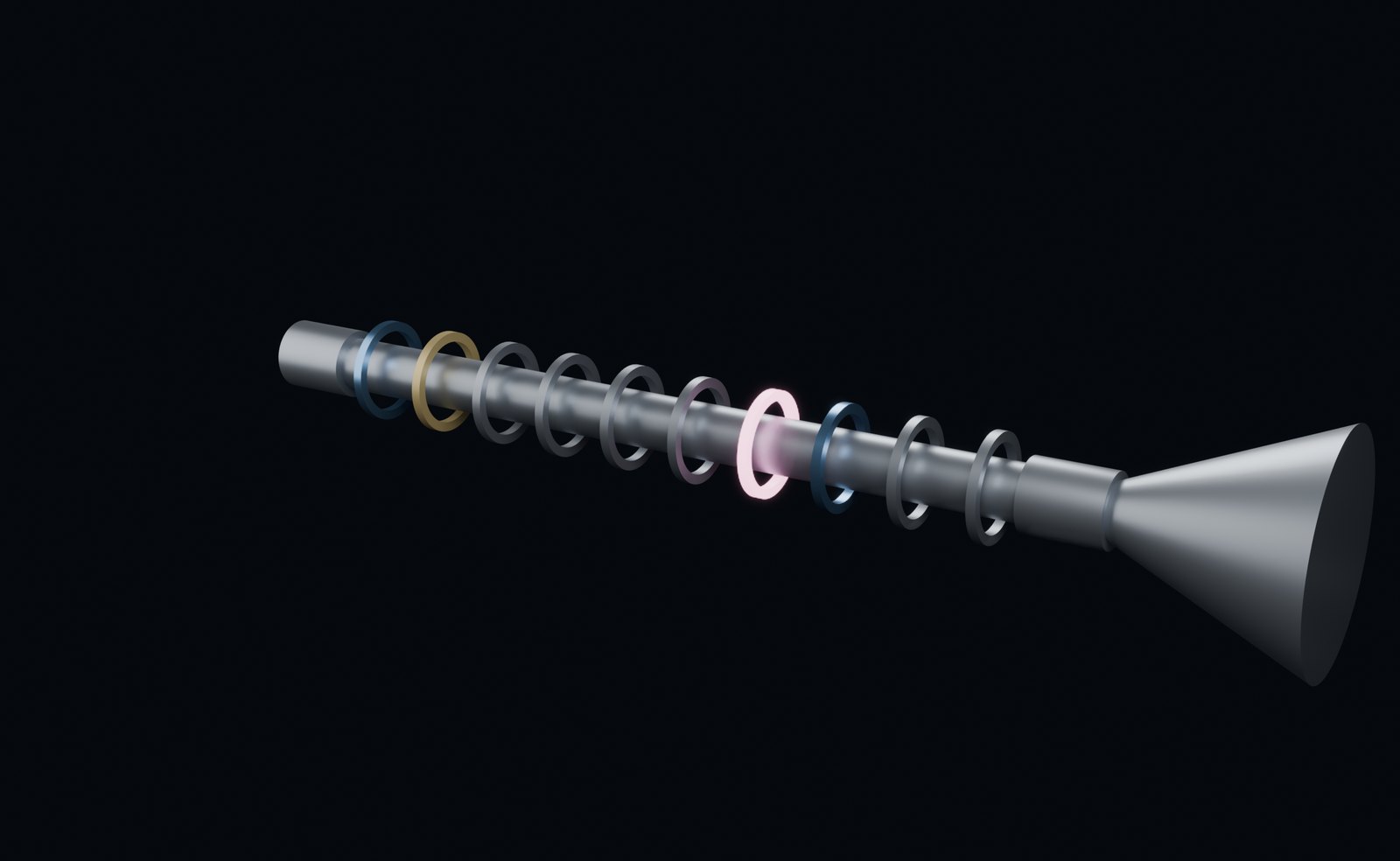
Commissioning and First-Burn Readiness
The steps that take an assembled test burner from cold hardware to a first controlled burn, with safety and protection proven first.
Cold to first burn
Commissioning walks a machine up in stages: vacuum and leak checks, magnet cool-down and energisation, subsystem checkouts, then progressively longer plasma shots toward a first controlled burn. Each stage has hold points that must pass before the next begins.
Safety and protection first
- Machine protection interlocks proven before high field
- Fast-discharge and rapid-shutdown paths verified
- Radiological monitoring for the 5.44% neutron output active
- Control-room procedures rehearsed on the training simulator
Why first burn is not net gain
A first controlled burn demonstrates the machine can operate; it is not a net-gain claim. Performance is measured over a campaign, not declared at first light. The honest milestone remains the breeder FOAK for hardware net-gain relevance.
A first controlled burn is a demonstration of operability, not a performance claim, and we are careful to keep the two apart. Performance is measured across a campaign; first light only shows the machine can be brought up safely. Safety and protection systems are proven before high field precisely because the honest sequence puts interlocks ahead of records.