
Code Benchmarking Status
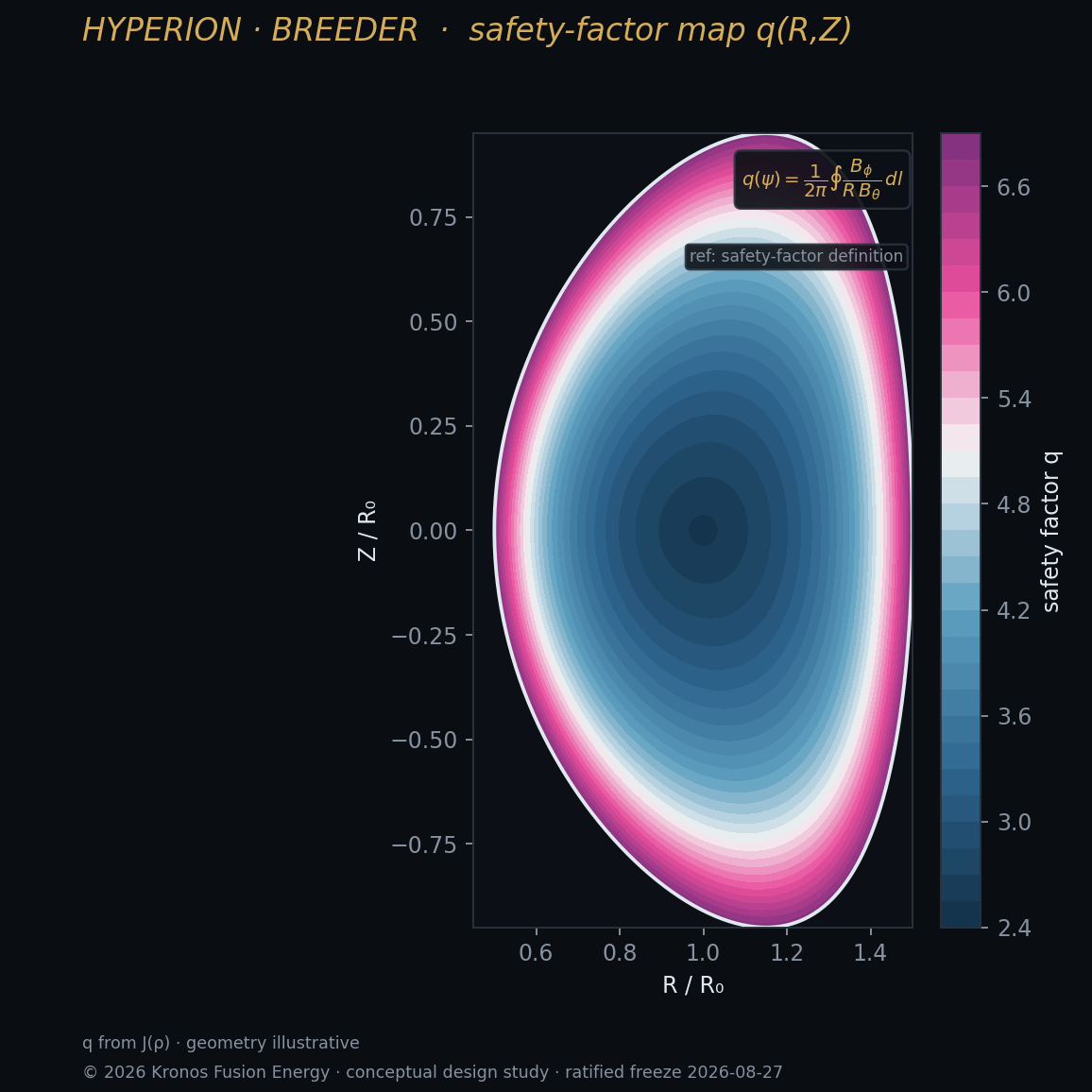
Where the physics and engineering codes stand: benchmarked against known cases, validated only within the range of operated devices.
What is benchmarked
The equilibrium, transport, neutronics, and structural codes are checked against analytic solutions and against each other. That establishes they compute what they claim. It does not establish that the answers hold at the Aegis operating point.
The honest boundary
Validation ends where operated devices end. Beyond that — the 166–830x regime, the 26.49 T plug — the codes extrapolate. We label such results as extrapolations with uncertainty, never as validated predictions.
How the boundary moves
Each regime-scaling experiment and, later, the test burner extends the validated range. Code benchmarking status is therefore a moving line that the validation campaign pushes outward.
The honest boundary is the range of operated devices; beyond it, the codes extrapolate and we label them as doing so. That boundary is not fixed — each regime-scaling experiment and, later, the test burner push it outward — but at any moment it defines which of our numbers are validated and which are projections. Reporting the boundary is as important as reporting the numbers.
See V&V methodology and regime experiments.