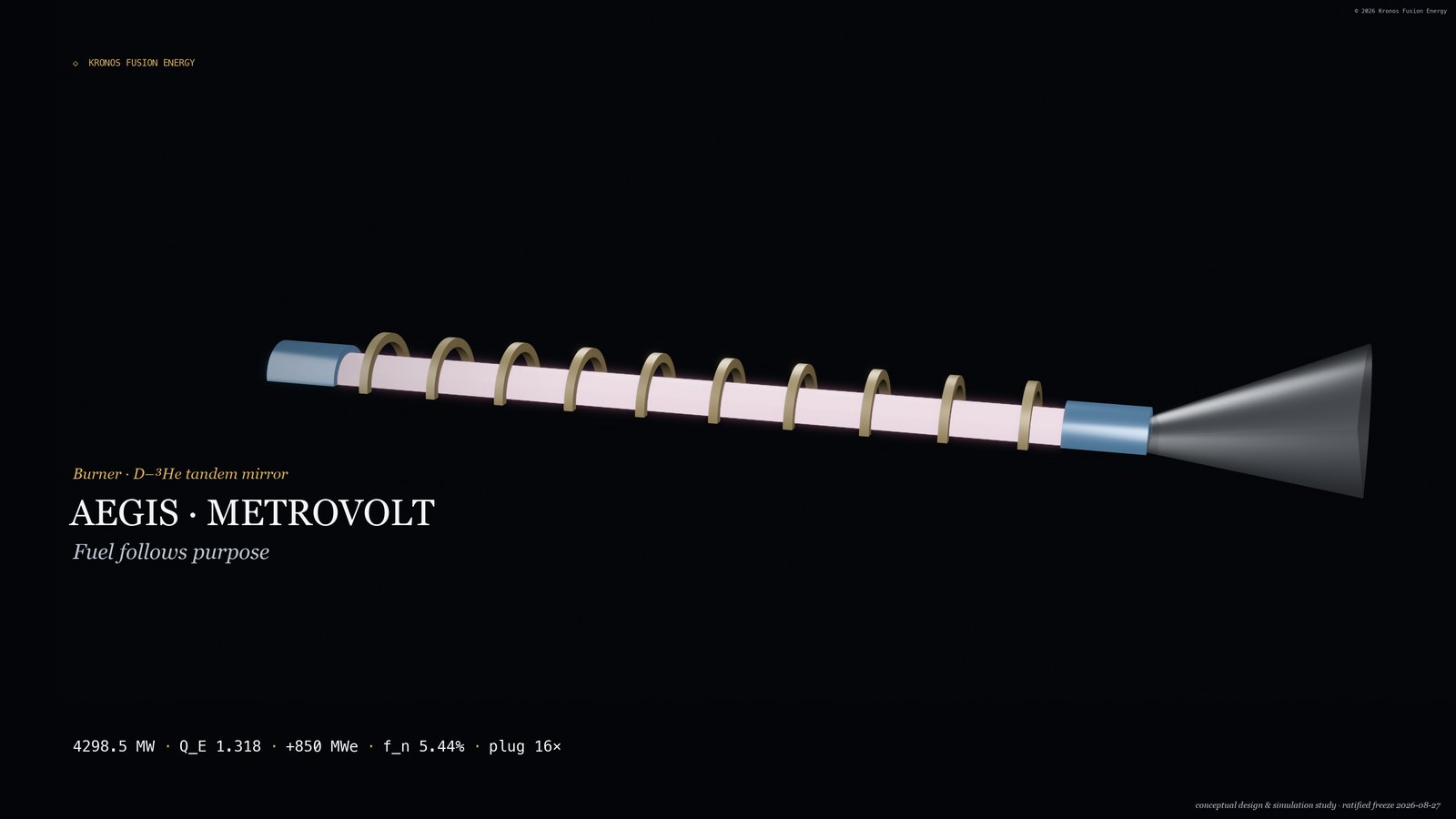
High-Field Magnet Readiness
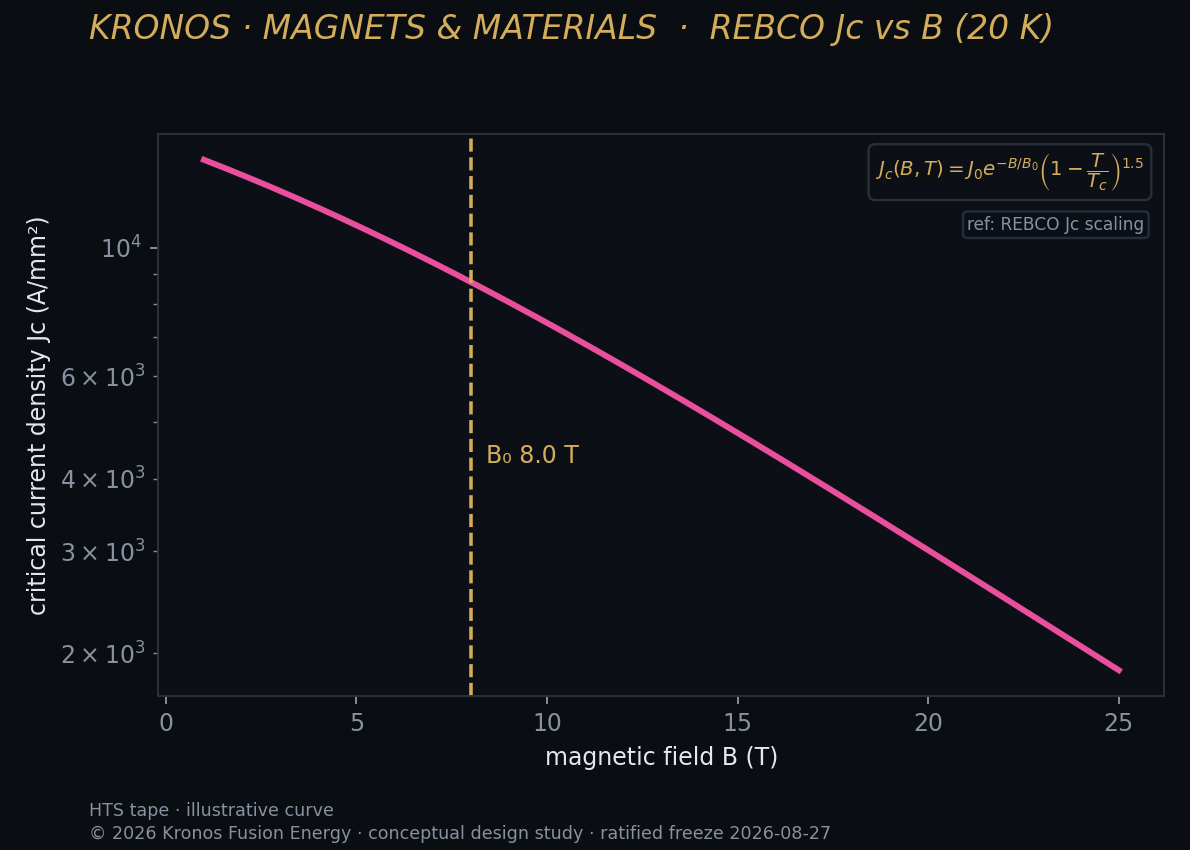
The 26.49 T plug and 17 T throat sit at the frontier of superconducting magnet technology; their readiness is the pacing item for burner hardware.
The fields required
Aegis needs 26.49 T at the plug and 17 T at the throat. These are extreme fields; the plug in particular exceeds what any fielded fusion magnet holds today, and at the design bore the coil is overstressed 3–3.9x. Magnet readiness is therefore the single most limiting hardware question.
The role of REBCO
High-temperature superconductor (REBCO) tape enables high fields, but field alone is not the problem — structure is. Running REBCO at conservative current density buys stress margin in exchange for more conductor. The trade between field, bore, current density, and structure is the heart of the magnet program.
Readiness statement
No magnet at 26.49 T with the required bore and margin has been demonstrated. Until a coil section is tested, the plug field remains a simulation target. This is stated plainly because it is the gate most likely to move the schedule.
It is worth separating two ideas that are easily conflated: reaching a field and surviving it. High-temperature superconductor makes 26.49 T conceivable, but the binding problem is structural, not electromagnetic. The magnet program therefore spends most of its effort on the field/bore/current-density/structure trade, and treats a tested coil section — not a computed field — as the milestone that matters.
See the prototype program and plug feasibility.