Vacuum Pumping Systems
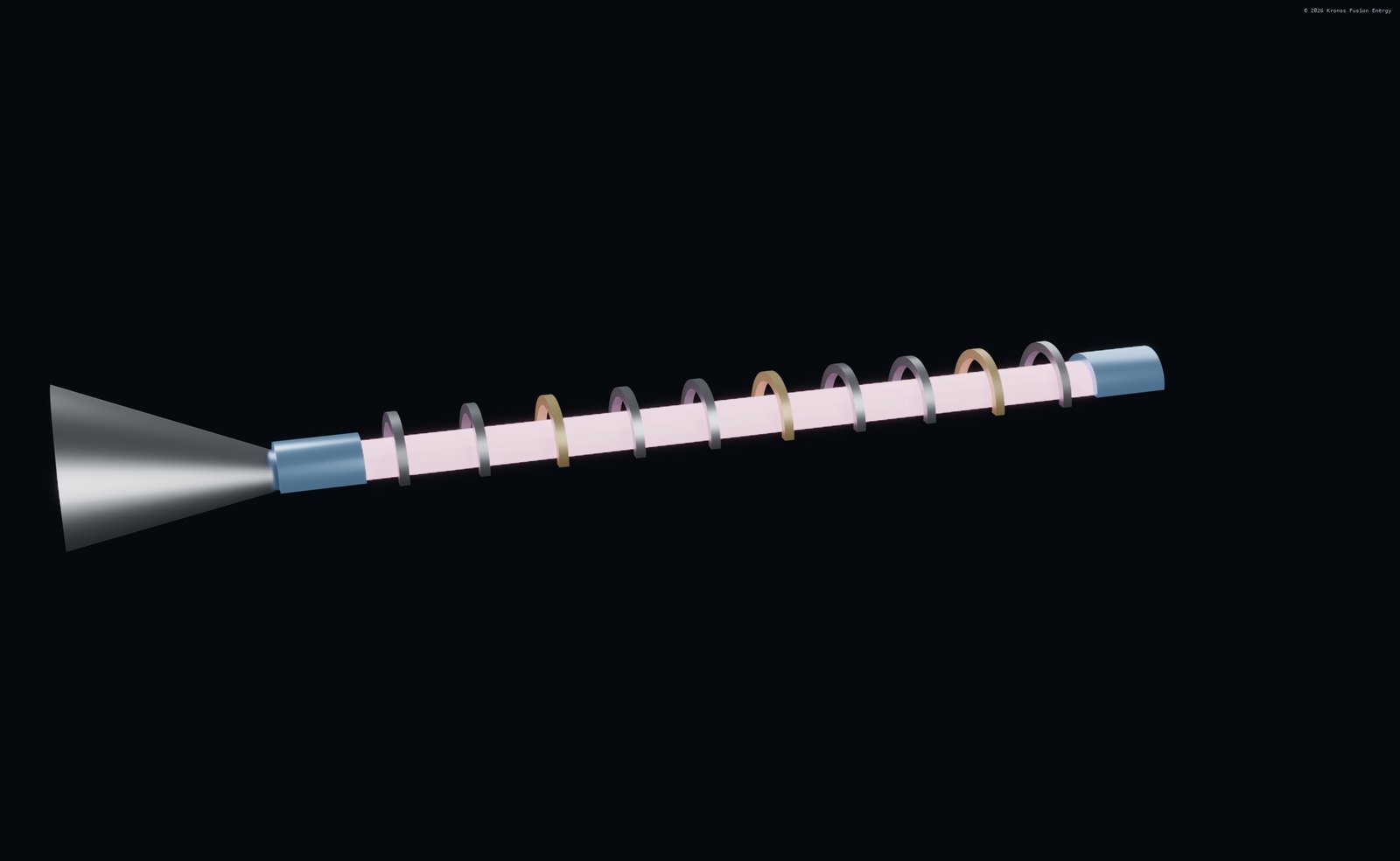
A staged pumping train establishes and holds the ultra-high vacuum, and removes plasma exhaust for fuel recovery.
Vacuum pumping does two jobs: it establishes and maintains the ultra-high vacuum the plasma requires, and it removes the exhaust stream during operation so that unburned fuel can be recovered. The train is staged from mechanical roughing pumps to high-vacuum pumps that reach operating pressure.
Staged pumping
- Mechanical pumps rough the system from atmosphere
- High-vacuum pumps reach and hold ultra-high vacuum
- Exhaust handling routes effluent to fuel recovery
- Isolation valves segment the boundary for maintenance
Exhaust and recovery
During operation, the pumps continuously remove particles leaving the plasma — unburned deuterium and helium-3, helium ash, and byproducts. This stream is routed to fuel handling for separation and recycle, and any tritium is directed to controlled handling. Pumping speed and capacity are matched to the fueling rate to hold the central-cell pressure.
Reliability
Because a loss of vacuum ends operation, the pumping system is designed with redundancy and clear isolation so that a single pump can be serviced without breaking the whole boundary. Vacuum performance is specified at design stage against the frozen machine's operating pressure.