Component Lifetime & Replacement
Life-limited components are tracked against neutron fluence and duty, and replaced on planned campaigns before failure.
Some components have a finite life set by neutron fluence, thermal cycling, or wear. The low D-³He neutron fraction (5.44%) extends the life of near-plasma parts compared with a D-T machine, but the first wall, near-plasma structure, and some diagnostics are still tracked and replaced before they reach end of life.
Life drivers
- Neutron fluence — activation and material damage near the plasma
- Thermal cycling — fatigue from operation and outages
- Wear and erosion — plasma-facing surfaces
- Aging — electronics and seals over time
Tracking and planning
Each life-limited component has a tracked budget — accumulated fluence, cycles, or hours. Condition monitoring and inspection confirm the estimate. Replacements are grouped into planned campaigns so that related end-of-life components are exchanged in one outage rather than several.
Replacement
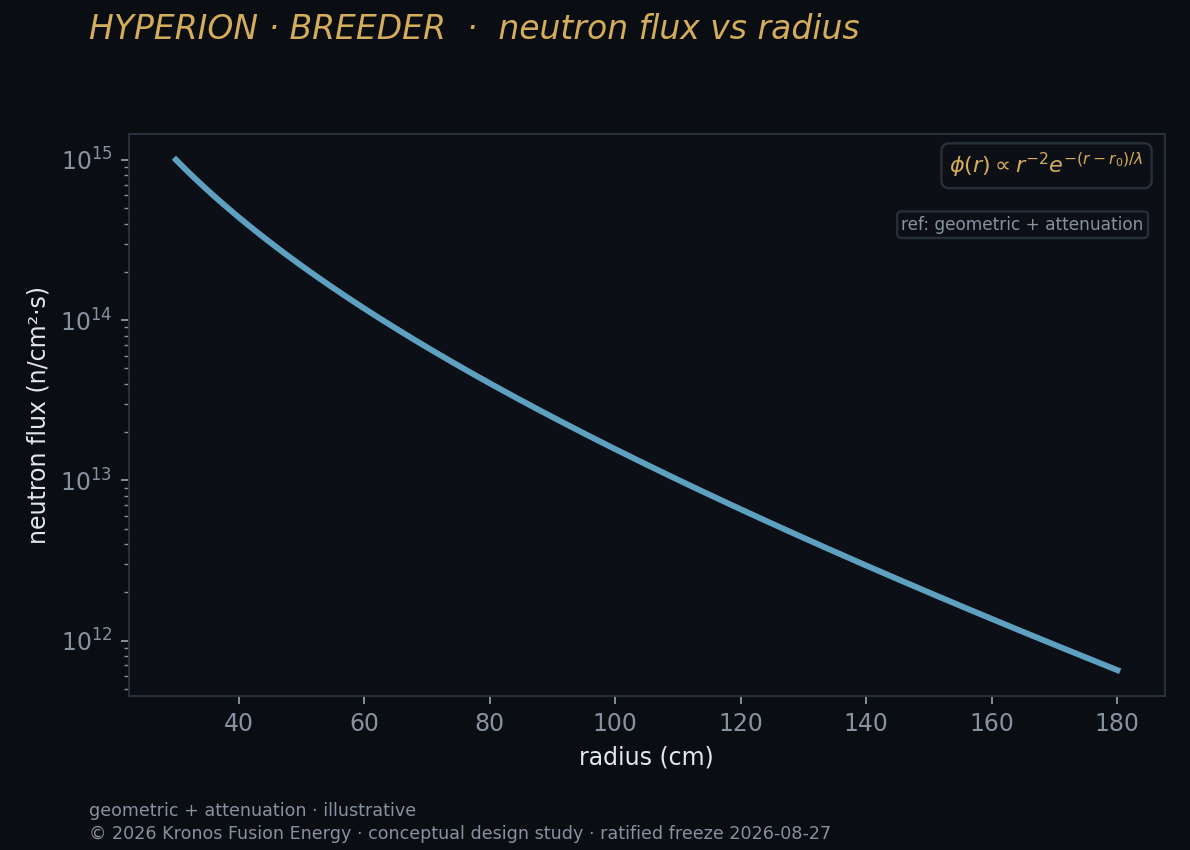
Life-limited parts are modular and, where activated, handled remotely and refurbished or dispositioned in the hot cell. The chart shows illustrative relative intervals, not measured values; life estimates are computed at design stage from the frozen machine and confirmed with operating experience.