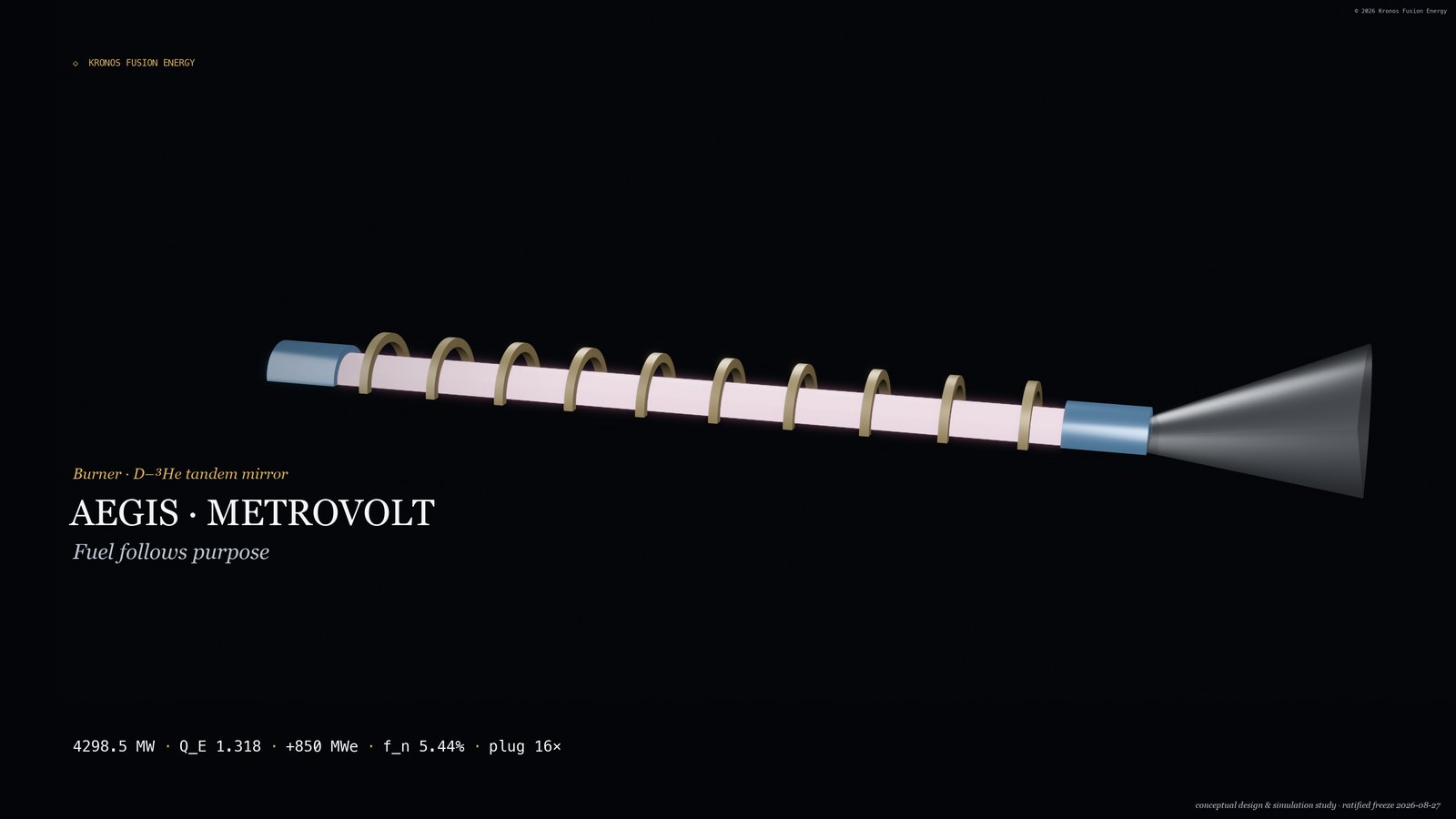
Safety Systems Overview
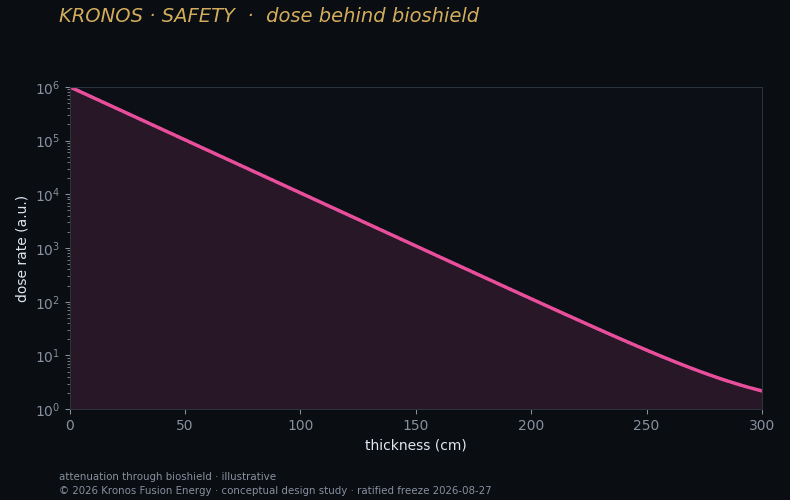
Aegis safety is layered defense-in-depth: independent protection, passive margins, and monitoring that hold a safe state through faults.
Safety at a fixed installation follows defense-in-depth: multiple independent layers so that no single failure leads to harm. Aegis combines independent safety-system logic, machine-protection trips, passive margins, containment, and monitoring. The low D-³He neutron fraction (5.44%) reduces the radiological source term, but the systems are designed for it fully.
Layered protection
- Prevention — robust design and control keep faults rare
- Protection — independent trips and fast magnet discharge
- Containment — closed systems and shielding limit release
- Monitoring — radiological and process surveillance
- Response — procedures and backup power for events
Inherent characteristics
A magnetic-confinement burner holds only a small fuel inventory in the plasma at any moment, and stopping fueling or losing confinement ends the burn — there is no runaway chain reaction. The main hazards to manage are stored magnetic energy, cryogenic and vacuum systems, activation, and any tritium byproduct.
Design-stage status
Safety systems are engineered and analyzed at design stage against the frozen machine and verified during commissioning by fault injection. The plant is not yet built; these are the safety functions the design is required to satisfy.