Tritium & Neutron Byproduct Handling
The low but nonzero neutron fraction and any tritium byproduct are contained, monitored, and handled under radiological controls.
D-³He burn is chosen partly because its neutron fraction is low — 5.44% for the frozen operating point — far below a D-T machine. Low is not zero: side reactions and the neutron flux produce activation and small amounts of tritium that must be contained, monitored, and handled under radiological controls.
Neutron byproduct
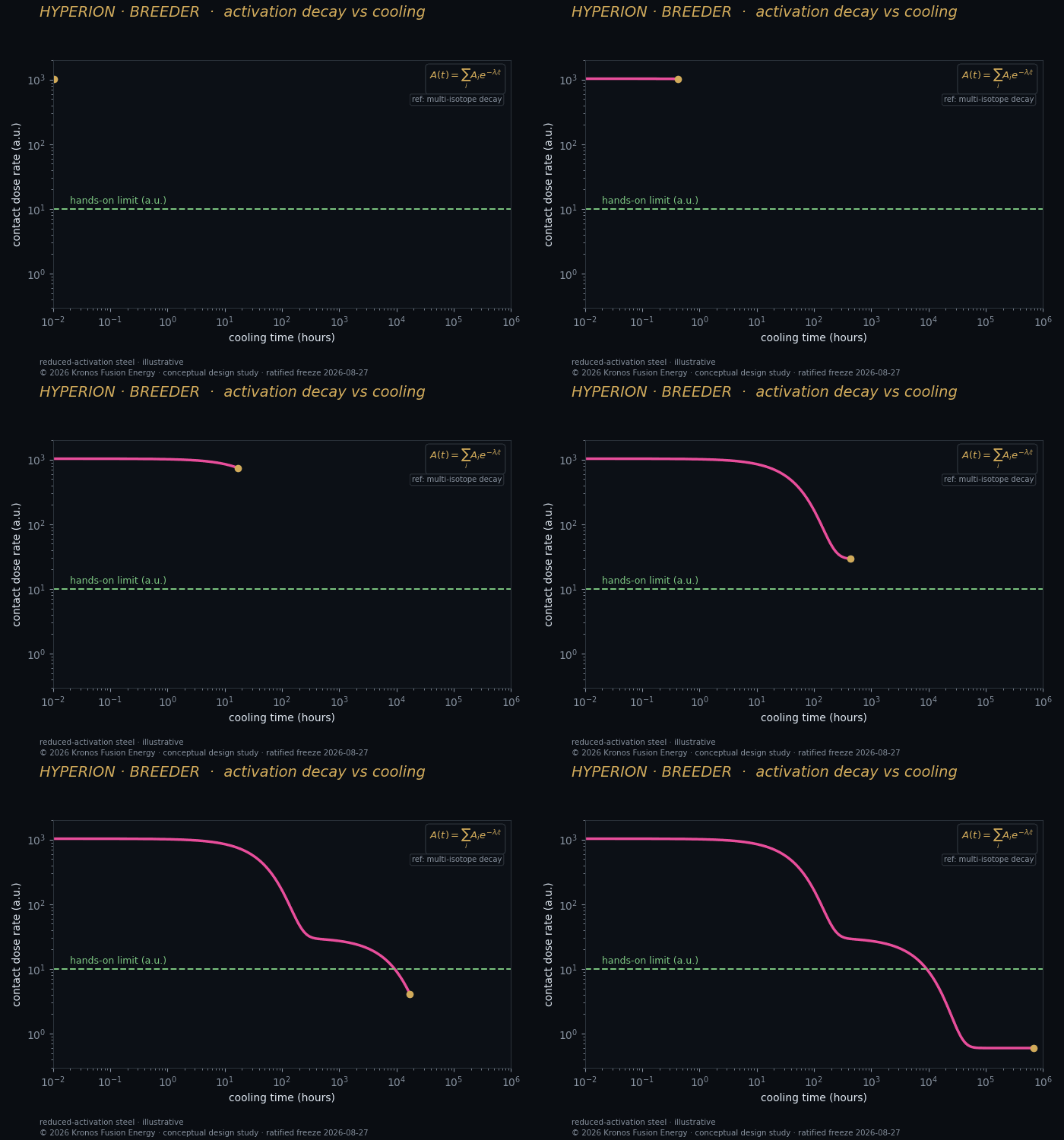
The 5.44% neutron fraction deposits energy and causes activation in the shield and nearby structure. This sets shielding requirements, drives component-lifetime planning, and makes the reactor hall a controlled radiological area. Compared with D-T, activation is greatly reduced, which simplifies maintenance and waste handling — but the systems are still designed for it.
Tritium byproduct
- Trace tritium is separated from the exhaust in fuel handling
- It is contained in closed, monitored systems
- Effluent and area monitoring watch for release
- Inventory is accounted and minimized
Defense in depth
Handling relies on layered containment: closed process systems, a monitored ventilation and detritiation path where needed, and area and effluent monitoring. The design goal is to keep worker dose and any release far below limits. These systems are engineered at design stage against the frozen neutron fraction and are not yet built.