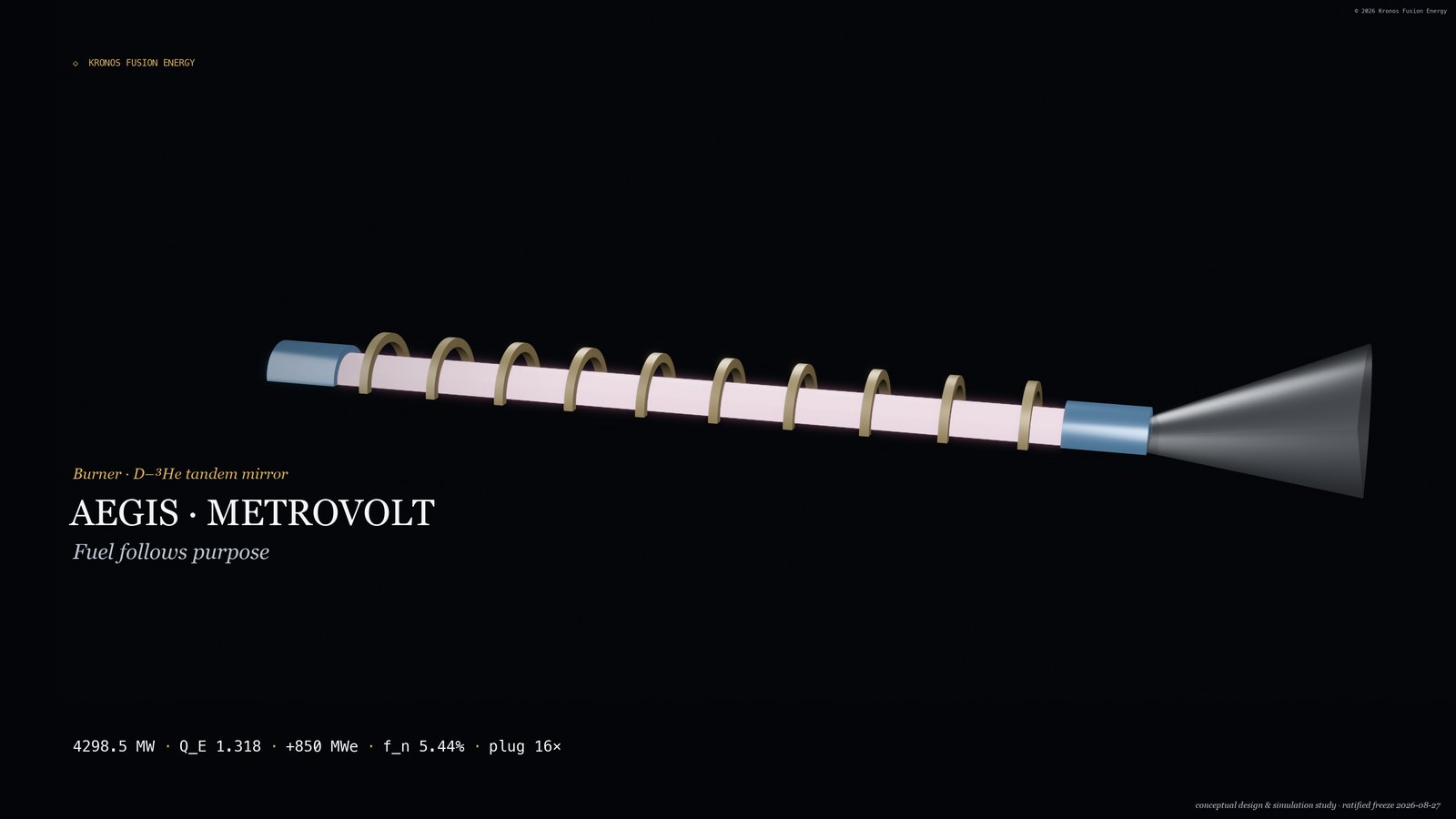
Plasma Initiation & Plug Formation
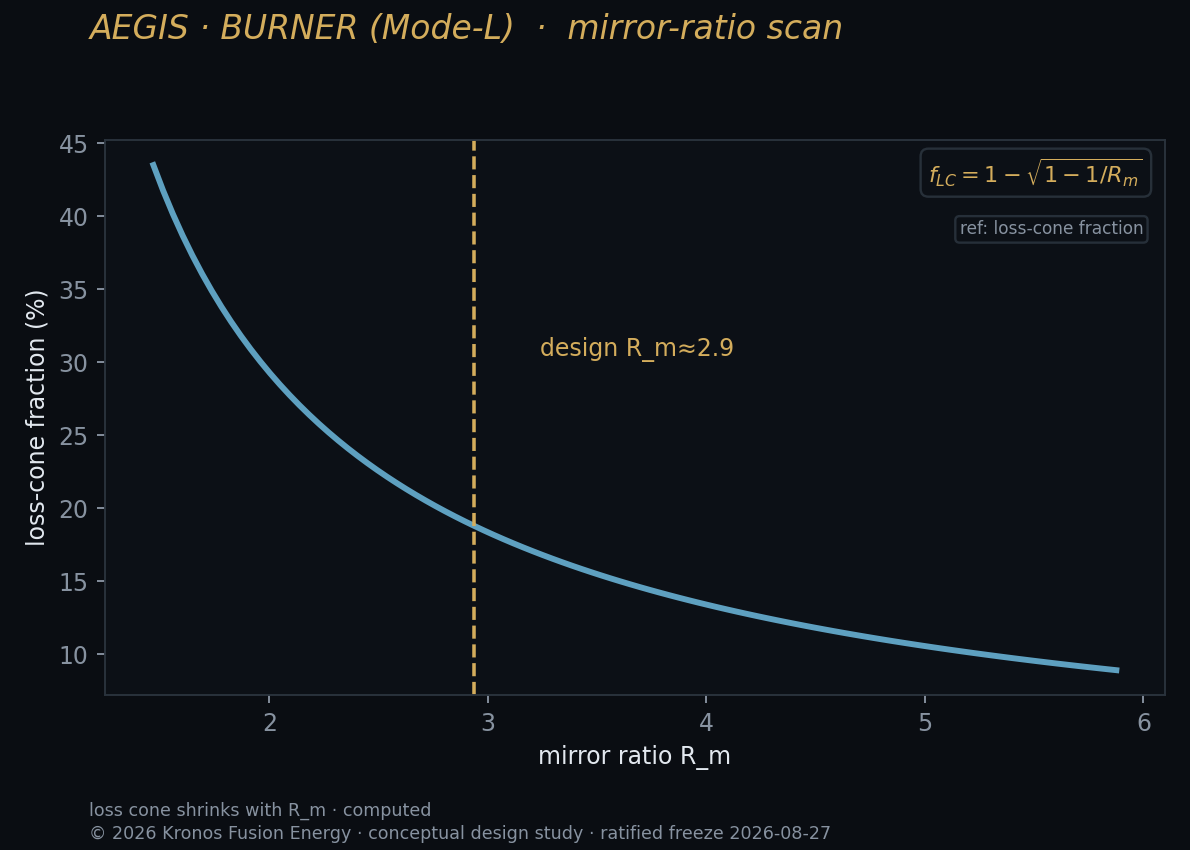
Plasma is initiated in the central cell and the high-field plugs are formed to build the ambipolar potential that confines it.
A tandem mirror confines plasma in the central cell using electrostatic potentials built by the high-field end plugs, not just magnetic mirroring. Plasma initiation creates the central-cell plasma; plug formation raises the potential at each end so ions are reflected back into the burn region.
Initiation
The central-cell plasma is established and heated. Initial fueling and heating build density and temperature toward the range where the ambipolar potential can be sustained. Diagnostics track the plasma from breakdown onward so the sequence can be halted safely if conditions drift.
Plug formation
- High-field plugs (26.49 T class) provide the field required at the ends
- Heating in the plug region raises the local potential
- The resulting ambipolar potential reflects central-cell ions
- The throat (17 T) transitions to the expander and direct converter
Why the plug gate matters
The end-plug potential is the gate that keeps ions in the central cell long enough to burn. Forming and holding it is the central control challenge of the tandem mirror. Plug formation, the ambipolar potential, and the confinement it produces are modeled at design stage against the frozen configuration; they are demonstrated on hardware beginning with the first test burner.