Fuel Handling: D-³He
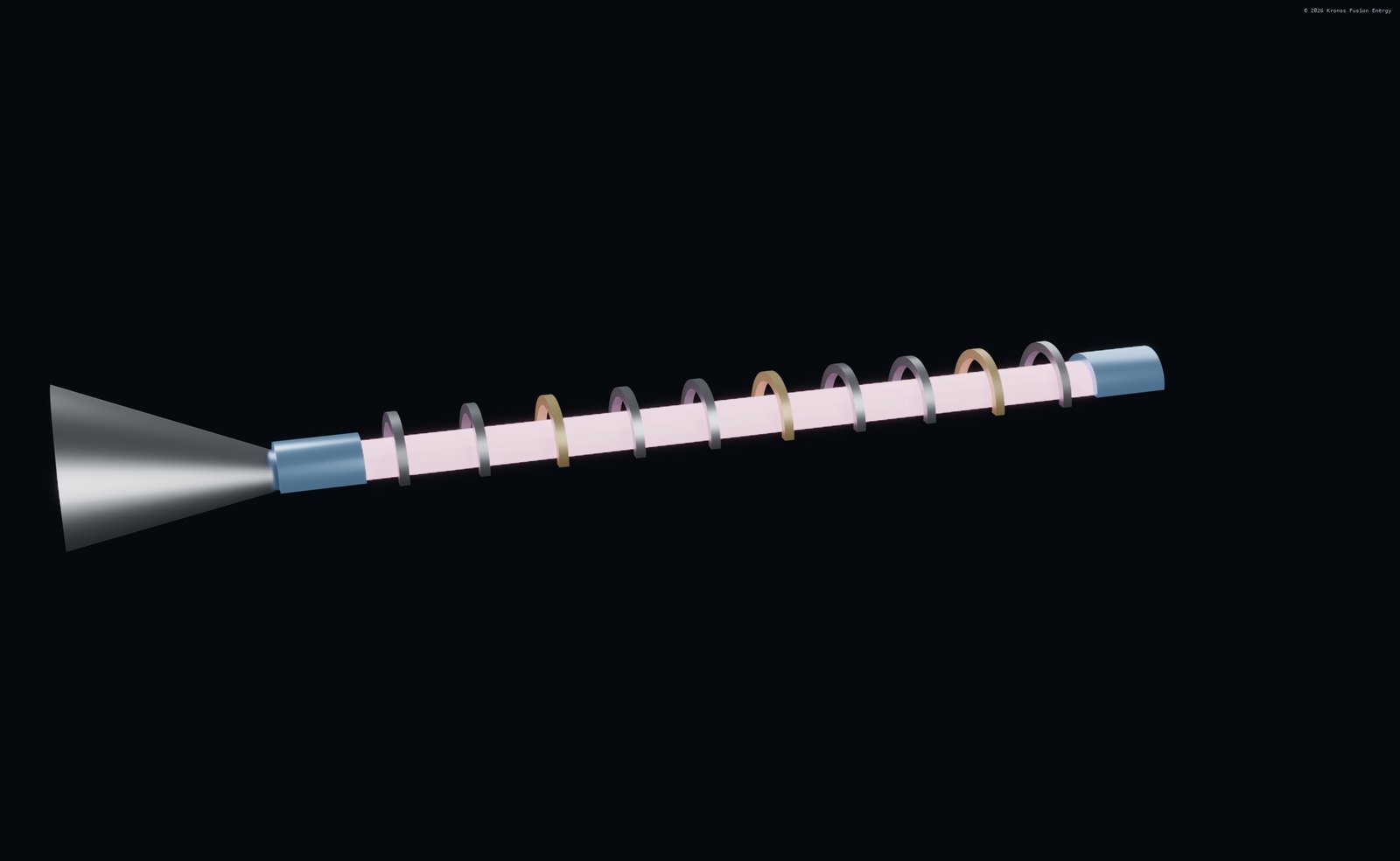
Deuterium and helium-3 are stored, metered, and injected into the central cell, with unburned fuel recovered and recycled.
Aegis burns deuterium and helium-3. Fuel handling is the set of systems that store these gases safely, meter them precisely, inject them into the central cell, and recover and recycle unburned fuel from the vacuum exhaust. Helium-3 is a scarce input, so recovery efficiency matters operationally.
Storage and metering
Fuel is stored in a controlled area with inventory tracking. Deuterium is abundant; helium-3 is supplied through the Kronos fuel cycle, including breeder-sourced helium-3, and is treated as a managed, accountable inventory. Metering delivers the fuel mixture to specification for the target plasma composition.
Injection and control
- Gas or pellet injection feeds the central-cell plasma
- Feedback control trims the mix to hold the operating point
- Isolation valves and interlocks govern every fuel path
Recovery and recycle
The vacuum pumping system removes exhaust containing unburned deuterium and helium-3 plus reaction products. Fuel handling separates and recycles the valuable species rather than discarding them, and routes any tritium byproduct to controlled handling. This closes as much of the fuel loop as practical, conserving helium-3.
Fuel-handling design follows the frozen D-³He operating point and is a design-stage engineering package tied to the Kronos fuel supply.