Direct-Energy-Conversion Balance of Plant
The direct converter turns the expanding plasma stream into electricity, with power electronics conditioning it for delivery.
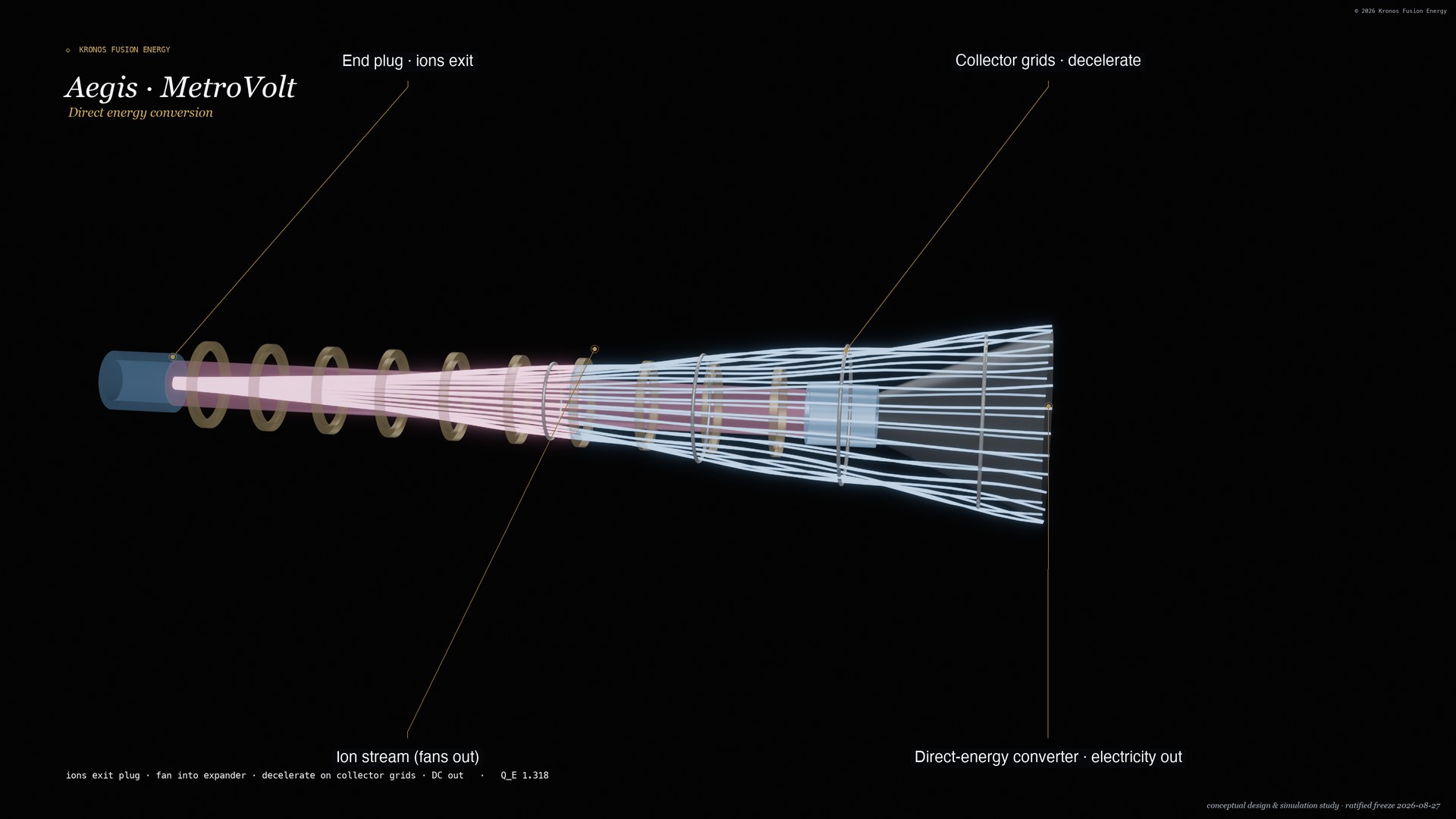
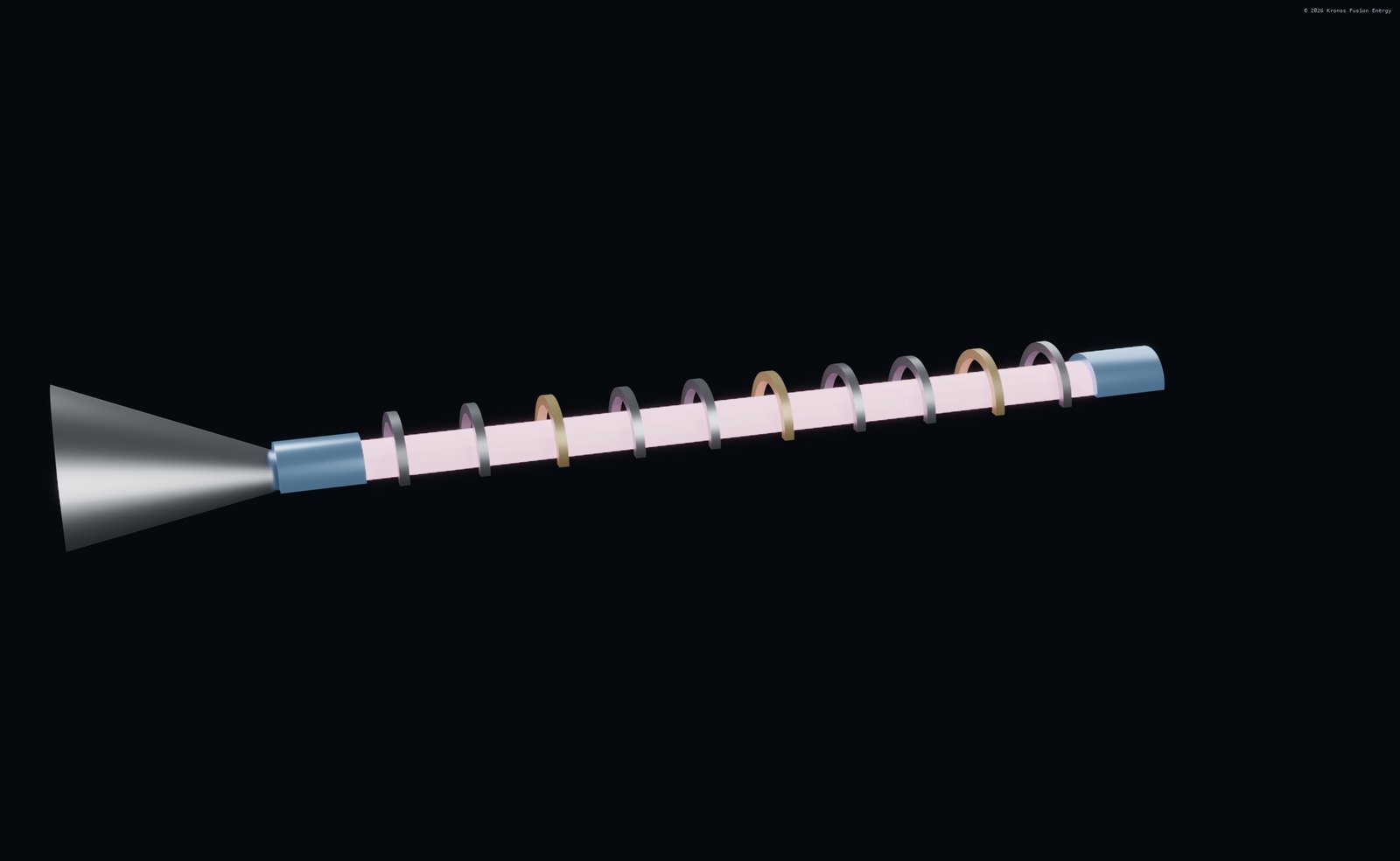
Direct energy conversion (DEC) is the defining efficiency feature of the D-³He tandem mirror. Charged fusion products and plasma leaving the central cell expand along a diverging field into the expander tank, where their kinetic energy is collected directly as electrical current rather than through a heat cycle.
From plasma to current
In the expander, the magnetic field weakens toward the DEC end (from the 17 T throat class outward). The plasma stream fans out and its charged particles are decelerated against biased collector stages, delivering current at high potential. This converts particle energy to electricity without an intermediate thermal loop for that fraction.
Power conditioning
- Collector stages at graded potentials capture the energy spread
- Conditioning electronics convert the raw output to grid- or load-compatible power
- Protection isolates faults without disturbing the plasma unnecessarily
BOP implications
Because a large share of energy is converted directly, the burner leans on power electronics and high-voltage engineering rather than a large steam plant. Residual heat — including that from the 5.44% neutron fraction deposited in shielding and structure — is still managed by the thermal systems, but the primary conversion path is electrical.
DEC performance figures are design-stage results from the frozen configuration; no net-power hardware operation is claimed before the first test burner.