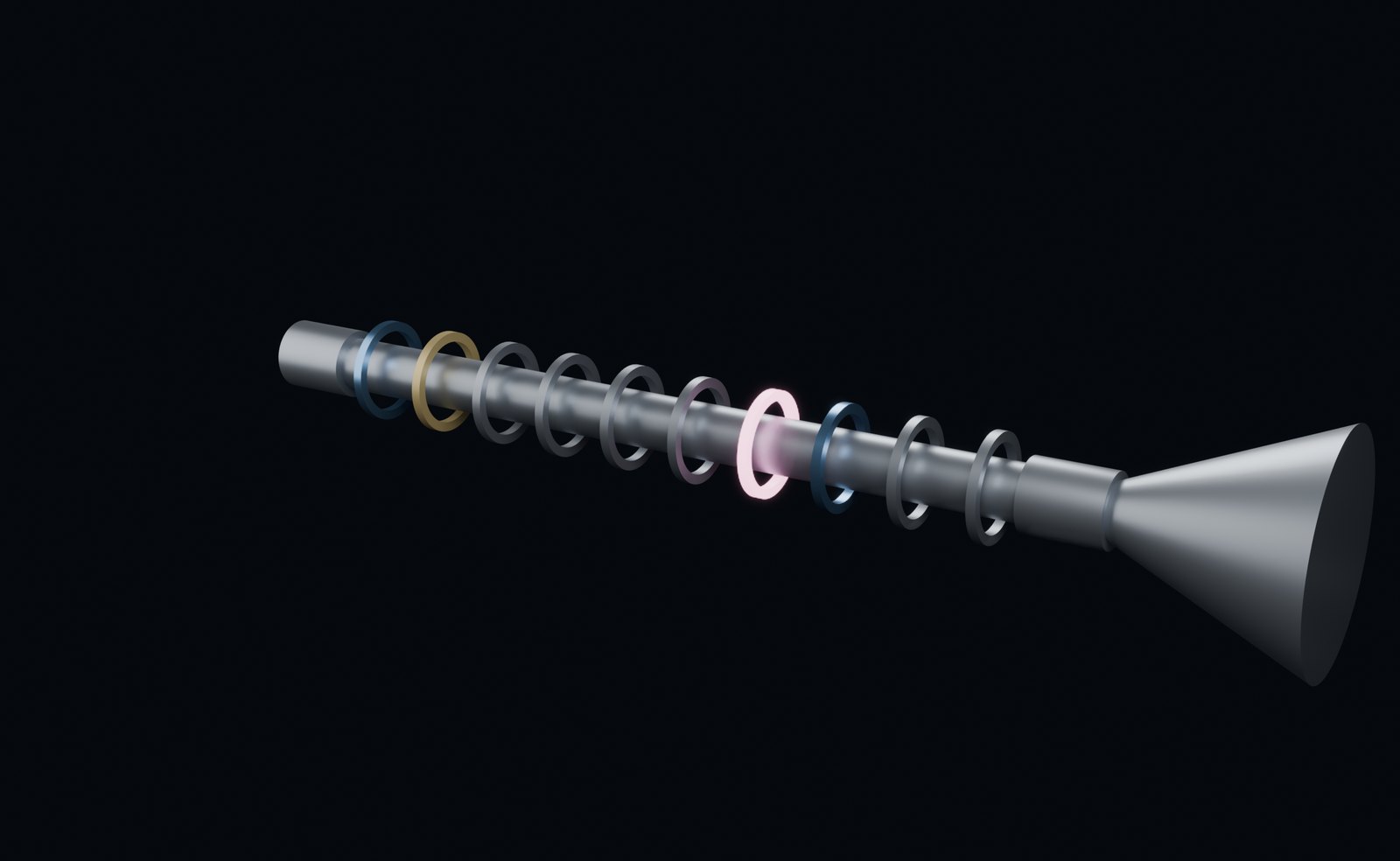
Remote Handling & Hot Cell
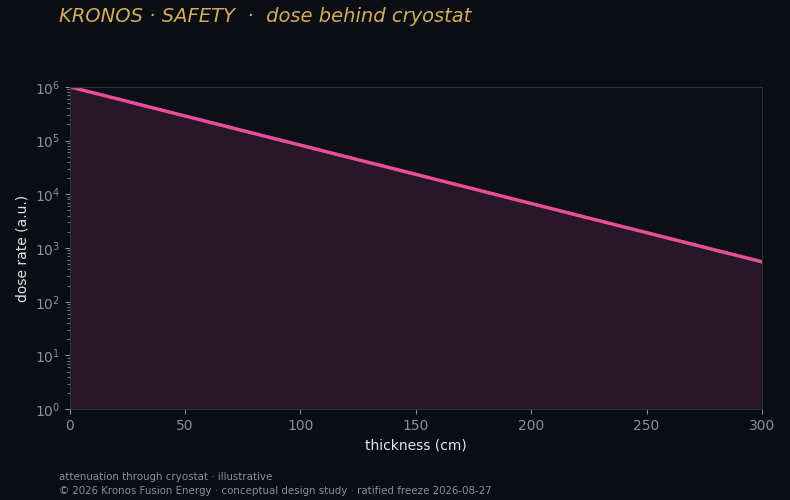
Activated components are handled remotely and serviced in a shielded hot cell to keep worker dose low.
Components near the plasma become activated by the neutron flux. Even though the D-³He neutron fraction is low (5.44%), the most exposed parts — shielding, first-wall structure, and near-plasma diagnostics — are handled remotely and serviced in a shielded hot cell rather than by direct hands-on work.
Remote handling
Remote-handling systems remove and replace activated components using tooling designed for the machine's specific interfaces. Standardized connections — mechanical, cooling, and electrical — let a manipulator disconnect and reconnect a module reliably. The layout and shielding are designed so these operations are feasible and quick.
Hot cell
- Shielded, monitored space for handling activated parts
- Remote manipulation for inspection and refurbishment
- Characterization before reuse, storage, or waste routing
- Connection to remote-handling transfer paths from the reactor hall
Dose reduction
The combination of low activation, remote handling, and hot-cell work keeps worker dose far below limits and supports the as-low-as-reasonably-achievable principle. These systems are engineered at design stage against the frozen machine and its activation inventory.