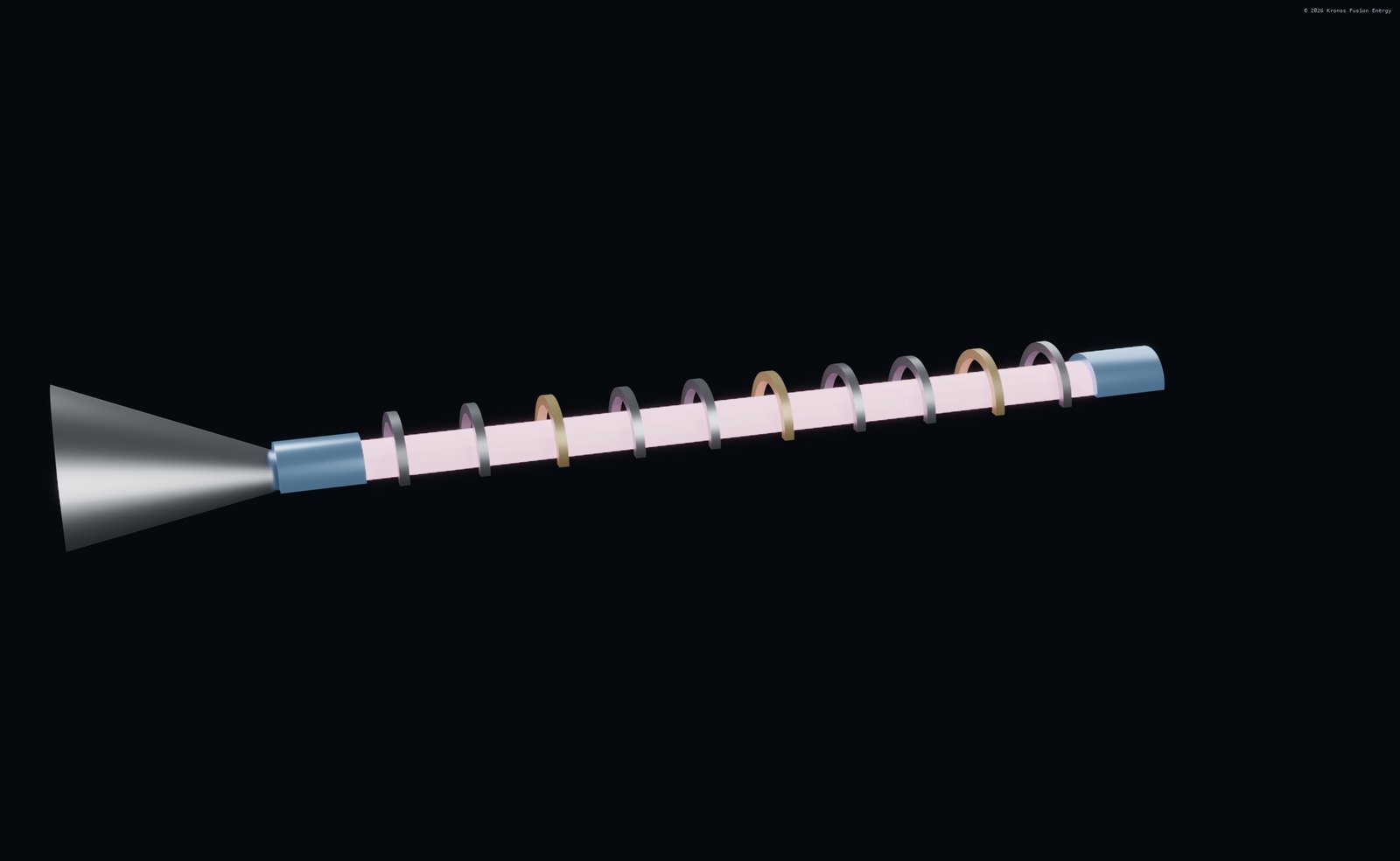
The Four Gates, for Installations
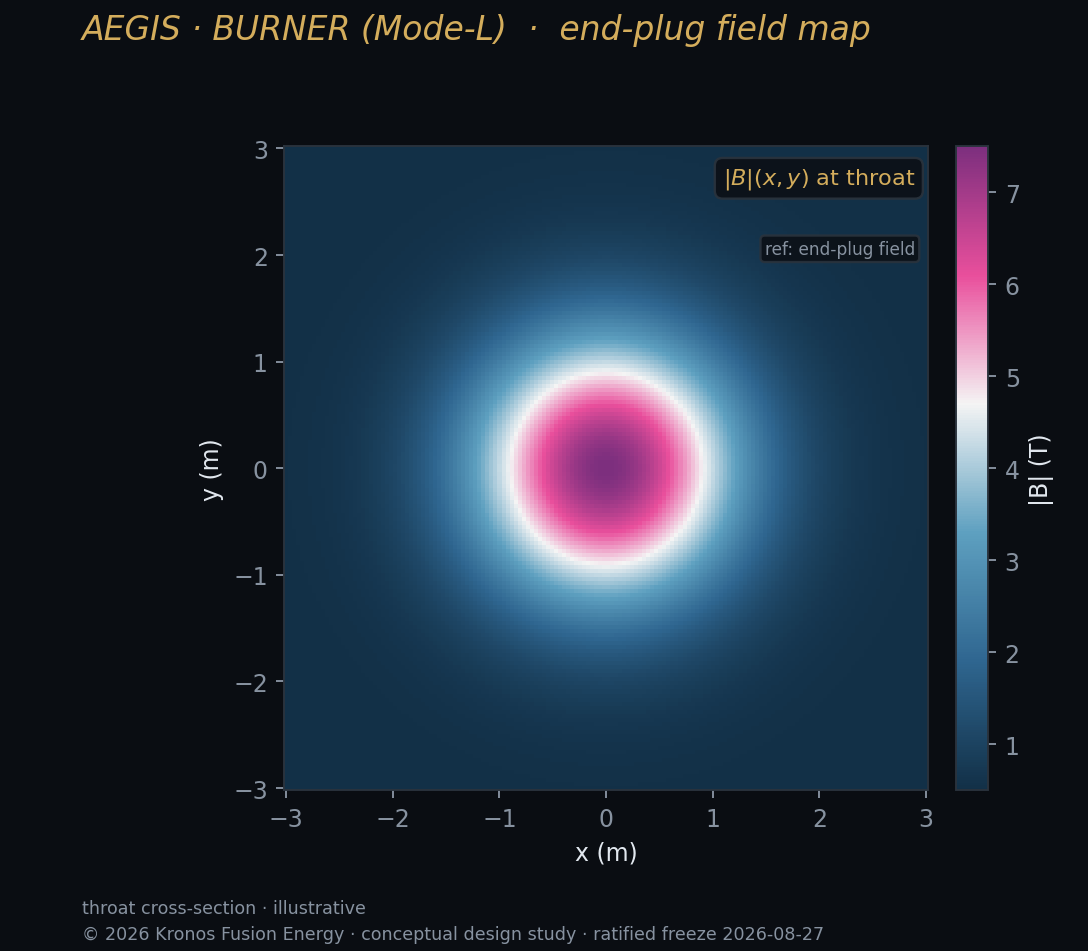
The four honest burner gates - plug stress, plug regime, helium-3 supply, and availability - each shape how Aegis can be sited.
Reading the gates as siting constraints
The Kronos burner has four honest physics gates, stated openly. This page reads each one specifically through the lens of a fixed-installation deployment, so a reader can see how the physics constrains the resilience story rather than being told the story without its limits.
Gate 1 - plug coil stress
The plug coil is overstressed by roughly 3–3.9× at the design bore, making the machine infeasible exactly as specified. For installations this means the deployable unit is not yet a settled design; siting plans are provisional until the magnet structure is resolved.
Gate 2 - plug operating regime
The end-plug regime is 166–830× beyond any device operated, so its behaviour cannot be fully post-dicted today. This is why availability is a wide range and why black-start and transient performance are test-burner objectives, not fielded facts.
Gate 3 - helium-3 supply
One commercial unit's helium-3 demand is roughly 400× today's domestic supply. Fleet-scale sovereign siting therefore depends on breeder-bred and, later, lunar helium-3 — the sovereignty claim grows with supply, it is not available now.
Gate 4 - availability vs Tier III
Single-unit availability of 0.86–0.995 is 30–100× short of a hyperscale Tier III target of 0.99982. This is the reason every resilience page assumes redundancy and storage; a lone Aegis unit is not a sole Tier III source.
These four are physics and reliability facts, never translated into money. Stated together, they mark the boundary the resilience concept lives inside — plug stress and regime constraining the machine, helium-3 supply constraining the fleet, and availability constraining the single unit — and stating them plainly is how the concept earns trust.