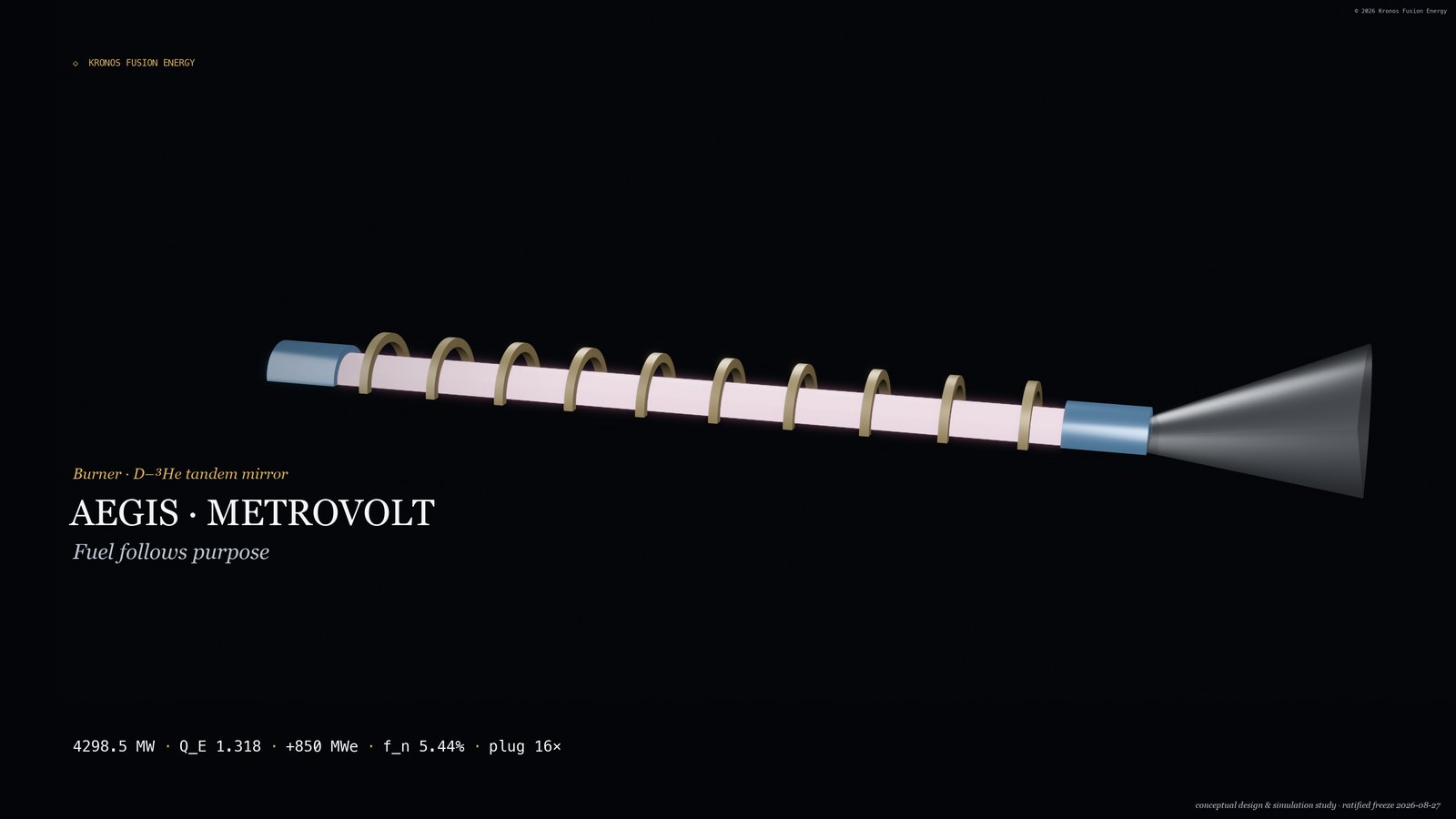
Base & Campus Integration
Aegis integrates into an installation's existing distribution, cooling, and control rather than replacing the whole campus at once.
Fitting into what exists
A fixed installation already has a distribution network, standby generation, and mission loads. Aegis is introduced as a firm anchor within that system, not as a rip-and-replace. It ties into the existing medium-voltage distribution, coordinates with legacy standby sources, and takes over the firm-power role while conventional units are retained as deep backstop.
Interfaces to the campus
Integration touches four systems: electrical distribution (the bus and protection), heat rejection (shared or dedicated cooling), controls (the microgrid controller and the installation's energy-management system), and fuel handling (secured on-site inventory). Each interface is defined so the campus can operate connected, islanded, or in transition without manual reconfiguration.
- Electrical: tie into existing medium-voltage distribution
- Thermal: heat rejection, shared or dedicated
- Control: microgrid controller + energy-management integration
- Fuel: secured on-site inventory handling
Coexistence with legacy standby
Existing diesel or gas standby is not discarded on day one. It is repositioned as a black-start backstop and a deep-reserve layer behind Aegis and storage, which strengthens continuity during the period when the burner design is still being proven.
Integration is described at concept level; a real deployment would be engineered to the specific installation. The consistent principle is additive resilience — Aegis raises the floor without removing existing layers until it has earned that trust. The order of adoption is deliberate: Aegis first proves itself in parallel with the existing system, then assumes the firm-power role, and only later does legacy standby step back to a deep-reserve position, so trust is earned in stages rather than assumed.