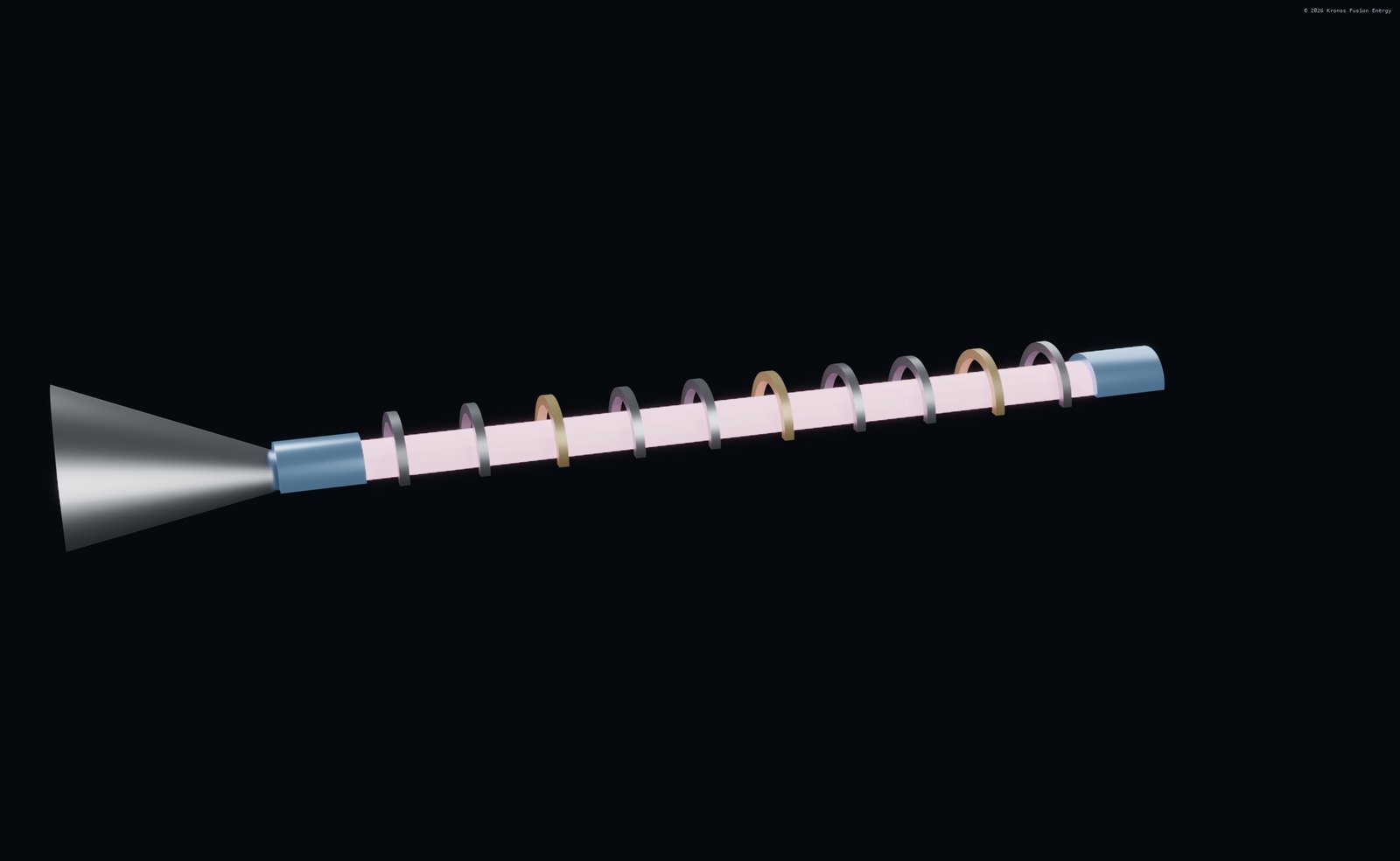
Seismic & Environmental Hardening
Fixed foundations let Aegis be designed against earthquakes, flood, wind, and extreme temperature for its specific site.
Built for the site's hazards
A fixed installation faces natural hazards — seismic events, flooding, high wind, extreme heat or cold — that the plant must keep running through, or at least survive without releasing anything. Because Aegis sits on a permanent foundation, it can be engineered to the specific hazard profile of its location rather than to a generic worst case.
What gets hardened
The high-field magnet structures and cryogenic plant sit on foundations designed for the site's seismic spectrum. Critical auxiliaries are placed above flood levels or protected against inundation. Heat rejection is sized for the site's temperature extremes. Structures are designed for local wind and, where relevant, ice and snow loads.
- Foundations designed to the site seismic spectrum
- Critical auxiliaries above flood exposure
- Heat rejection sized for temperature extremes
- Structures rated for local wind, ice, and snow
Hardening supports availability
Environmental hardening is part of the availability story: an event that takes a unit offline is an outage, and the availability gate (0.86–0.995) already leaves little room. Designing so that credible natural hazards do not simultaneously affect redundant units preserves the N+1 margin when it is most needed.
Specific design values are site-dependent and set per deployment; the fixed-foundation constraint is what makes this depth of hardening possible, and the hardening is aimed as much at keeping redundant units uncorrelated under a hazard as at protecting any single one. Crucially, hardening is applied so that a single natural event does not correlate the failures of redundant units — for example by not placing all units in a common flood plain — which is what keeps the redundancy statistically independent.