Low-Signature Operation
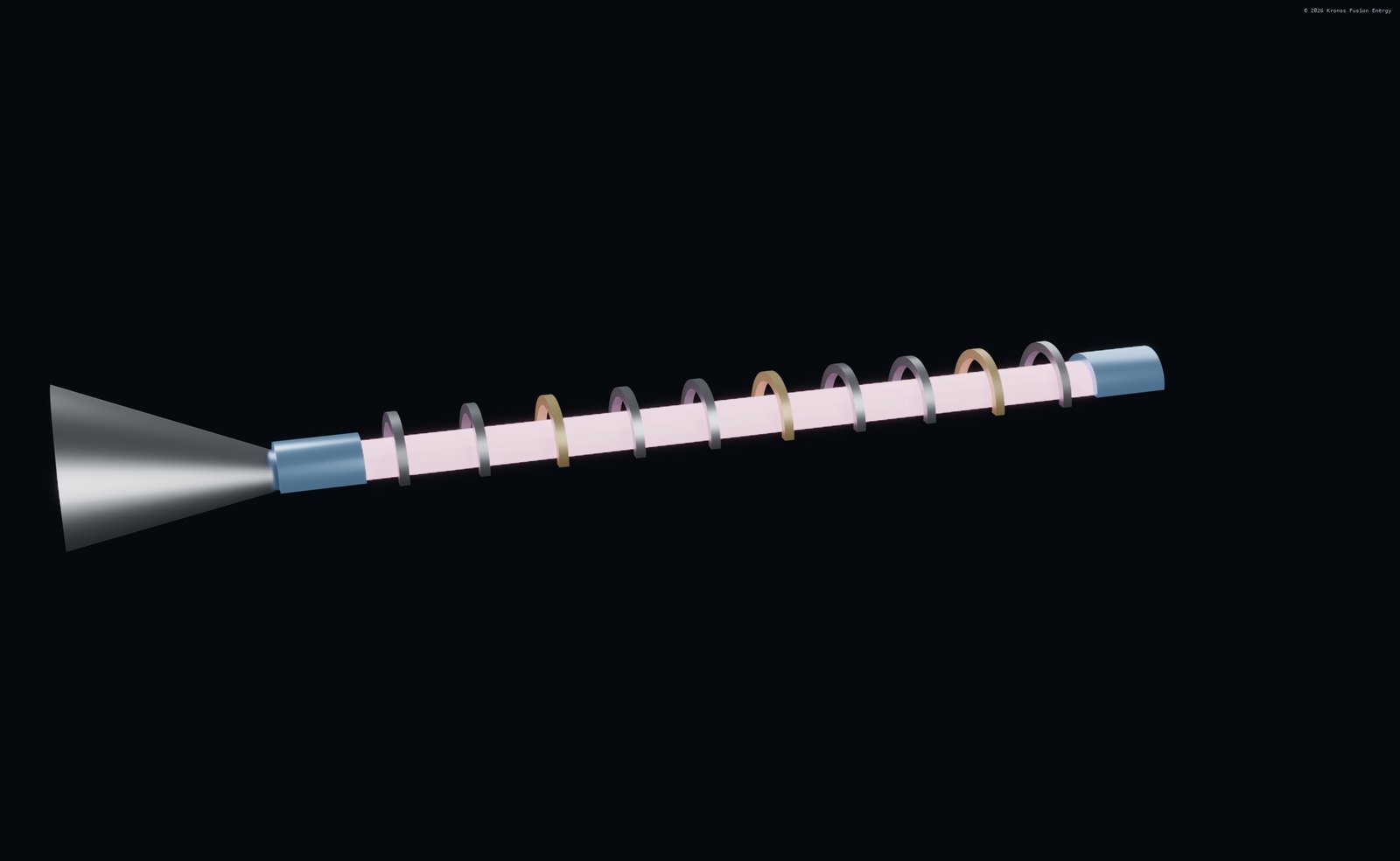
The burner's low-neutron reaction and direct conversion give it a modest thermal, chemical, and acoustic signature compared with combustion generation.
Signature as an asset
For a fixed installation, a source that is hard to detect and characterise is harder to target and disrupt. Aegis is designed to run with a modest signature: no combustion plume, no fuel-burning exhaust stack, and — with direct energy conversion — no large steam cycle rejecting heat through a conventional cooling stack.
Where the signature comes from
The D–3He reaction is low-neutron: 5.44% of the fusion energy is carried by neutrons, versus the overwhelmingly neutronic D–T reaction. Most energy is released as charged particles, which direct energy conversion turns straight into electricity. There is no combustion, so there is no chemical exhaust and no visible or infrared plume from burning fuel.
- No combustion: no exhaust plume, no fuel-burn emissions
- Low-neutron: 5.44% neutron fraction (not aneutronic)
- Direct conversion: no steam-cycle stack, less waste heat
- Modest acoustic signature vs reciprocating engines
Honest limits of ‘low’
Low signature is not zero signature. The 5.44% neutron fraction means the plant still needs shielding and a radiological setback, and heat rejection still produces a thermal signature that must be managed. Low-signature is a comparative claim against combustion and steam plants, stated at the design stage.
The correct framing: quieter, cleaner, and cooler than fuelled generation, but a real facility with a real — if reduced — signature to be engineered. Signature also degrades gracefully with distance: because there is no tall combustion stack and no bright thermal plume, the plant's detectable footprint falls off quickly beyond the fence, which is a siting advantage as well as a survivability one.