Stewardship as an Engineering Discipline
Stewardship is not a slogan; it is a set of design choices, measurements, and honest limits carried through every stage of the work.
From value to practice
It is easy to state environmental values and hard to encode them into engineering. Kronos treats stewardship as a discipline: choices about materials, siting, lifecycle, and disclosure that are made explicitly and recorded, not left implicit. A value that never changes a decision is decoration.
Where stewardship shows up
- Material selection weighed for activation and end-of-life, not only performance
- Designs frozen and versioned so environmental claims attach to a specific configuration
- Predictions pre-registered so results can be checked against them
- Data and methods published so outside reviewers can audit the footprint
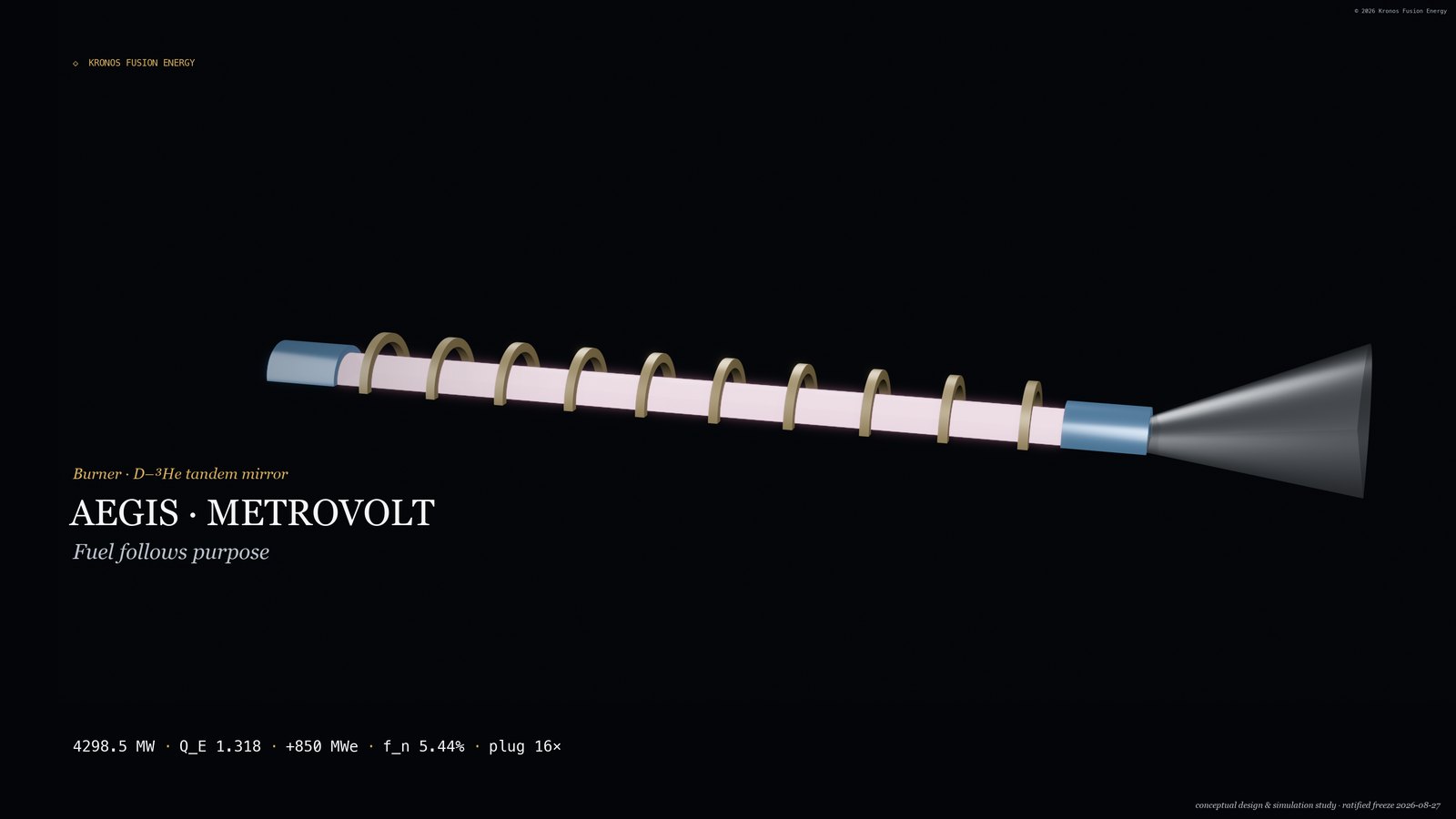
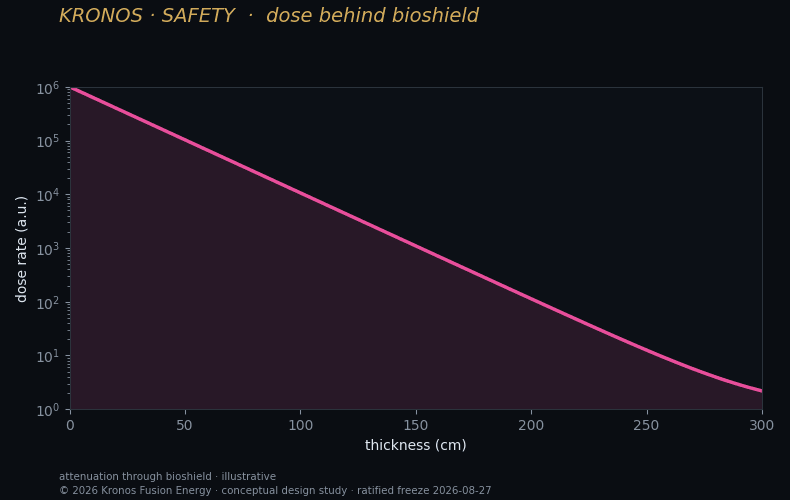
The breeder (Hyperion) and burner (Aegis / MetroVolt) are studied as whole systems, including what happens to their materials over a lifetime. We treat decommissioning and activation as first-class design inputs, discussed in activation and materials choices and decommissioning thinking.
Stewardship also means restraint in claims. We do not assert environmental benefits that depend on machines behaving in ways we have not demonstrated. Where a number is contested or uncertain, we say so rather than round toward the flattering answer.
The test we apply to any stewardship claim is simple: did it change a decision? A material we would have chosen anyway, described afterward as an environmental choice, is decoration. A material we selected specifically because it activates less, at some cost to convenience, is stewardship. We try to keep our record on the second side of that line.
This connects directly to our environment, health, and safety practices — see the EHS connection.