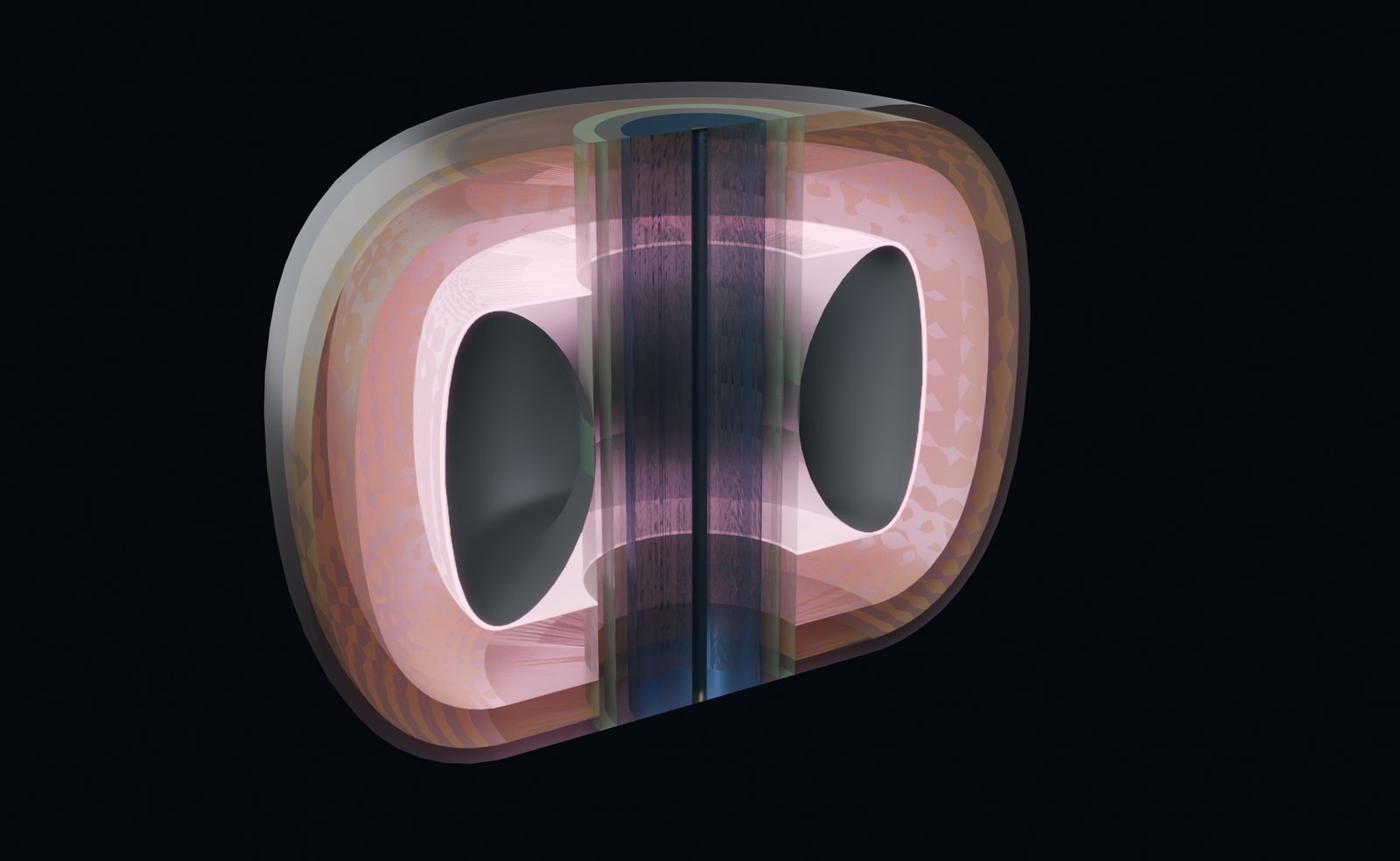
Activation and Materials Choices
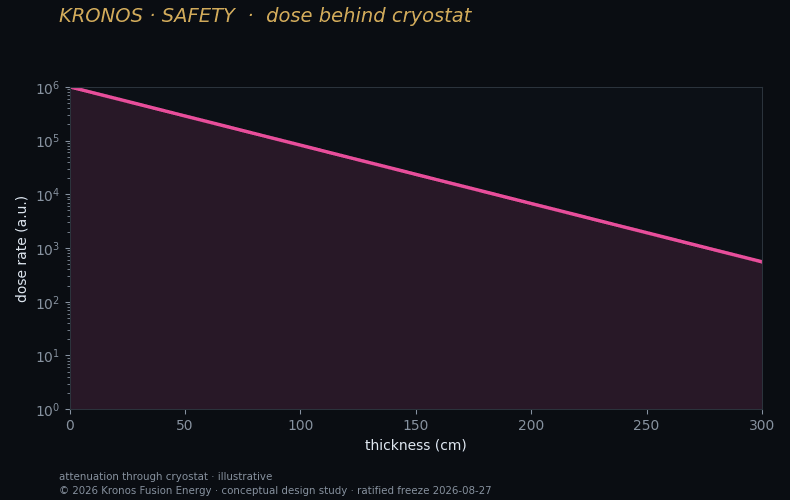
Neutrons make structures radioactive; choosing low-activation materials shortens how long that material stays hazardous.
The activation problem
When neutrons strike a material, they can transmute its atoms into radioactive isotopes — a process called activation. For the breeder (Hyperion), with its 14 MeV neutron flux, activation of the surrounding structure is the principal source of radioactive waste. How bad and how long-lived that waste is depends heavily on which materials are used.
Materials as a design lever
Some materials activate into short-lived isotopes that decay to safe levels relatively quickly; others produce long-lived isotopes that remain hazardous for far longer. Choosing low-activation materials is therefore one of the most consequential environmental decisions in the design, and we treat it as such rather than defaulting to whatever is easiest to fabricate.
- Prefer materials that activate into shorter-lived isotopes
- Weigh activation against structural and thermal performance
- Account for end-of-life handling from the start
- Reduce total activated mass through compact design
The burner's low neutron fraction of 5.44% means much less activation to begin with, which is a structural advantage of the D-3He reaction — though it depends on scarce helium-3, as noted in helium-3 and the planet.
Because activation depends on both flux and material, the same neutron environment can leave one component safe within decades and another hazardous for far longer. Treating material selection as an environmental decision, weighed alongside strength and cost of fabrication, is how the eventual waste burden is minimized before a single neutron is ever produced.
This decision propagates into decommissioning thinking and links to materials and the Earth.